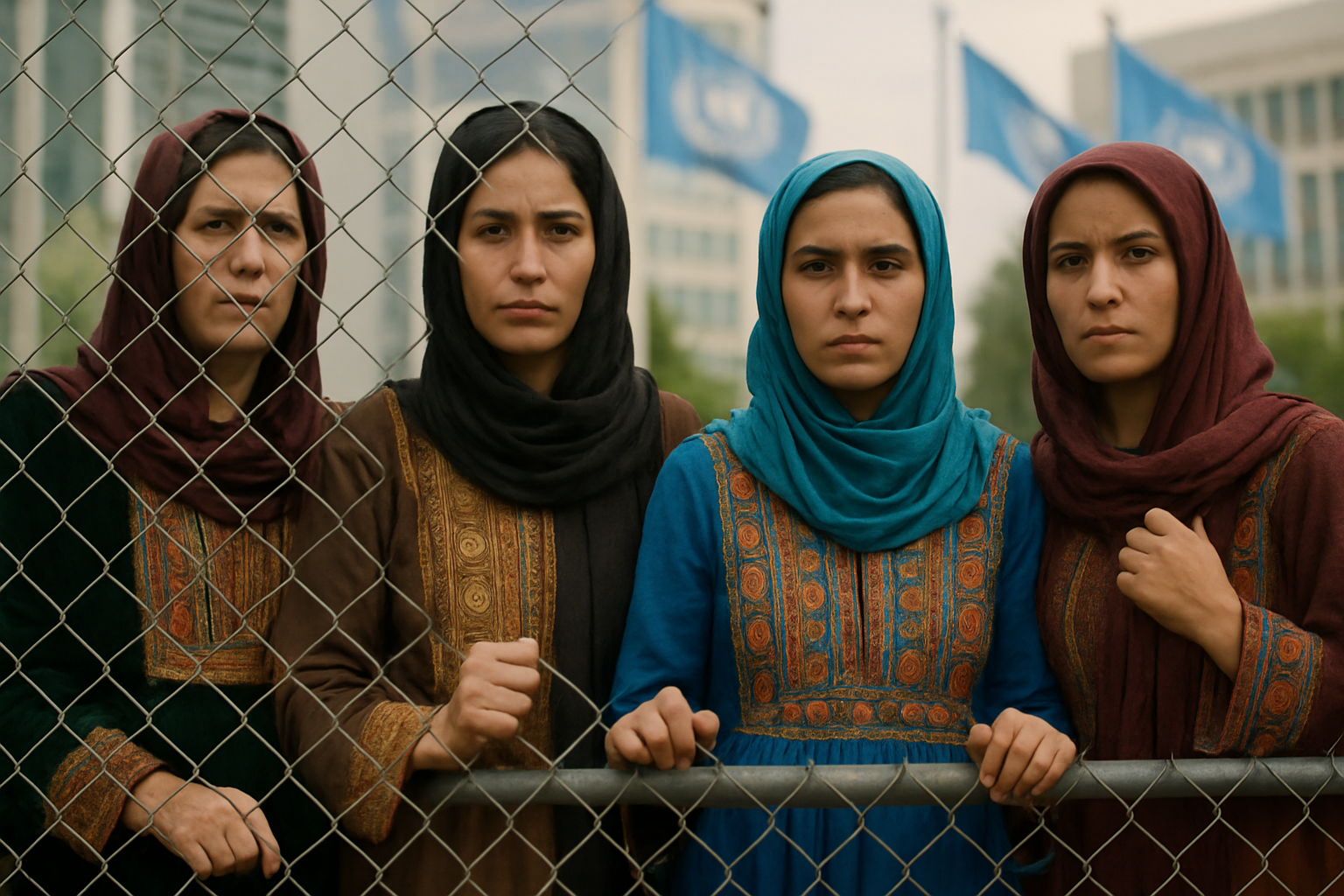
The international community has raised urgent concerns over the systematic violation of women's rights in Afghanistan, with key diplomatic figures warning that nearly five years after the Taliban's return to power, women and girls remain excluded from public life with no meaningful signs of policy change.
Afghanistan's acting UN envoy Naseer Ahmad Faiq told the UN Security Council on Tuesday that the situation for women and girls in Afghanistan has shown no improvement since the Taliban regained control in August 2021. Speaking at a Security Council meeting, Faiq emphasized that women continue to face comprehensive restrictions on their participation in society, education, and the workforce.
Unprecedented Global Rankings Reveal Crisis
The gravity of the situation is underscored by Afghanistan's ranking in the Georgetown Institute for Women, Peace and Security Index, where the country places 181st out of 181 countries – absolute last place globally. This represents what international observers have termed the "most severe rollback of women's rights in modern history."
The statistics paint a devastating picture: 88% of female-headed households are unable to meet minimum living requirements, compared to 75% of the general population. This systematic exclusion affects approximately half of Afghanistan's potential workforce, creating structural economic damage that impacts the entire population.
"The Taliban have stripped Afghan women of their rights, effectively turning them into second-class citizens."
— French Representative to UN Security Council
International Legal Concerns Mount
France's representative to the UN Security Council delivered particularly strong criticism, stating that the Taliban's systematic violations of women's rights could amount to gender persecution and crimes against humanity. The French envoy stressed that such actions must not go unpunished and represent a fundamental challenge to international human rights law.
The United Nations Assistance Mission in Afghanistan (UNAMA) has warned the UN Security Council that restrictions on women are undermining Afghanistan's progress and worsening humanitarian challenges. Acting head Georgette Gagnon emphasized that the Taliban are prioritizing ideological policies over the welfare of the Afghan people, particularly through restrictions on women's participation in society.
Healthcare System in Crisis
The impact extends far beyond social participation to critical services like healthcare. UN Special Rapporteur Richard Bennett has warned of an acute shortage of female medical professionals due to systematic restrictions on women's participation in the workforce. This creates a particularly severe crisis given cultural and religious norms that require female patients to be treated by female healthcare providers.
The World Health Organization has been forced to deliver medical oxygen to only 23 hospitals across Afghanistan, while hundreds of health centers have closed due to international aid cuts. The healthcare system faces what WHO describes as the worst humanitarian crisis in 25 years.
Economic Devastation Spreads
The systematic exclusion of women from the workforce has created ripple effects throughout Afghanistan's economy. The UN Development Programme reports that the prohibition on women's employment, except in very limited healthcare roles, has effectively removed half of the country's potential labor force from economic participation.
This economic damage compounds an already severe humanitarian situation. The World Food Programme has provided school meals to 880,000 children in 2025, but girls remain excluded from secondary education, representing what experts call an unprecedented educational emergency affecting an entire generation.
Civil Society Under Pressure
Recent Taliban restrictions have extended beyond individual rights to organizational participation. Taliban Order No. 12 banned women from national and international civil society organizations, a move condemned by UN Women as a serious violation of human rights that deepens gender-based violence and worsens humanitarian conditions.
This restriction threatens to further limit humanitarian access at a time when international assistance is desperately needed. Organizations working in Afghanistan report that the exclusion of female staff members severely hampers their ability to reach vulnerable populations, particularly women and children.
"The Taliban are prioritizing ideological policies over the welfare of people in Afghanistan, particularly through restrictions on women's participation in society."
— Georgette Gagnon, Acting Head of UNAMA
International Response and Diplomatic Pressure
The international community has responded with a combination of diplomatic pressure and continued humanitarian assistance. UN Special Rapporteur Richard Bennett is expected to present comprehensive documentation to the 61st UN Human Rights Council session in Geneva, providing recommendations for international action to protect the fundamental rights of systematically excluded Afghan women and girls.
Despite the political challenges, international humanitarian organizations continue to operate in Afghanistan. The International Federation of Red Cross and Red Crescent provided health services to over 2 million people in 2025, supporting more than 128 healthcare centers during multiple crises.
Regional Context and Global Implications
The crisis in Afghanistan stands in stark contrast to progress being made in women's rights elsewhere globally. While countries like Austria have achieved gender parity in higher education and the Dominican Republic has seen women borrowers surpass men in formal financial systems for the first time, Afghanistan represents a dramatic regression.
International legal experts argue that the restrictions violate fundamental human rights and potentially constitute crimes under international law. The situation challenges both international human rights frameworks and what global Islamic scholars describe as authentic Islamic principles regarding women's participation in society.
Looking Forward: Calls for Action
The international community faces the complex challenge of addressing the humanitarian needs of the Afghan people while maintaining pressure for policy changes regarding women's rights. Organizations emphasize that the current situation is not just a national tragedy but a global challenge to fundamental principles of human dignity and equality.
As the UN Security Council continues to address the situation, there are growing calls for sustained international attention and coordinated action to protect the rights of Afghan women and girls. The crisis represents what many observers consider the most severe test of international commitment to gender equality in the 21st century.
The coming months will be crucial in determining whether international pressure and continued humanitarian engagement can create space for policy changes that would allow Afghan women and girls to reclaim their fundamental rights to education, work, and full participation in society.