A wave of agricultural innovation is sweeping across Africa as nations from Kenya to Algeria implement groundbreaking projects that combine traditional farming wisdom with modern technology, positioning the continent as a global leader in climate-resilient food production.
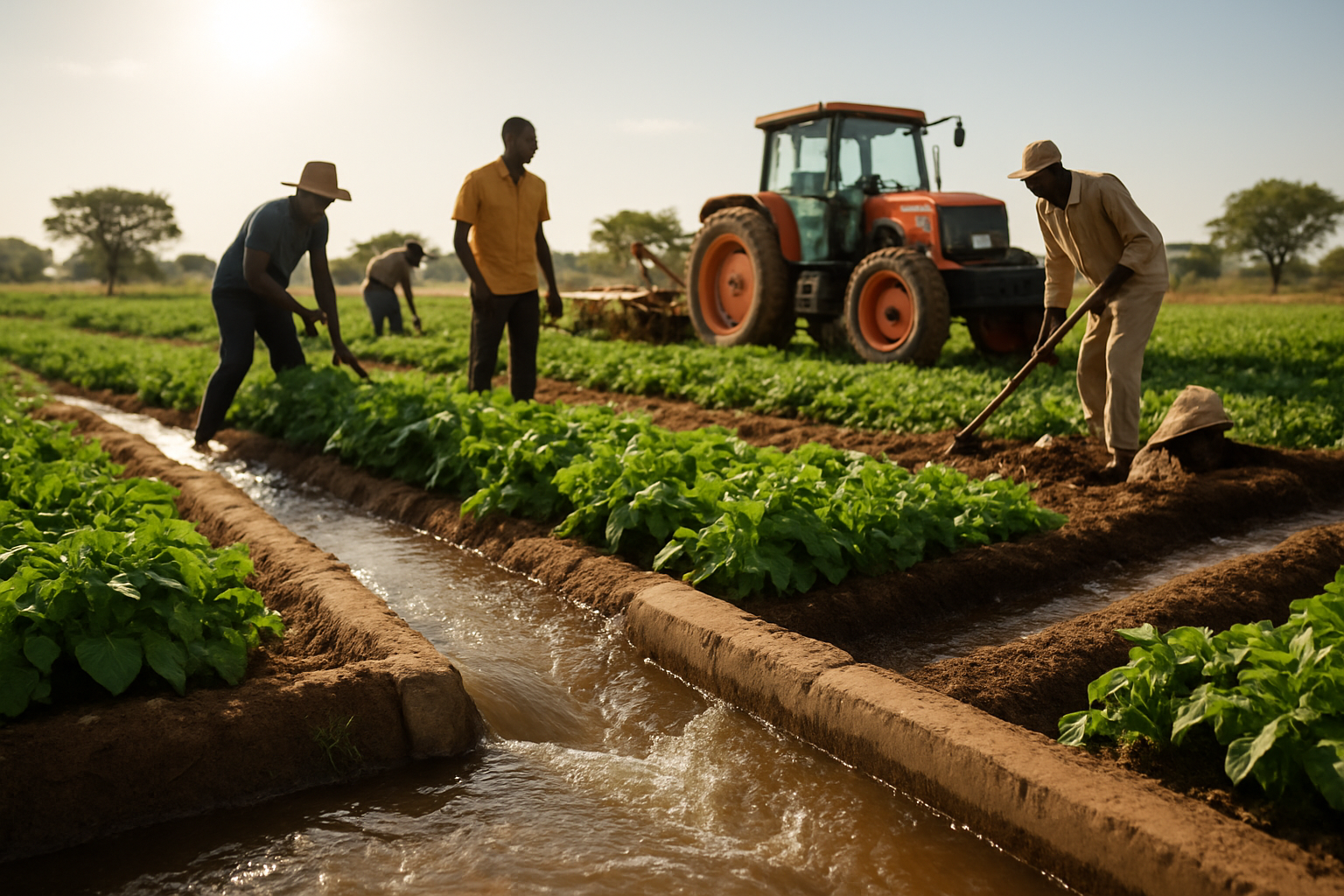
In Kenya's Kajiado West sub-county, over 10,000 farmers are experiencing a remarkable agricultural transformation following the rehabilitation of the Nguruman irrigation scheme. The ambitious project, which began in 2024 after devastating floods destroyed vital water infrastructure, represents more than just infrastructure repair—it embodies a new era of climate-resilient agriculture designed to withstand environmental challenges while boosting food security.
The rehabilitation comes after catastrophic flooding forced many farmers to abandon irrigation farming entirely, leaving thousands of hectares of previously productive farmland barren. The restored system now features upgraded canals and water intake systems built to withstand extreme weather events, incorporating lessons learned from climate science and traditional water management practices passed down through generations.
Regional Revival: From Pastoralism to Innovation
Uganda's agricultural renaissance tells an equally compelling story of resilience and recovery. In the Teso region, cattle farming—once decimated by decades of cattle raids and insurgency—is making a dramatic comeback. For generations, cattle were central to life in Teso, shaping not only livelihoods but also culture and social status. Soroti once hosted a thriving meat-packing factory, reflecting the region's historical strength as a livestock hub in eastern Uganda.
The revival represents more than economic recovery; it signals the restoration of cultural identity and traditional pastoralist knowledge systems that sustained communities for centuries. Modern veterinary services, improved breeding programs, and enhanced security measures are now combining with traditional herding practices to create a more resilient and productive livestock sector.
"This transformation represents the convergence of traditional knowledge with modern agricultural science, creating solutions that are both innovative and culturally appropriate."
— Dr. Ahmed Hassan, Agricultural Development Specialist
Scientific Innovation: Algeria's Breakthrough Feed Technology
Perhaps nowhere is this fusion of tradition and innovation more evident than in Algeria's groundbreaking development of "Tamr Al-Aghanm" (Date Feed), a revolutionary livestock feed that has earned a patent after being developed by the Scientific and Technical Research Center for Arid Regions in Biskra. This innovative product represents the optimal utilization of date palm waste, transforming what was once considered agricultural refuse into high-value livestock nutrition.
The Algerian government's formal presentation of this innovation during a Wednesday cabinet meeting underscores its potential impact on both agricultural productivity and environmental sustainability. By converting date waste into premium livestock feed, Algeria has created a circular economy model that other nations are studying for potential adaptation to their own agricultural contexts.
The innovation addresses multiple challenges simultaneously: reducing agricultural waste, providing nutritious feed for livestock, and creating economic opportunities in arid regions where traditional fodder crops struggle to grow. This represents the kind of systems thinking that characterizes the new wave of African agricultural innovation.
Building on Continental Success
These developments build upon a broader pattern of African agricultural advancement documented throughout 2025 and early 2026. Ethiopia has shifted from emergency relief to long-term climate resilience through strategic water infrastructure investments, emphasizing watershed management and integrated water resource systems. Rwanda has identified 417,000 hectares of undeveloped irrigation potential, prioritizing expansion for food security and climate resilience in its land-scarce agricultural economy.
The broader context includes significant international cooperation, such as the Norwegian Church Aid's $2.9 million multi-partner agricultural transformation program in South Sudan, and Niger's achievement of cereal market price stabilization after elevated early 2026 levels. These initiatives demonstrate how local innovation can be supported and scaled through international partnerships while maintaining African leadership and ownership.
Technology Integration and Traditional Knowledge
What distinguishes the current agricultural renaissance from previous development attempts is the sophisticated integration of traditional knowledge with modern technology. Rather than displacing indigenous farming practices, these innovations build upon generational wisdom about local conditions, crop varieties, and sustainable land management.
The success in Nepal's Sigana village, where orange farmers generated 40 million rupees in sales through direct market access, offers lessons for African agricultural development. By eliminating intermediary costs and working directly with traders, farmers achieved both prosperity and food security—a model that several African nations are adapting to their own agricultural contexts.
Climate Resilience and Adaptation
Climate considerations remain central to these agricultural innovations. With January 2026 recorded as the hottest month in history—the 18th of the past 19 months to exceed 1.5°C above pre-industrial levels—the urgency of climate-adapted agriculture has never been clearer. African agricultural innovations are specifically designed to address these challenges, incorporating drought-resistant varieties, water-efficient irrigation systems, and diversified farming approaches that reduce vulnerability to climate shocks.
The rehabilitation of Kenya's irrigation infrastructure, for example, includes enhanced flood management systems and drought contingency plans. Uganda's livestock recovery incorporates pasture management strategies designed to withstand variable rainfall patterns. Algeria's date-based feed innovation provides nutrition security in arid regions where traditional feed sources may become increasingly unreliable.
Regional Integration and Market Development
These agricultural advances align with broader African development trends including regional integration through the African Continental Free Trade Area (AfCFTA), climate adaptation strategies, and economic diversification efforts. Infrastructure developments like Angola's revived Lobito Corridor railway and Ethiopia's water infrastructure investments support not just local food security but continental agricultural trade networks.
The emphasis on value addition—such as Algeria's transformation of date waste into livestock feed—demonstrates sophisticated approaches to agricultural development that go beyond raw material production to include processing, packaging, and marketing components that retain value within African economies.
Gender Integration and Community Ownership
Programs across the continent emphasize gender integration and community ownership as essential components of sustainable agricultural development. Cambodia's Agricultural Market Incentive System (AIMS) promotes gender integration and market access for smallholder farmers, providing a model that African nations are adapting to their own contexts.
The success of these initiatives depends not just on technical innovation but on inclusive approaches that ensure benefits reach all community members, including women and youth who often play crucial roles in agricultural production but have historically been excluded from decision-making and resource access.
Looking Forward: Sustainable Success
The success of Africa's agricultural renaissance will depend on sustained funding, continued political commitment, and enhanced international cooperation. However, the foundations being laid through these innovative programs—combining traditional knowledge with modern technology, emphasizing climate resilience, and ensuring community ownership—provide reasons for optimism.
These developments represent more than agricultural projects; they embody a new model of African development that asserts control over food systems while engaging constructively with global partners. As the continent faces 21st century food security challenges, these innovations offer pathways toward not just food security but agricultural prosperity that can serve as a foundation for broader economic development.
The agricultural transformation unfolding across Africa demonstrates that solutions to global food security challenges are emerging from the regions most affected by these challenges, guided by deep knowledge of local conditions and informed by the latest agricultural science. This represents the kind of innovation-driven development that can address both immediate needs and long-term sustainability goals.