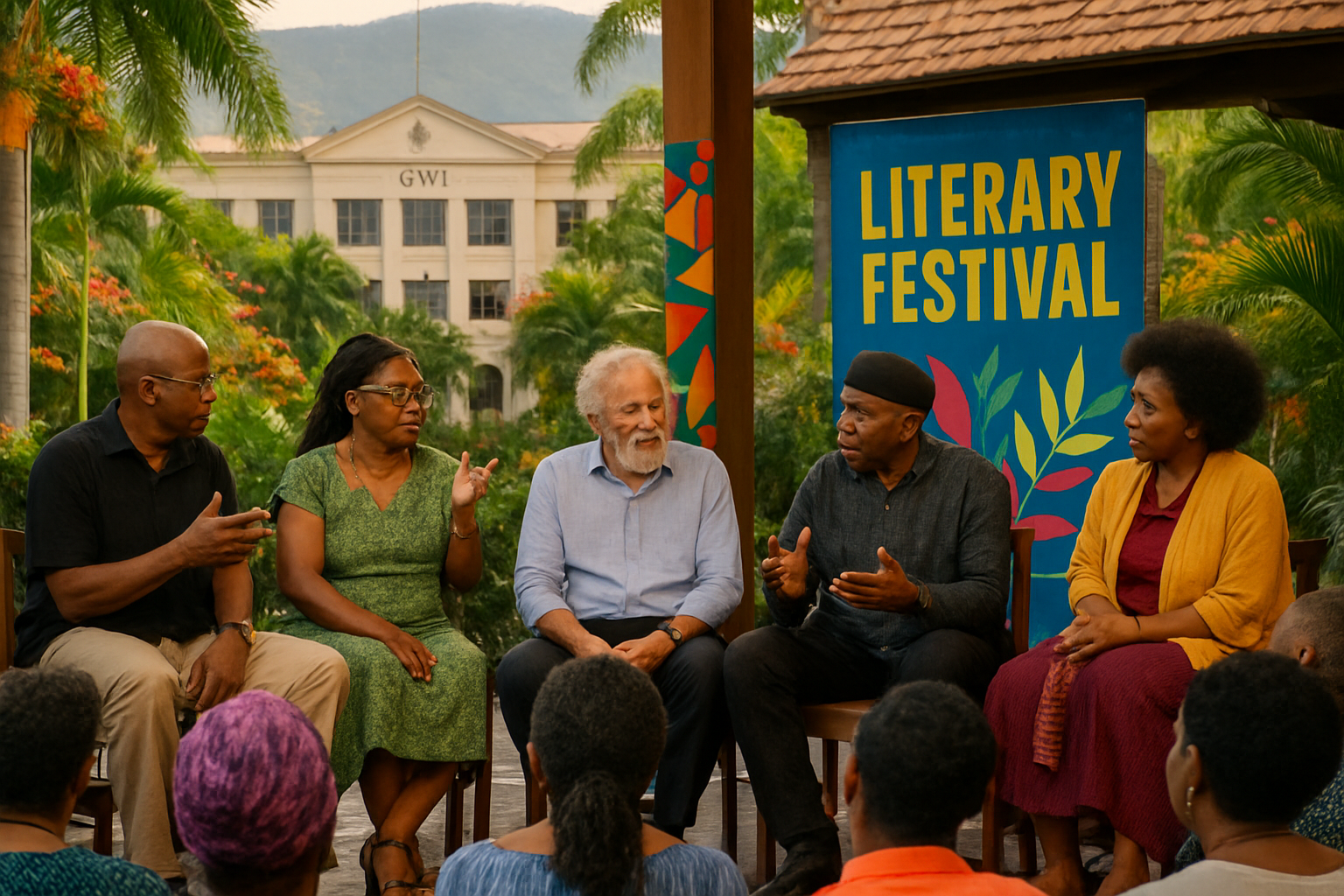
A dynamic convergence of African and Caribbean literary voices took center stage this weekend as the Jamaica Book Festival's inaugural Africa Caribbean Literary Exchange concluded with a celebration of international literary collaboration, marking a pivotal moment in the global cultural renaissance sweeping across continents.
The exchange, which culminated on Saturday, February 28, at the Confucius Institute, University of the West Indies, Mona, brought together an exceptional delegation of internationally recognized authors and cultural leaders for what festival director Latoya West-Blackwood described as "a defining cultural moment." The gathering featured New York Times bestselling author Namina Forna, award-winning Kenyan writer and editor Troy Onyango, and cultural commentator Alexandra Antwi-Boasiako, among other distinguished literary figures.
International Literary Collaboration Takes Flight
The festival showcased the power of cross-continental literary dialogue, with Namina Forna leading discussions on her critically acclaimed "The Gilded Ones" series, which explores themes of power, patriarchy, and identity through bold feminist fantasy narratives. Her participation alongside Troy Onyango, founder of the influential literary magazine Lolwe, demonstrated the growing interconnectedness of African and Caribbean literary ecosystems.
This literary exchange represents a broader global movement documented throughout February 2026, where nations worldwide have embraced cultural programming as essential infrastructure for community development and international cooperation. From Estonia's Elektriteater anniversary celebrations to Malta's strategic cultural diplomacy initiatives, the month has witnessed unprecedented coordination of artistic programming across six continents.
Cultural Renaissance Beyond Jamaica
While Jamaica's literary exchange captured international attention, parallel developments across the Caribbean and beyond reveal the scope of this cultural awakening. In France, cultural programming has expanded to include comprehensive literary reviews and graphic novel selections, with Le Monde's February curation featuring eleven BD and manga works that explore diverse themes from Polish generational trauma to tsunami narratives.
The February 2026 cultural renaissance encompasses various forms of artistic expression, from literature and visual arts to music and theater. Bolivia's Pasión Andina celebrated its 25th anniversary with symphonic carnival concerts, while European venues like Austria's Haydnbibliothek presented contemporary interpretations of classical works, including theatrical guides to self-optimization based on Goethe's writings.
Technology Enhancing Traditional Literary Forms
The success of contemporary literary festivals demonstrates sophisticated integration of technology with traditional storytelling methods. Digital platforms have enabled unprecedented global sharing of literary content while maintaining authentic community engagement. Cyprus has emerged as a leader in digital poetry democratization, transforming literary creation from "dusty shelves" to vibrant online communities that span from London Instagram poets to curated websites across the Netherlands.
This technological integration reflects a mature approach where innovation builds upon established literary foundations rather than replacing them. The Jamaica Book Festival's use of multimedia presentations and international virtual participation allowed global audiences to engage with African and Caribbean literary traditions while preserving the intimacy of face-to-face cultural exchange.
"The Africa Caribbean Literary Exchange represents the evolution of cultural programming from regional celebration to truly global festival of literary renewal and cross-cultural understanding."
— Latoya West-Blackwood, Festival Director
Economic Impact of Literary Tourism
The economic implications of this literary renaissance extend far beyond immediate ticket sales. Cultural festivals like Jamaica's Africa Caribbean Exchange generate substantial multiplier effects through tourism revenue, hotel occupancy, and international media attention. These events create lasting cultural infrastructure including performance networks, artistic collaborations, and community organizations that remain active year-round.
Similar economic benefits have been documented across the global cultural renaissance, with countries positioning literature and arts as strategic infrastructure for competitive advantage. Portugal's digital publication of Fernando Pessoa's "The Duke of Parma" and Czech Republic's fresh English translation of Božena Němcová's "Babička" demonstrate how literary heritage preservation can attract international academic partnerships and cultural tourism.
Literary Preservation and Innovation
The contemporary approach to literary festivals balances heritage preservation with innovative programming. Estonia's success with Mstyslav Chernov's documentary "2,000 Meters to Andriivka" streaming on digital platforms illustrates how traditional storytelling forms can leverage modern distribution methods to reach new audiences without compromising authenticity.
This balance is particularly evident in the Africa Caribbean Literary Exchange's programming, which honored traditional oral storytelling traditions while embracing contemporary literary forms. The festival's emphasis on feminist fantasy, social commentary, and cross-cultural dialogue reflects literature's capacity to address universal human experiences while maintaining distinct cultural identities.
Global Templates for Cultural Cooperation
The success of literary festivals and cultural exchanges throughout February 2026 has established templates for international cooperation that respect local authenticity while fostering global understanding. The pattern evident from Jamaica to Malta to Estonia suggests that sustainable cultural development requires community leadership, authentic representation, and strategic use of technology to amplify rather than replace traditional artistic expression.
These developments represent more than entertainment programming; they constitute recognition of culture as essential infrastructure equivalent to transportation, communication, and healthcare systems. The economic viability through cultural tourism, the educational value through international exchange, and the diplomatic benefits through soft power projection demonstrate literature's multifaceted role in contemporary society.
Future Implications
As the Jamaica Book Festival's Africa Caribbean Literary Exchange concludes, its impact extends beyond the participants and immediate audience. The festival has contributed to a global network of cultural cooperation that positions literature as a bridge between communities, a vehicle for international understanding, and a foundation for sustainable economic development.
The broader February 2026 cultural renaissance suggests that communities worldwide are recognizing the strategic importance of arts and heritage in building resilient, connected societies. From the grand stages of major festivals to intimate community gatherings, literary and cultural events are serving as vehicles for meaning creation, connection building, and celebration of human creativity.
The success of these initiatives provides practical models for cultural development that honor the past while embracing future possibilities, demonstrating that authentic traditions can unite communities through shared experiences of renewal, creativity, and collective celebration in an increasingly interconnected world.