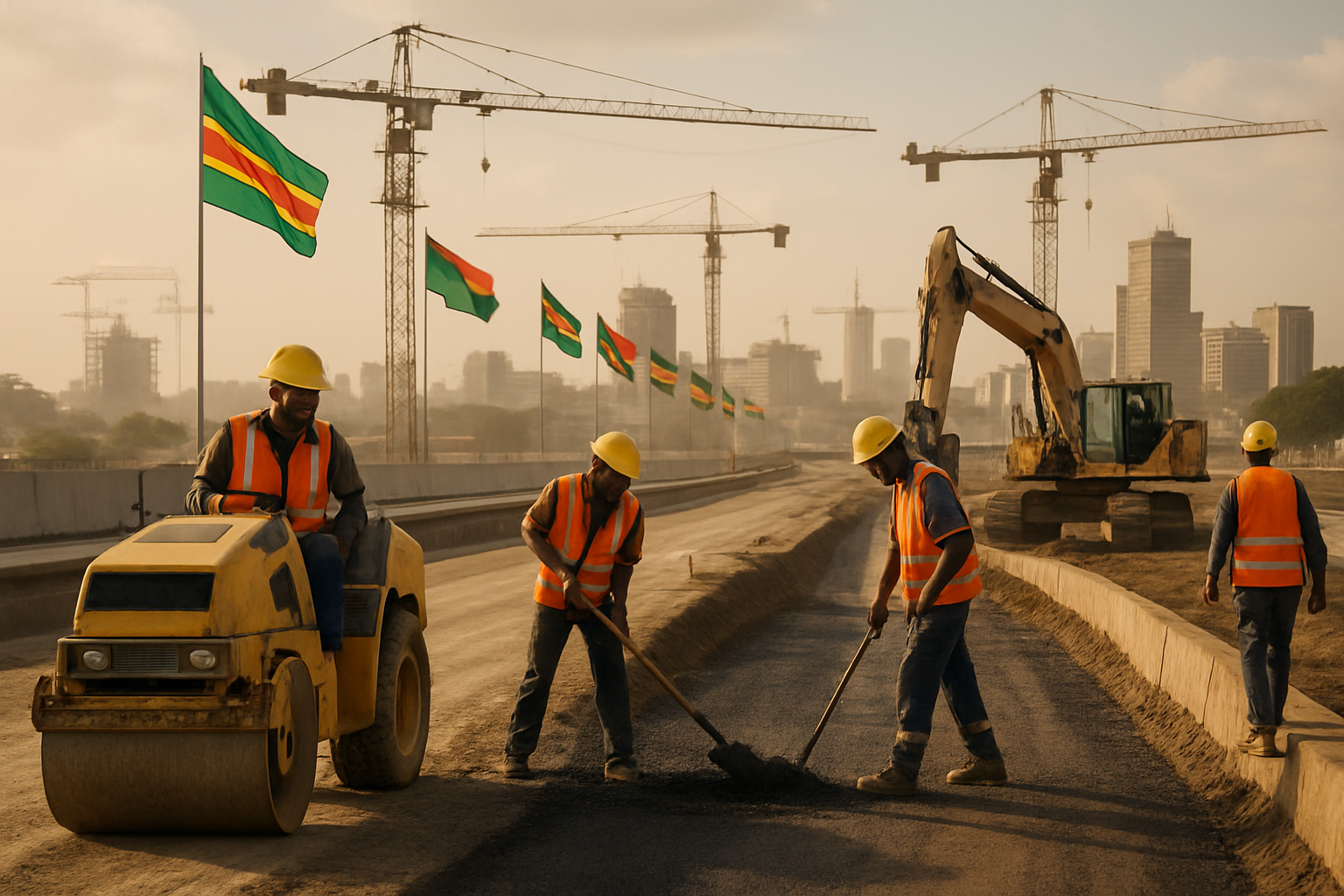
A new wave of infrastructure development is sweeping across Africa as Dubai-based Maser Group announces a Ksh206 billion ($1.4 billion) investment initiative spanning multiple African nations, while Gabon launches an ambitious 306-kilometer strategic highway project connecting four provinces.
The developments represent the latest phase in what experts are calling Africa's infrastructure renaissance, building on a series of major projects that have transformed the continental development landscape throughout 2026.
Dubai Investment Powers Regional Transformation
Kenya stands among several African countries positioned to benefit from Maser Group's substantial private-public partnership investment, which focuses on agricultural development and data center infrastructure. The government has been actively exploring plans to lease sections of Kenya's key food-producing regions, including the strategically important Galana Kulalu irrigation scheme, as part of broader efforts to enhance food security across the region.
This Dubai-led investment aligns with Kenya's recent infrastructure achievements, including the early completion of the Ngong Road-Naivasha Road flyover project, which finished one year ahead of schedule under President William Ruto's administration. The success demonstrates improved project management capabilities that are attracting increased international confidence in African infrastructure development.
Gabon's Strategic Connectivity Project
Simultaneously, Gabon has officially launched its ambitious Alembé–Lopé–Mikouyi highway project, a strategic 306-kilometer axis designed to connect four provinces through improved road infrastructure. The bitumage (road surfacing) project represents a critical investment in regional connectivity, facilitating better access to markets, resources, and economic opportunities across provincial boundaries.
The Gabonese government's commitment to this infrastructure initiative reflects broader continental priorities for improved intra-African connectivity, supporting implementation of the African Continental Free Trade Area (AfCFTA) objectives.
Continental Infrastructure Momentum
These developments occur within a broader context of accelerating African infrastructure investment. Recent completed and ongoing projects include:
- Angola's revival of the historic Lobito Corridor railway, connecting Atlantic ports to mineral-rich interior regions and the DRC copper belt
- Algeria's Gara Djebilet mining railway project, providing access to the world's third-largest iron ore reserves
- Tanzania's completion of feasibility studies for the 1,000-kilometer Mtwara-Mbamba Bay Standard Gauge Railway
- Burkina Faso's record-breaking gold production generating over $6 billion in revenue to fund development initiatives
- Ethiopia's strategic shift toward climate-resilient water infrastructure and watershed management
Investment Models and International Partnerships
The current wave of infrastructure development demonstrates sophisticated financing approaches combining national commitment, international partnerships, and private sector engagement. The Dubai investment model represents a Gulf-Africa partnership trend that complements traditional development financing sources.
Recent infrastructure investments have shown remarkable diversity in funding mechanisms. Vietnam leads globally with a $120 billion commitment to build 9,000 kilometers of expressways by 2050, while African nations are pioneering approaches that maintain resource sovereignty while engaging productive international partnerships.
"These infrastructure developments demonstrate Africa's growing capability to attract and manage large-scale international investments while maintaining strategic control over development priorities."
— Regional Development Expert
Technology Integration and Climate Adaptation
Modern African infrastructure projects increasingly incorporate advanced technologies, renewable energy systems, and climate adaptation measures. The integration of smart infrastructure systems enables better project management, operational efficiency, and long-term sustainability.
Environmental considerations have become central to project planning, with initiatives addressing watershed management, renewable energy integration, and climate resilience. This approach positions African infrastructure development at the forefront of global sustainable development practices.
Economic Multiplier Effects
Infrastructure development creates significant economic multiplier effects beyond direct construction benefits. Improved connectivity facilitates trade, supports agricultural modernization, enables mining sector development, and strengthens regional integration initiatives.
The timing of these investments is particularly strategic, occurring amid unprecedented global infrastructure development that includes major projects across Vietnam, Nicaragua, Ghana, Indonesia, and Tanzania. This coordinated international approach reflects recognition of infrastructure as essential for post-pandemic economic recovery and climate adaptation.
Regional Integration and AfCFTA Implementation
African infrastructure development directly supports continental integration objectives through the AfCFTA, which requires improved connectivity for effective implementation. Cross-border projects, regional value chains, and shared infrastructure initiatives enable the economic integration envisioned by continental trade agreements.
The Gabon highway project, connecting multiple provinces, exemplifies the connectivity improvements necessary for effective regional trade. Similarly, the Dubai agricultural investments support food security objectives that strengthen continental economic resilience.
Challenges and Future Outlook
Despite remarkable progress, African infrastructure development faces ongoing challenges including project coordination, environmental protection requirements, community relations, and sustainable financing mechanisms. However, the sophistication of current projects demonstrates improved capacity for addressing these challenges through comprehensive planning and international cooperation.
The infrastructure renaissance positions Africa for accelerated economic development, improved regional integration, and enhanced climate resilience. Success depends on continued commitment to transparent governance frameworks, environmental sustainability, and community benefit integration.
As 2026 progresses, the momentum generated by initiatives like the Dubai investment and Gabon highway project suggests that African infrastructure development has reached a critical inflection point, with the potential for sustained transformation across the continent.