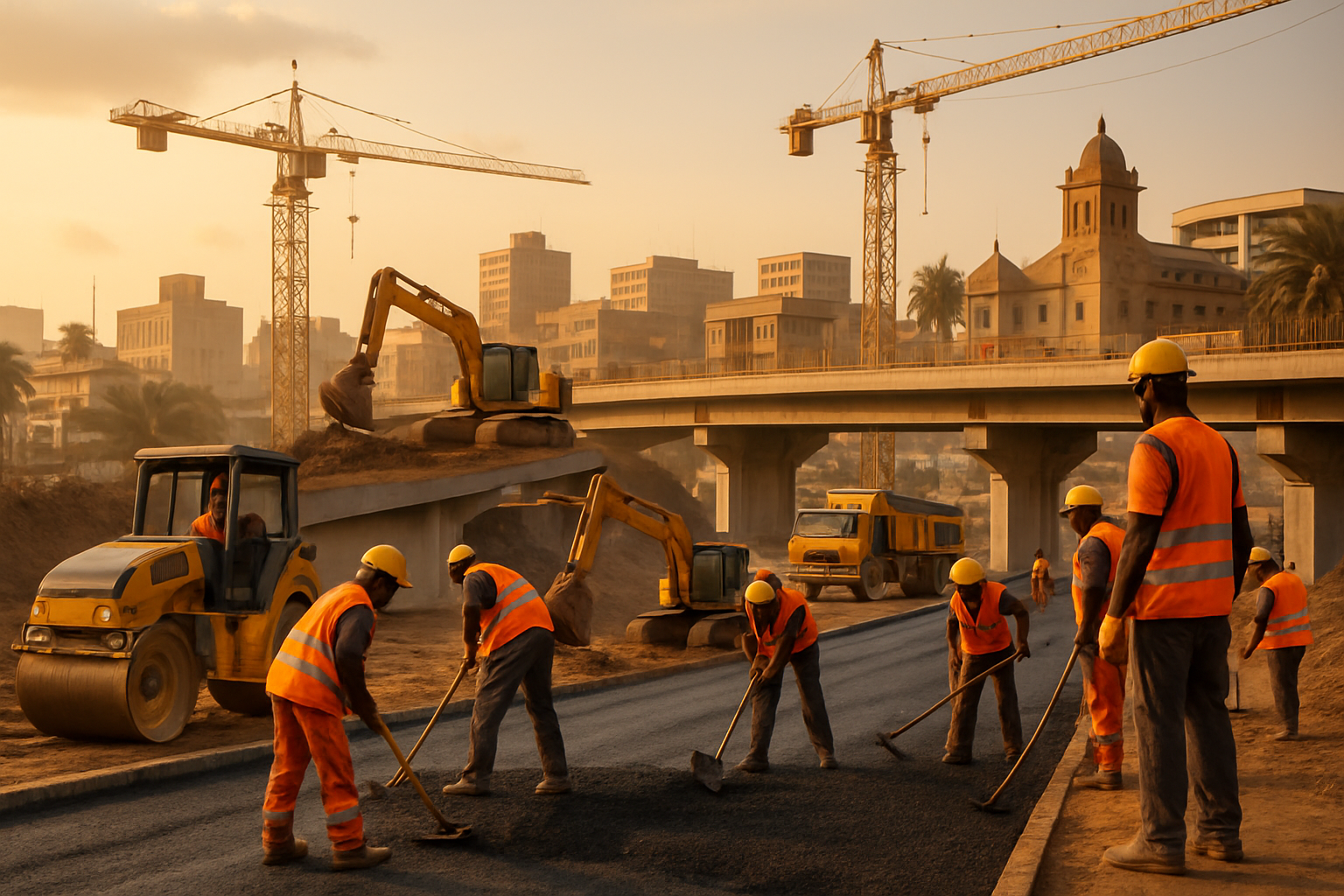
A sweeping infrastructure development surge across eight African nations reveals unprecedented coordination in continental transformation, with projects spanning transportation modernization, digital payment systems, educational facilities, housing development, and petroleum sector reforms worth billions of dollars.
The coordinated initiatives, announced across Burkina Faso, Cameroon, Democratic Republic of Congo, and Niger between March 10-11, 2026, demonstrate Africa's evolution from aid recipient to strategic development partner, leveraging international partnerships while maintaining sovereignty over national priorities.
Housing and Urban Development Leadership
Burkina Faso's Caisse nationale de sécurité sociale (CNSS) launched construction of a major housing complex in Ouagadougou's prestigious Ouaga 2000 district. The 9,000-square-meter development, positioned between the Ouaga 2000 interchange and the Martyrs Monument, represents a modern vision of quality housing combined with commercial and recreational spaces.
Under the patronage of Ousmane Bougouma, President of the Transitional Legislative Assembly, the project aims to provide Burkinabé citizens with high-quality housing that reflects contemporary urban planning principles. The initiative demonstrates how African institutions are taking ownership of urban development challenges.
Digital Financial Innovation Surge
Cameroon emerged as a digital finance hub with multiple breakthrough initiatives. Visa and Afriland First Bank signed a historic "Growth Agreement" in Yaoundé - the first autonomous agreement of its type between Visa and a local Cameroon bank. The partnership positions the country at the forefront of digital payment transformation in Central Africa.
"This collaboration has progressively established itself as a pillar of our commitment to modernizing payment methods in our country,"
— Hervé Dieudonné Ayissi, Deputy General Manager, Afriland First Bank Cameroon
The ceremony at Afriland First Bank's headquarters in Yaoundé brought together institutional leaders, partners, and clients, highlighting the strategic importance of digital financial infrastructure for economic development and regional integration.
Transportation and Port Infrastructure Modernization
Cameroon's transportation sector received major attention with urgent interventions planned for strategic road networks. The Ministry of Public Works, under Emmanuel Nganou Doumessi, announced comprehensive reconstruction of critical routes including the Yaoundé-Douala corridor, Douala-Bafoussam, Edéa-Kribi, and Ngaoundéré-Garoua axes.
With over 92% of freight transportation dependent on road infrastructure, these improvements address critical degradation affecting major commercial routes essential for regional trade and economic integration.
The port sector witnessed significant modernization discussions during the March 9-11 technical committee meetings of the Association for Port Management of West and Central Africa (AGPAOC) at the Yaoundé Congress Palace. Transport Minister Jean Ernest Masséna Ngallè Bibéhè emphasized new paradigms in port management including decarbonization, digitalization, and sustainability of port cities.
"There are exchanges of experience on new paradigms of port management such as decarbonization, digitalization, autonomization and especially the sustainability of port cities,"
— Jean Ernest Masséna Ngallè Bibéhè, Minister of Transport, Cameroon
Educational Infrastructure Investment
Cameroon's educational transformation received a massive boost with a 255 billion CFA francs (approximately $425 million) Presidential Investment Program for university infrastructure in Bertoua, Ebolowa, and Garoua. Minister of State for Higher Education, Professor Jacques Fame Ndongo, presided over the fourth session of the ad hoc committee overseeing implementation.
The program represents one of the largest educational infrastructure investments in Central Africa, focusing on modernizing university facilities and establishing world-class educational environments that can compete globally while serving regional development needs.
Water Infrastructure Challenges and Solutions
Cameroon's water sector faced internal challenges as Camwater Director General Dr. Moussa Blaise addressed issues with 80,000 connection kits sitting unused in warehouses while populations faced water access difficulties. The directive emphasized transparency and efficiency in service delivery, reflecting broader governance improvements across African infrastructure sectors.
Strategic Resource Management and Regional Security
The Democratic Republic of Congo hosted a crucial workshop on "Strategic Minerals and National Security in the Congo Basin" from March 10-12 at the College of Strategic and Defense Studies in Kinshasa. The forum addressed critical issues related to minerals in global dynamics and their implications for conflicts and security in Central Africa.
This initiative aligns with broader continental efforts to assert sovereignty over mineral resources while engaging international partners. Seven African countries - Angola, DRC, Guinea, Kenya, Morocco, Sierra Leone, and Zambia - are participating in the US-EU-Japan Critical Minerals Partnership, challenging China's dominance in critical materials production and refining.
Petroleum Sector Modernization
Niger advanced petroleum sector development with government initiatives to strengthen local content in the oil industry. The Ministry of Petroleum organized meetings with economic actors to enhance domestic participation in oil sector activities, reflecting broader African strategies to maximize resource revenues while building local capacity.
These initiatives occur within the context of Niger's evolving energy landscape and demonstrate how African nations are balancing resource extraction with economic diversification and local content development.
Continental Integration and Strategic Partnerships
The infrastructure developments align with broader continental integration objectives under the African Continental Free Trade Area (AfCFTA) framework. Projects emphasize regional connectivity, cross-border trade facilitation, and coordinated development strategies that benefit multiple countries simultaneously.
The timing of these announcements reflects sophisticated coordination among African nations and their international partners, including China, European Union institutions, and multilateral development banks. This demonstrates Africa's strategic autonomy in managing diverse partnerships while maintaining development control.
Technology Integration and Climate Adaptation
Modern infrastructure projects increasingly incorporate sophisticated technology from the design phase, including real-time monitoring, predictive maintenance, digital payments, and environmental optimization. Climate adaptation has evolved from an optional consideration to a fundamental design requirement, with enhanced drainage, weather-resistant materials, and backup power systems becoming standard.
The global semiconductor shortage, which has driven prices up sixfold, is paradoxically accelerating innovation in efficient, resource-conscious solutions - an area where African developers are showing particular strength.
Economic Multiplier Effects and Investment Attraction
These infrastructure investments create substantial economic multiplier effects beyond construction employment. Reduced logistics costs, enhanced market access, improved productivity, and increased competitiveness support both national development and regional integration objectives.
The projects demonstrate Africa's capacity for sophisticated international investment management while maintaining development priorities aligned with local needs. Success factors include sustained political commitment, transparent governance, comprehensive stakeholder engagement, and adaptive management strategies that can respond to changing conditions.
Implementation Challenges and Success Strategies
Universal challenges include material cost inflation, skilled labor shortages, environmental compliance requirements, and coordination complexity across multiple sectors and stakeholders. However, the coordinated nature of these announcements suggests sophisticated project management capabilities and international cooperation frameworks.
Success depends on maintaining momentum through electoral cycles, ensuring transparent procurement processes, engaging communities effectively, and balancing immediate development needs with long-term sustainability goals.
Strategic Significance for Continental Development
The March 2026 infrastructure surge represents a watershed moment in African development, demonstrating unprecedented coordination in addressing 21st-century connectivity and development challenges. The convergence of technological advancement, environmental awareness, and international cooperation is creating new development models that prioritize sustainability alongside economic growth.
These projects establish precedents for African infrastructure development that could influence continental strategies for decades ahead. They demonstrate the potential for transformative infrastructure development that serves as the foundation for sustainable prosperity in an increasingly interconnected and climate-challenged world.
The success of these initiatives will determine Africa's adaptive capacity for thriving in global economic integration while maintaining cultural identity and environmental stewardship. The choice between reactive crisis management and proactive infrastructure development represents one of the most significant policy decisions of the current decade, with implications extending far beyond national borders.