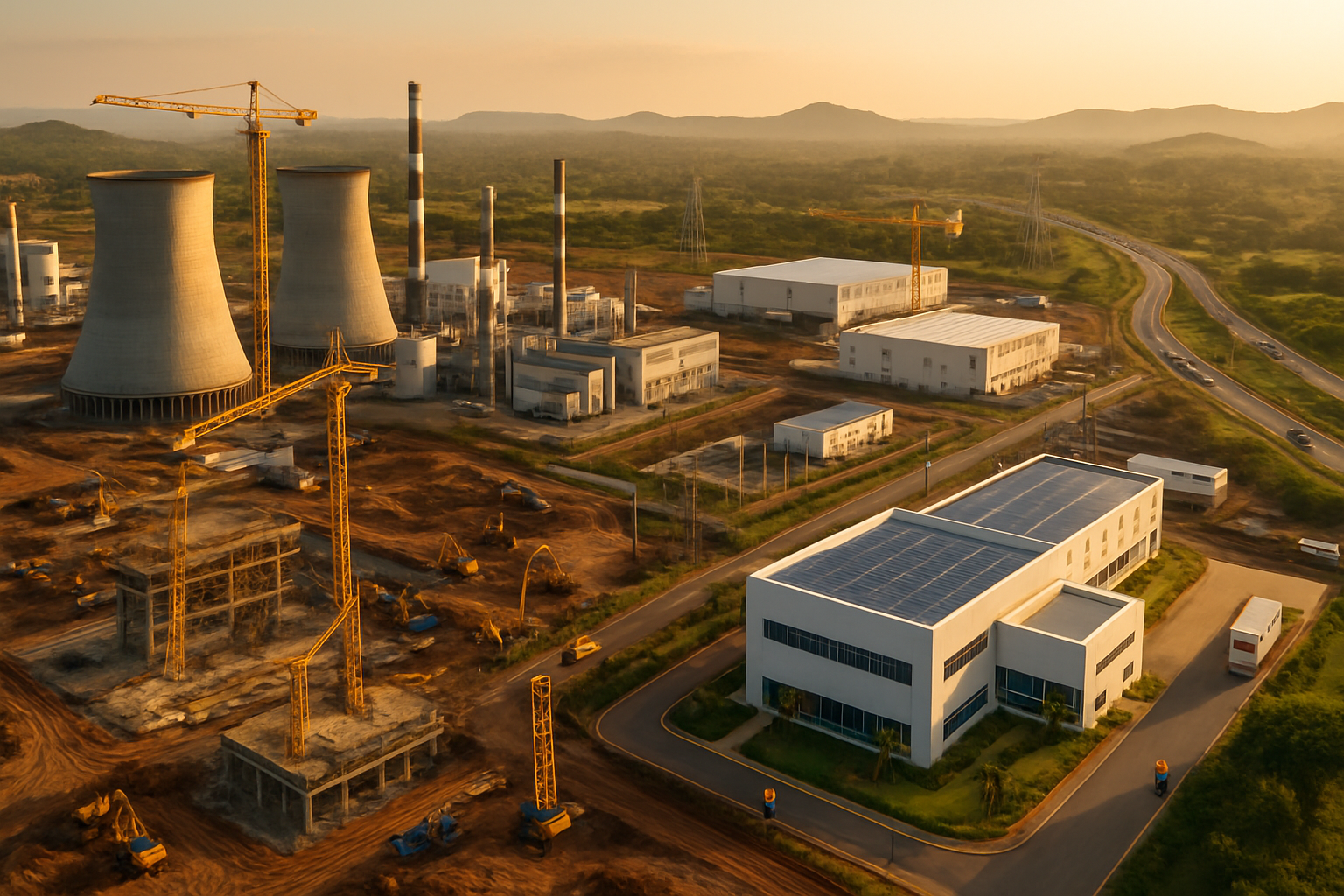
Africa is experiencing an unprecedented infrastructure renaissance as multiple nations simultaneously launch major power plants, industrial complexes, and pharmaceutical facilities, signaling a continental shift from aid dependency to strategic economic development partnerships.
From Algeria's power station expertise extending into Niger to Burkina Faso's pharmaceutical innovation and Malawi's massive transportation infrastructure agreements, February 2026 marks a pivotal moment in African development strategy. These projects, worth billions of dollars collectively, represent a sophisticated approach to economic transformation that leverages international partnerships while maintaining national sovereignty.
Algeria Leads Power Generation Expansion
Algeria's state-owned utility Sonelgaz has dispatched technical experts to Niger's capital Niamey to begin field assessments for constructing power generation stations on behalf of Nigeria's national electricity company Nigelac. The mission, announced February 27, 2026, involves comprehensive site evaluations including infrastructure readiness assessments, electrical grid connection studies, and technical compliance verification.
This trans-national energy cooperation exemplifies how Algeria is leveraging its power sector expertise to become a regional energy hub. The Sonelgaz team will conduct detailed feasibility studies before launching construction phases, positioning Algeria as a key player in West African energy security amid growing regional demand.
The project aligns with broader African energy initiatives, including recent hydropower breakthroughs in Guyana that achieved 600% electricity demand growth projections by 2030, demonstrating the continent's appetite for transformative energy infrastructure.
Burkina Faso's Industrial and Pharmaceutical Leadership
Burkina Faso emerged as a continental leader in both industrial development and pharmaceutical innovation during February 2026. The Société industrielle de l'agroalimentaire pour la transformation des oléagineux (SIATOL) officially inaugurated its 2 billion CFA franc ($3.2 million) industrial complex in Ouagadougou's Kossodo industrial zone on February 27.
Founded in 2010, SIATOL represents a mature approach to agricultural value-addition, moving beyond raw material exports to sophisticated processing capabilities. The complex demonstrates how African nations are building industrial capacity that creates employment while serving both domestic and export markets.
Simultaneously, Burkina Faso advanced its pharmaceutical ambitions through legislative reforms to the Société de gestion du technopôle pharmaceutique intégré de Kokologho (FASO-PHARMA). The government adopted decree modifications strengthening the pharmaceutical technology park's governance structure, part of broader efforts to establish Africa as a global pharmaceutical manufacturing hub.
"These projects represent more than infrastructure—they embody Africa's transition from resource extraction to value-added manufacturing that serves our people while competing globally."
— Regional Development Analyst
The FASO-PHARMA initiative reflects lessons learned from COVID-19 about pharmaceutical dependency, with African nations increasingly investing in domestic production capabilities for essential medicines and medical supplies.
Educational Infrastructure Supporting Renewable Energy
Ghana demonstrated sophisticated human capital development through renewable energy education initiatives. The Kwame Nkrumah University of Science and Technology (KNUST), University of Energy and Natural Resources (UENR), and industry partners launched comprehensive programs addressing two critical challenges: financial barriers for disadvantaged students and the growing skills mismatch between university training and industry needs.
Professor William Oduro, coordinator of the "Empowering Ghana's Engineering Future" project, explained the initiative's dual purpose: "We've noticed in all the universities in this country and Africa that there are very disadvantaged and vulnerable students. We felt we could sell this book so we could take care of brilliant but disadvantaged students that don't have the resources to continue."
The program represents a sophisticated understanding that infrastructure development requires parallel investment in human capital. Proceeds from educational materials fund institutional support systems while ensuring curriculum alignment with rapid technological advancement in renewable energy sectors.
Malawi Secures Historic Infrastructure Agreement
Malawi achieved a diplomatic and economic breakthrough with China's agreement to fund a $43 million (K75.29 billion) dual carriageway connecting Kanengo to Kamuzu International Airport, alongside government digitalization initiatives. The Development Cooperation Agreement, signed February 27, represents one of Malawi's largest single infrastructure investments in recent years.
The dual carriageway project addresses critical transportation bottlenecks affecting Malawi's landlocked economy, while digitalization initiatives position the country for enhanced government service delivery and digital economic participation. The agreement demonstrates China's continued commitment to African infrastructure development despite global economic uncertainties.
This cooperation aligns with China's broader African engagement strategy, including the announcement of zero-tariff access for 53 African countries beginning May 1, 2026—the most comprehensive China-Africa trade expansion in history.
Continental Context and Strategic Significance
These developments occur within a broader African infrastructure renaissance worth hundreds of billions of dollars. The African Finance Corporation reports that Africa holds $29.5 trillion in mineral reserves (20% of the global total) with $8.6 trillion remaining untapped, creating unprecedented opportunities for resource-backed development financing.
Recent continental achievements include Burkina Faso's record 94-ton gold production in 2025 worth over $6 billion, infrastructure projects like Algeria's Gara Djebilet railway accessing the world's third-largest iron ore reserves, and Angola's Lobito Corridor revival connecting Atlantic ports to DRC mineral regions.
The projects demonstrate sophisticated integration of traditional African expertise with cutting-edge technology. Industrial complexes incorporate renewable energy systems, pharmaceutical facilities meet international quality standards, and power stations utilize advanced monitoring technologies while respecting local environmental requirements.
Technology Integration and Innovation
Modern African infrastructure projects increasingly feature sophisticated technology integration from the design phase. Digital monitoring systems, predictive maintenance capabilities, and renewable energy integration represent standard requirements rather than premium additions.
The pharmaceutical and industrial facilities incorporate smart manufacturing systems, while power generation projects feature grid integration technologies and environmental monitoring. This technological sophistication positions African infrastructure as competitive with global standards while addressing continent-specific challenges.
Educational initiatives like Ghana's renewable energy program ensure that technology transfer includes capacity building for local expertise, creating sustainable foundations for continued innovation and maintenance.
Financing Innovation and International Partnerships
The projects demonstrate evolving financing models that balance international cooperation with national ownership. Malawi's Chinese-funded infrastructure maintains government oversight, while Burkina Faso's industrial development leverages private sector expertise within national development strategies.
Algeria's regional power cooperation represents South-South partnerships where African nations provide technical expertise to continental neighbors, reducing dependency on external actors while building regional integration.
These approaches reflect lessons from previous development experiences, emphasizing mutual benefit partnerships over traditional aid relationships while maintaining strategic autonomy in development planning.
Implementation Challenges and Success Factors
Despite ambitious goals, these infrastructure projects face significant implementation challenges. Global supply chain constraints, including sixfold increases in semiconductor prices affecting smart infrastructure systems, create cost pressures and timeline uncertainties.
Climate adaptation requirements add complexity, as infrastructure must withstand increasingly extreme weather while contributing to rather than exacerbating environmental challenges. The ongoing global temperature crisis—January 2026 marked the 18th consecutive month exceeding 1.5°C pre-industrial levels—demands climate-resilient design standards.
Success factors consistently emerging across projects include sustained political commitment, transparent governance frameworks, community engagement, and adaptive management capabilities responding to changing conditions while maintaining strategic objectives.
Regional Integration and Continental Impact
These infrastructure developments directly support African Continental Free Trade Area (AfCFTA) implementation by creating physical foundations for enhanced commerce. Power generation enables industrial development, pharmaceutical facilities reduce import dependencies, and transportation networks facilitate cross-border trade.
The projects create templates for continental scaling—successful models can be adapted across similar contexts while maintaining respect for local conditions and preferences. Knowledge sharing between countries enhances overall continental capacity for sophisticated project management and technology deployment.
Regional integration extends beyond physical infrastructure to institutional cooperation, with countries like Algeria providing technical expertise to neighbors while maintaining commercially viable partnerships.
Looking Forward: Continental Transformation
February 2026 may prove pivotal in establishing infrastructure development patterns that influence African competitiveness and regional cooperation for decades ahead. The convergence of power generation expansion, pharmaceutical manufacturing, industrial development, and educational advancement creates synergistic effects potentially accelerating broader economic transformation.
The success of these initiatives will determine whether Africa can maintain momentum toward strategic development goals while navigating global economic uncertainties, climate challenges, and technological disruptions. Early indicators suggest sophisticated planning and international cooperation positioning African nations as increasingly important global partners rather than aid recipients.
As these projects progress through implementation phases over coming months and years, their success or failure will provide crucial lessons for scaling infrastructure development across the continent. The stakes extend beyond national borders—continental integration and global competitiveness increasingly depend on the infrastructure foundations being established through these ambitious initiatives.