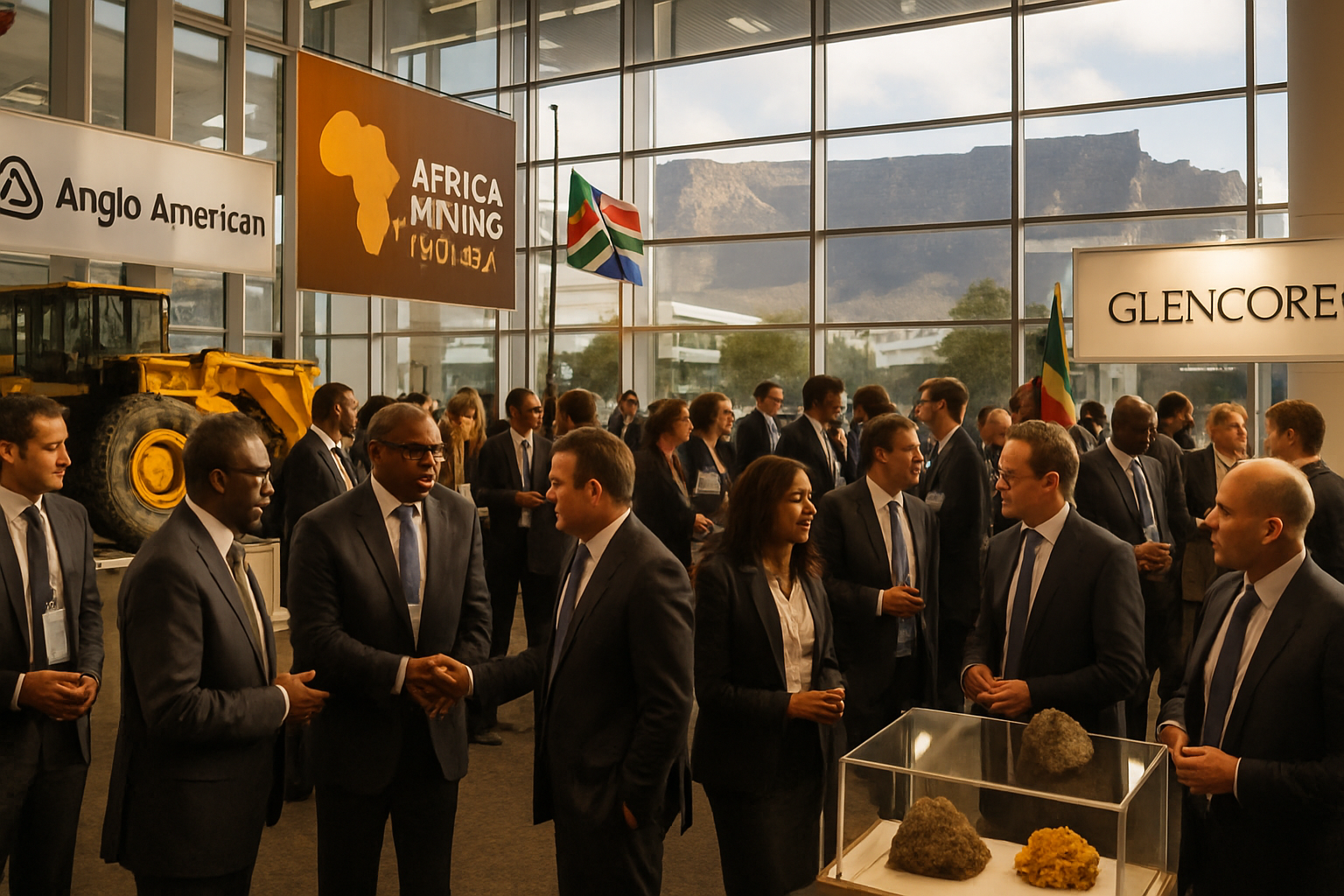
The 2026 Invest in Africa Mining Indaba opened in Cape Town this week under the theme "Stronger Together," as new data from the African Finance Corporation reveals Africa sits on nearly $30 trillion in mineral wealth, with $8.6 trillion remaining undeveloped despite unprecedented global demand for critical materials.
Ghana emerged as a standout participant at this year's conference, reinforcing its reputation as a leading destination for sustainable mining investment and a key voice in African mineral policy. The delegation, led by Minister for Lands and Natural Resources Emmanuel Armah Kofi Buah, presented the country's long-term vision for responsible resource development and regional cooperation.
Massive Untapped Wealth Revealed
According to the African Finance Corporation (AFC) report released yesterday, Africa hosts one of the world's most diversified and strategically significant mineral endowments, with an estimated $29.5 trillion in mine-site value representing approximately 20% of global reserves. However, a staggering $8.6 trillion remains untapped, highlighting the continent's massive development potential.
This revelation comes amid a wave of significant investment approvals across the continent. Zimbabwe has approved $400 million in mining investment proposals in the last quarter of 2025 alone, signaling growing investor confidence in the sector. The approvals demonstrate what authorities describe as surging investor interest following improved governance frameworks and regulatory clarity.
Investment Momentum Accelerates
The Mining Indaba represents a critical moment for African mining, occurring amid unprecedented investment activity across multiple countries. Recent developments include the Ivory Coast's approval of two massive gold mining projects worth 732.7 billion CFA francs ($1.2 billion), positioning the country among West Africa's leading producers within five years.
"Ghana has reinforced its reputation as a leading destination for sustainable mining investment and a key voice in African mineral policy."
— Minister Emmanuel Armah Kofi Buah, Ghana Ministry of Lands and Natural Resources
South Africa's Industrial Development Corporation has committed R325 million ($18 million) to Frontier Rare Earths's Zandkopsdrift project in Northern Cape for rare earth elements extraction, demonstrating the country's strategic response to supply chain vulnerabilities. Meanwhile, Burkina Faso achieved record 94-ton gold production in 2025, worth over $6 billion, under Captain Ibrahim Traoré's resource sovereignty reforms.
Geopolitical Implications
The conference occurs against the backdrop of major geopolitical shifts in the global minerals market. The US-EU-Japan Critical Minerals Strategic Partnership, involving 55 countries, aims to challenge China's dominance in the sector, where China controls 60% of global production and 90% of refining capacity for critical materials.
Seven African countries—Angola, Democratic Republic of Congo, Guinea, Kenya, Morocco, Sierra Leone, and Zambia—are participating as key alternative suppliers in this partnership. This represents a fundamental shift from market-driven to security-based supply chain coordination, with critical materials increasingly treated as national security infrastructure.
Infrastructure Development Drives Growth
Major infrastructure projects are supporting the mining boom across the continent. Algeria has launched the western mining railway connecting Gara Djebilet-Tindouf-Bechar, providing access to the world's third-largest iron ore reserves (approximately 3.5 billion tons). This project is part of Algeria's economic diversification strategy to reduce dependence on hydrocarbon exports.
Angola is reviving the Lobito Corridor railway, originally built in the early 1900s but now rebuilt to access DRC copper belt and reduce dependence on raw material exports. Tanzania has completed feasibility studies for the 1,000-kilometer Mtwara-Mbamba Bay Standard Gauge Railway project, including branches to iron ore and coal deposits.
ESG Transformation and Governance
Modern mining projects increasingly emphasize environmental, social, and governance (ESG) compliance, with international investors requiring adherence to higher standards. This shift is evident in recent regulatory enforcement actions, including Congo's suspension of Congo Dongfang Mining operations in Lubumbashi following environmental violations.
The transformation reflects African governments' evolving approach, balancing economic development with environmental protection while asserting resource sovereignty. Countries are demanding higher standards from operators while maintaining investment attractiveness through improved regulatory frameworks.
Technology and Innovation
The mining industry is experiencing rapid technological advancement, with projects incorporating renewable energy systems, advanced waste management, smart systems, and digital monitoring. Japan's recent breakthrough in deep-sea rare earth mining at Minamitorishima, extracting materials from 6,000 meters depth with concentrations 20 times higher than terrestrial mines, demonstrates the technological possibilities reshaping the sector.
These innovations address infrastructure limitations while improving operational efficiency and environmental compliance. The integration of technology with traditional mining operations creates opportunities for African nations to leapfrog older industrial models.
Regional Integration and AfCFTA
The African Continental Free Trade Area (AfCFTA) implementation is enabling cross-border mining ventures, regional value chains, and shared infrastructure development. The Mining Indaba serves as a platform for advancing these continental integration objectives while showcasing Africa's sophisticated approach to sustainable development.
Regional integration creates economic multiplier effects through improved trade connectivity, agricultural modernization, and mining sector support. Projects like the Angola Lobito Corridor and Algeria's Gara Djebilet railway demonstrate how infrastructure development supports both national economic diversification and continental integration.
Future Challenges and Opportunities
Despite the positive momentum, significant challenges remain. These include environmental protection requirements, community relations, infrastructure limitations, regulatory complexity, commodity price volatility, and currency fluctuations. The recent tragic mine collapse at Rubaya coltan mine in North Kivu, DRC, which killed approximately 300 people, underscores the ongoing safety and governance challenges in the sector.
However, the opportunities are substantial. Energy transition demand, supply chain diversification needs, improved governance frameworks, and technological advances are making previously uneconomical deposits viable. The Mining Indaba demonstrates Africa's capacity for large-scale international investment management while maintaining development priority control.
As the conference continues through February 12, participants are working to transform the continent's vast mineral wealth into sustainable economic development that benefits local populations while engaging global markets productively. The theme "Stronger Together" reflects the collaborative approach needed to unlock Africa's mining potential while maintaining the highest environmental and social standards.