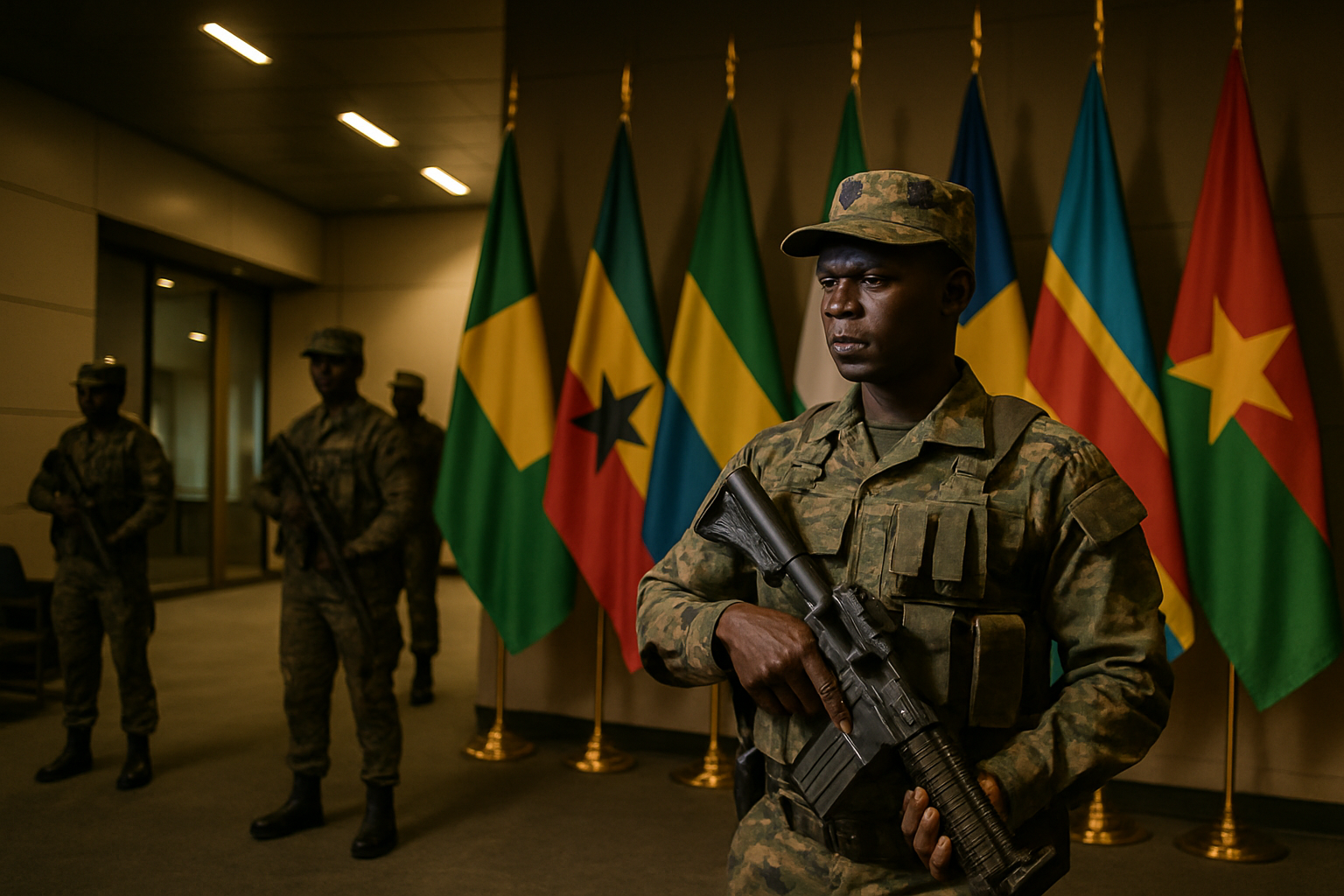
A wave of terrorist attacks, diplomatic tensions, and cross-border violence is testing Africa's regional security architecture as multiple conflicts simultaneously challenge stability from the Sahel to Central Africa, highlighting the fragility of continental cooperation efforts.
The most dramatic escalation occurred at Niger's Diori Hamani International Airport in Niamey, where armed assailants launched a coordinated attack that killed multiple soldiers and civilians. Saudi Arabia's strong condemnation of the assault underscored the international concern over escalating terrorism in the region, with the Kingdom reaffirming its "firm stance against all forms of violence and extremism."
According to Niger's military authorities, 20 attackers were neutralized during the fierce fighting at the airport, which also houses an air force base located approximately 10 kilometers from the presidential palace. Four soldiers were wounded in the assault, demonstrating the continued vulnerability of critical infrastructure across the Sahel region.
Sahel Violence Intensifies
The airport attack represents part of a broader pattern of escalating violence across the Sahel. In western Mali, at least 15 fuel truck drivers were killed in a jihadist attack on a tanker convoy, marking a sharp escalation in tactics as it was reportedly the first incident where drivers were systematically executed.
The assault disrupted the main supply route linking western Mali to Senegal's port of Dakar, highlighting how terrorist groups are increasingly targeting economic lifelines. The attack followed earlier tanker burnings and border clashes that had already strained fuel supplies and threatened national stability in Mali.
Russia's foreign intelligence service has accused France of seeking to destabilize governments across the Sahel, adding a geopolitical dimension to the security crisis. These allegations come as the region faces what analysts describe as a "fresh wave of violence" targeting both military installations and civilian infrastructure.
Diplomatic Tensions with Regional Bodies
The security crisis is complicated by ongoing tensions between military governments and regional organizations. The Economic Community of West African States (ECOWAS) has reached what sources describe as a "modus vivendi" with military leaders who took power in Guinea-Bissau in November 2025.
This diplomatic accommodation represents a pragmatic shift by ECOWAS, which has struggled to respond effectively to the wave of military coups that have swept through the region. The arrangement has been welcomed by regional actors as it potentially provides a framework for managing tensions between continental bodies and military governments.
However, broader challenges persist with the Alliance of Sahel States (AES), comprising Niger, Mali, and Burkina Faso, which have distanced themselves from traditional regional cooperation mechanisms following their military transitions.
"The region faces unprecedented security challenges that require coordinated responses from both military and civilian authorities."
— Regional Security Analyst
Central African Instability
Beyond the Sahel, the Democratic Republic of Congo continues to face severe security challenges. Recent deadly violence in Rubaya has highlighted the ongoing instability in mineral-rich eastern provinces, where various armed groups continue to operate despite international peacekeeping efforts.
The DRC's vast territory of over 2 million square kilometers presents enormous challenges for maintaining security and governance. The country's strategic importance, given its mineral wealth and position in Central Africa, means that instability there has implications far beyond its borders.
The situation in eastern DRC particularly affects regional mining operations and trade routes, with implications for global supply chains of critical minerals used in technology and renewable energy sectors.
International Responses and Regional Cooperation
The mounting security challenges have prompted various international responses. The United States has faced criticism for its diplomatic overtures to military governments in the Sahel, with some experts arguing that Washington's approach sends "the wrong message about U.S. tolerance of bad behavior in the region."
Saudi Arabia's condemnation of the Niger airport attack reflects broader international concern about terrorism's spread across Africa. The Kingdom's statement emphasized the need to protect civilians and maintain stability in affected regions.
Afghanistan's own experience with regional security concerns has been highlighted in recent discussions, with neighboring countries expressing ongoing worries about stability and cross-border security implications.
Economic and Humanitarian Impact
The security crisis is having severe economic consequences across affected regions. The disruption of trade routes, particularly the Mali-Senegal fuel supply line, demonstrates how terrorism directly impacts economic stability and civilian welfare.
Mining operations, crucial for many African economies, face increasing threats from armed groups. The situation in the DRC's mining regions exemplifies how security challenges can disrupt critical resource extraction that supports both local communities and global supply chains.
Humanitarian organizations report increasing difficulties in delivering aid to affected populations, as security concerns limit access to vulnerable communities across multiple countries.
Looking Forward: Challenges to Regional Stability
The convergence of multiple security crises across Africa presents unprecedented challenges for regional cooperation mechanisms. ECOWAS and other continental bodies are struggling to adapt to new realities where military governments control significant portions of their membership.
The Alliance of Sahel States represents an alternative approach to regional cooperation, but its effectiveness in addressing security challenges remains to be proven. The group's relationship with established continental organizations like the African Union continues to evolve.
International partners face difficult choices in how to engage with military governments while supporting legitimate governance and security objectives. The debate over whether engagement or isolation is more effective continues to divide policymakers and analysts.
As violence continues to spread across multiple theaters, from terrorist attacks in Niger and Mali to ongoing conflicts in the DRC, Africa's regional security architecture faces its most severe test in decades. The outcome will likely determine the trajectory of continental cooperation and stability for years to come.