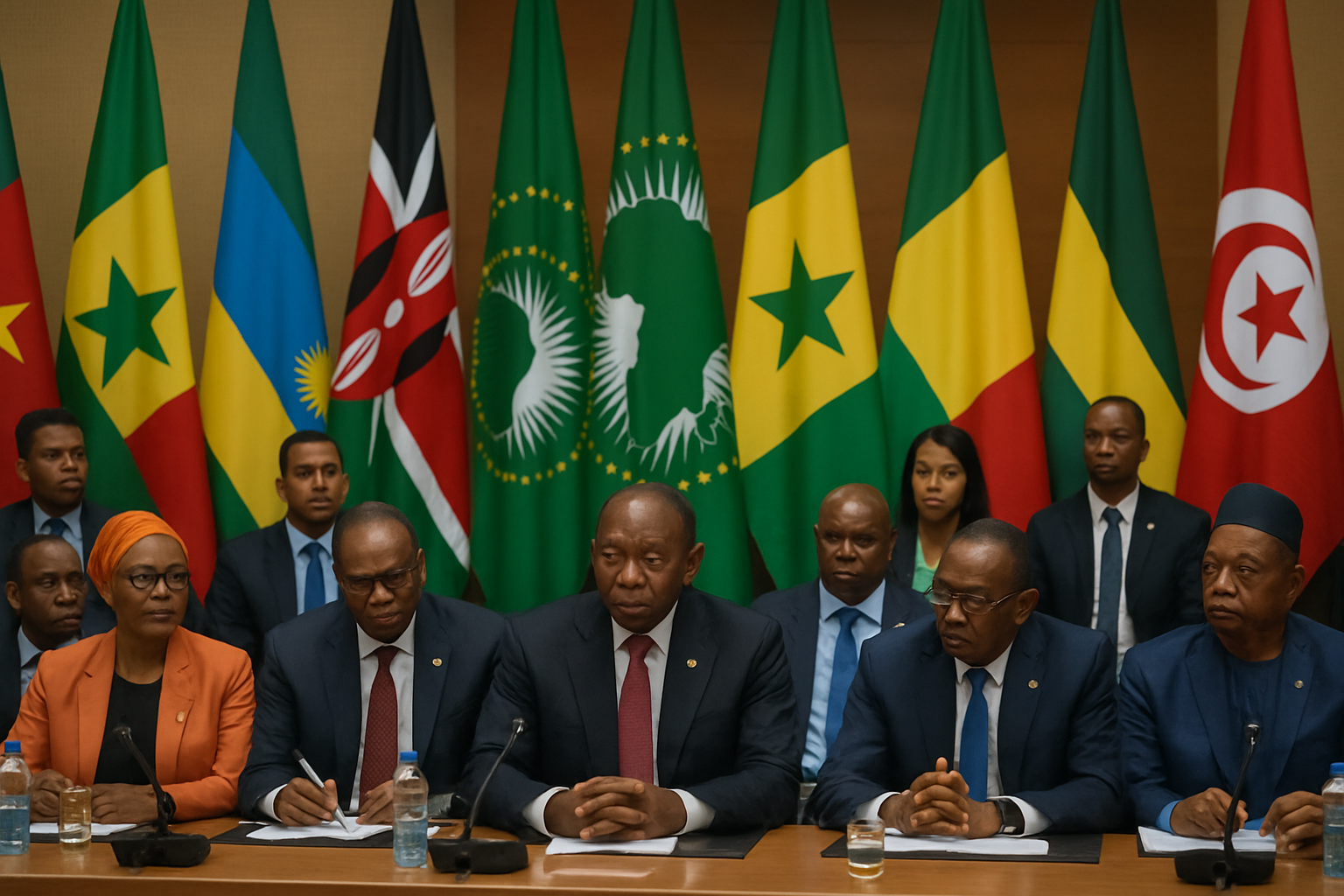
African nations are demonstrating unprecedented political maturity and institutional development as several key countries advance major governance reforms, constitutional changes, and strategic appointments that collectively signal a new phase of continental democratic evolution and regional integration.
Burkina Faso Advances Revolutionary Agenda
President Captain Ibrahim Traoré marked a pivotal moment in Burkina Faso's political transformation on April 1, 2026, delivering a defining address on the first anniversary of the "progressive and popular revolution." The speech, characterized by calls for order, discipline, and patriotic engagement, announced the forthcoming publication of a "Manifeste de la Révolution" that will outline the fundamental principles of the nation's sovereignty-focused administration.
This manifesto represents more than symbolic politics – it codifies the philosophical framework that has enabled Burkina Faso to achieve record-breaking economic performance, including 94-ton gold production worth over $6 billion in 2025. Traoré's emphasis on discipline and national engagement reflects lessons from previous African liberation movements, particularly the legacy of Thomas Sankara, while adapting these principles to contemporary governance challenges.
Simultaneously, the government achieved a historic milestone in traditional governance recognition. The Superior Council of Customary and Traditional Leadership celebrated the adoption of an official legal framework consecrating the status of customary chieftaincy, marking what observers describe as a "historic turning point" in institutional recognition of traditional authority within modern governance structures.
Chad Implements Major Government Restructuring
Chad's political landscape witnessed significant transformation with the announcement of a comprehensive new government structure on April 1, 2026. Prime Minister Allah-Maye Halina heads an administration that balances territorial administration, economic planning, and social development priorities through strategic ministerial appointments.
The government structure reflects sophisticated understanding of contemporary African governance challenges, with key positions including Vice-Prime Minister Limane Mahamat overseeing Administration of Territory and Decentralization, and Minister of State Dr. Abdoulaye Sabre Fadoul managing Foreign Affairs, African Integration, and Chadians Abroad. This configuration demonstrates explicit commitment to both domestic governance effectiveness and regional continental integration.
The appointment of Minister of State Tahir Hamid Nguilin to oversee Finance, Budget, Economy, Planning and International Cooperation signals strategic coordination of economic development with international partnerships – a crucial balance as Chad participates in broader African economic transformation initiatives while maintaining fiscal sovereignty.
Gabon Introduces Government Performance Evaluation
In an innovative approach to democratic accountability, Gabon announced plans for a comprehensive pre-evaluation of ministers marking the first 100 days of government operations. This initiative represents a significant evolution in African governance practices, moving beyond traditional appointment processes to establish systematic performance review mechanisms.
The evaluation framework addresses longstanding concerns about ministerial accountability while strengthening public confidence in government effectiveness. This approach reflects broader continental trends toward enhanced transparency and performance-based governance that have gained momentum across African political systems in recent years.
The timing of this initiative coincides with Gabon's active participation in continental energy development projects, including the recent hosting of the 10th Africa Energy Market Place and the "Mission 300" initiative targeting electricity connections for 300 million Africans by 2030.
Liberia Faces Electoral Commission Controversy
Liberia's democratic institutions confronted significant challenges as President Joseph Nyuma Boakai's nomination of Jonathan K. Weedor as National Elections Commission Chairman faced intense scrutiny from opposition groups and civil society organizations. Critics accused the nominee of partisan alignment with the ruling Unity Party, raising concerns about electoral independence ahead of future democratic processes.
The controversy reflects broader West African challenges regarding electoral integrity and institutional independence that have affected democratic consolidation across the region. The Senate confirmation process will serve as a crucial test of Liberia's commitment to transparent governance and institutional reform priorities established during Boakai's administration.
This electoral commission appointment occurs within the context of Liberia's broader democratic development efforts, including recent anti-corruption legislation and ongoing constitutional reform discussions that demonstrate the complex balance between institutional modernization and immediate social needs.
Namibia Strengthens Regional Diplomatic Relations
President Netumbo Nandi-Ndaitwah demonstrated sophisticated diplomatic leadership through her tribute to former Algerian President Liamine Zeroual, praising his role in building strong bilateral relations between Namibia and Algeria. This diplomatic engagement reflects Namibia's strategic approach to continental cooperation and South-South partnerships that have become central to African international relations.
The tribute highlights the evolution of African diplomacy from post-colonial adjustment to proactive continental leadership, with countries like Namibia positioning themselves as bridges between different African regions and international partnership frameworks.
Namibia's diplomatic initiatives occur alongside domestic governance improvements, including recent civil service salary increases and political financing reforms that demonstrate the country's balanced approach to internal development and external engagement.
Continental Context: Infrastructure and Economic Integration
These political developments unfold within Africa's unprecedented infrastructure renaissance, representing over $570 billion in coordinated development projects that provide the economic foundation for enhanced governance capacity. Key initiatives include Algeria's Gara Djebilet railway accessing the world's third-largest iron ore reserves, Angola's Lobito Corridor revival connecting Atlantic ports to DRC mineral resources, and Tanzania's Mtwara-Mbamba Bay railway feasibility completion.
The African Continental Free Trade Agreement (AfCFTA) implementation creates economic frameworks that require sophisticated political coordination across national boundaries, driving demand for enhanced governance structures and transparent regulatory frameworks. This economic integration momentum supports the political reforms observed across multiple countries simultaneously.
China's announcement of zero-tariff access for 53 African countries beginning May 1, 2026, alongside the US-EU-Japan Critical Minerals Partnership involving seven African nations, demonstrates the continent's strategic autonomy in managing multiple international relationships while maintaining sovereign decision-making authority.
Regional Security and Cooperation Frameworks
The political developments occur amid evolving regional security cooperation, with traditional frameworks like ECOWAS adapting to new realities including the Alliance of Sahel States (Niger, Mali, Burkina Faso) pursuing alternative cooperation models. This dynamic environment requires sophisticated diplomatic management and flexible governance structures capable of addressing 21st-century transnational challenges.
The African Union's reconstituted Peace and Security Council, including Somalia, DRC, and Morocco among new members, faces immediate testing with multiple simultaneous security challenges requiring coordinated continental responses. Success depends on the political maturity and institutional capacity demonstrated by individual member states.
Enhanced cooperation extends beyond security to encompass climate adaptation strategies, as evidenced by the 39th AU Summit's focus on water security amid 20+ consecutive months of global temperatures exceeding 1.5°C above pre-industrial levels.
Democratic Resilience and International Cooperation
The diversity of governance approaches across these five countries demonstrates African political systems' adaptability and resilience under multiple pressures. From Burkina Faso's revolutionary consolidation to Chad's administrative restructuring, Gabon's performance evaluation innovation, Liberia's electoral integrity challenges, and Namibia's diplomatic leadership, the continent showcases various pathways toward effective governance.
These developments occur during a critical period when international observers are reassessing African political trajectories. Rather than uniform democratic backsliding, the evidence suggests selective institutional strengthening in countries that successfully balance traditional governance wisdom with modern administrative capacity.
The continental approach to governance evolution emphasizes African agency in determining appropriate institutional frameworks while maintaining beneficial international cooperation. This balance between sovereignty and engagement positions Africa as an increasingly sophisticated participant in global governance discussions.
Future Implications and Strategic Significance
April 2026 represents a potential inflection point in African political development, with successful reform implementations providing templates for broader continental application. The coordination of political reforms with economic development initiatives demonstrates mature understanding that governance effectiveness requires both institutional innovation and economic foundation.
The success of current initiatives will influence regional integration patterns, establish precedents for democratic governance during economic transformation, and demonstrate African capacity for 21st-century development leadership through continental cooperation. The diversity of approaches provides complementary models addressing different governance challenges while maintaining democratic accountability and economic development momentum.
As these nations continue implementing their respective governance innovations, their collective experience contributes to evolving African political thought that balances traditional wisdom with contemporary requirements, creating distinctly African solutions to universal governance challenges in an interconnected world.