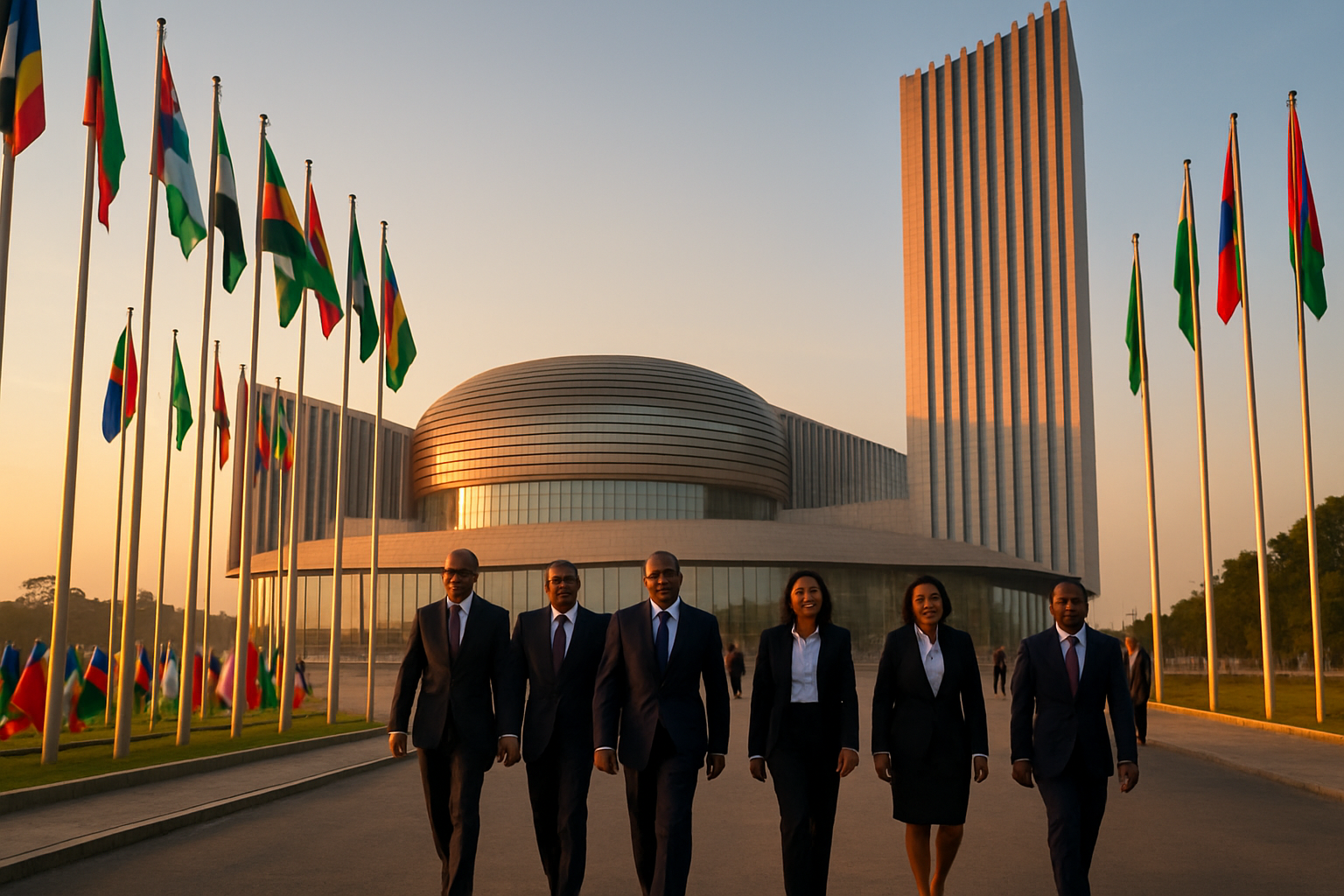
Africa's diplomatic landscape is undergoing a fundamental transformation in 2026, with the continent emerging as a critical mediator in global conflicts while asserting its strategic autonomy through innovative partnerships and economic sovereignty initiatives.
From the Democratic Republic of Congo's historic peace negotiations in Montreux to Uganda's enhanced conflict prevention initiatives, African nations are demonstrating unprecedented diplomatic sophistication that extends far beyond traditional continental boundaries.
Historic DRC-M23 Breakthrough Sets New Standards
The most significant diplomatic breakthrough occurred in Montreux, Switzerland, where the Democratic Republic of Congo government and M23 rebels reached landmark humanitarian agreements following intensive negotiations. MONUSCO welcomed the progress as crucial steps toward peace in eastern DRC, marking the most substantial diplomatic achievement in the region since M23's resurgence in 2021.
Unlike previous territorial-focused initiatives, the Montreux approach emphasizes humanitarian access and civilian protection as the foundation for broader political resolution. The agreements include commitments to facilitate humanitarian aid deliveries within 10 days, prisoner release mechanisms, civilian protection protocols, and ceasefire oversight frameworks.
"The agreements represent the most significant diplomatic breakthrough in eastern DRC conflict since M23 resurgence in 2021, prioritizing humanitarian access over territorial disputes."
— MONUSCO Statement, April 2026
The strategic implications extend beyond regional stability. The DRC's participation in the US-EU-Japan Critical Minerals Partnership challenges Chinese dominance in critical materials while the ongoing negotiations affect global supply chains for electronics and renewable energy sectors, particularly regarding the strategic Rubaya coltan mine that supplies 15-30% of global production.
Uganda's Proactive Conflict Prevention Framework
Uganda's diplomatic initiatives demonstrate Africa's evolution from reactive to proactive international engagement. Minister of State for International Affairs Okello Oryem's meeting with UN Under-Secretary-General Chaloka Beyani focused on strengthening conflict prevention measures, positioning Uganda as a regional stability anchor.
This engagement occurs within the context of Uganda's recent election to the African Union Peace and Security Council, where the country committed to "working actively on conflict prevention" while leveraging its experience in post-conflict reconstruction and regional mediation.
Gabon's Sports Diplomacy and Institutional Transformation
Gabon's approach exemplifies Africa's multifaceted diplomatic strategy. Bruno Ecuele Manga's FIFA-sponsored training to support the national football team's restructuring represents the intersection of sports diplomacy and nation-building, demonstrating how African countries are utilizing diverse soft power tools to enhance their international standing.
This initiative coincides with Gabon's broader institutional transformation following its participation in the African Union Peace and Security Council elections, where the country secured a two-year term and committed to enhanced regional influence through economic diversification beyond petroleum dependency.
Azerbaijan's Regional Integration Initiatives
Azerbaijan Foreign Minister Jeyhun Bayramov's attendance at the UNESCAP session in Bangkok highlights the interconnected nature of contemporary African diplomacy, where continental leaders engage across multiple regional frameworks simultaneously. This approach reflects Africa's strategic positioning within emerging multipolar governance structures.
The participation demonstrates how African diplomatic innovation extends beyond continental boundaries, engaging with Asian economic frameworks while maintaining strategic autonomy and pursuing diversified partnership approaches.
Continental Economic Renaissance
The African Finance Corporation's recent analysis reveals $29.5 trillion in mineral reserves representing 20% of global deposits, with $8.6 trillion remaining untapped. Seven African countries—Angola, DRC, Guinea, Kenya, Morocco, Sierra Leone, and Zambia—are participating in the US-EU-Japan Critical Minerals Partnership, challenging China's 60% production and 90% refining dominance.
Major infrastructure achievements include Algeria's Gara Djebilet railway project (accessing the world's third-largest iron ore deposits), Angola's Lobito Corridor revival connecting the Atlantic coast to DRC mineral regions, and Tanzania's 1,000-kilometer Mtwara-Mbamba Bay railway feasibility completion.
Innovative Diplomatic Frameworks
African diplomatic innovation is evident in the diverse approaches to conflict resolution and international engagement. The Democratic Republic of Congo's environmental enforcement through the suspension of mining operations demonstrates sophisticated regulatory oversight capabilities, while São Tomé's renewable energy innovations complement larger continental infrastructure projects.
The African Continental Free Trade Area (AfCFTA) framework enables enhanced cross-border trade, regional value chains, and coordinated development strategies that strengthen Africa's collective bargaining position in international negotiations.
Strategic Implications for Global Governance
Africa's diplomatic transformation occurs amid significant global realignments. The continent's emergence as a strategic mediator in international conflicts, combined with its critical mineral resources and growing economic integration, positions African nations as essential partners rather than aid recipients in global governance structures.
The success of the February 2026 African Union Peace and Security Council elections, which achieved geographical balance and demonstrated institutional maturation, provides the foundation for Africa's enhanced role in addressing 21st-century security challenges through innovative African-led solutions.
Challenges and Opportunities Ahead
Despite significant achievements, African diplomatic initiatives face persistent challenges including the Alliance of Sahel States dynamics, ongoing security concerns in the DRC's eastern provinces, and the need for sustained international cooperation in addressing climate adaptation and infrastructure development.
However, the continent's balanced approach to international engagement—maintaining sovereignty while leveraging global opportunities—demonstrates a sophisticated understanding of contemporary international relations that could provide templates for other regions navigating multipolar global governance structures.
April 2026 represents a potential inflection point where the combination of strategic resource management, regional cooperation, technological integration, and balanced international partnerships creates a sustainable development model that positions Africa as a strategic global partner capable of sophisticated investment management while maintaining sovereignty and democratic values.
The diplomatic renaissance underway across the continent suggests that Africa's influence in shaping 21st-century international relations will extend far beyond traditional expectations, offering innovative solutions to global challenges while asserting the continent's rightful place as an equal partner in addressing humanity's most pressing challenges.