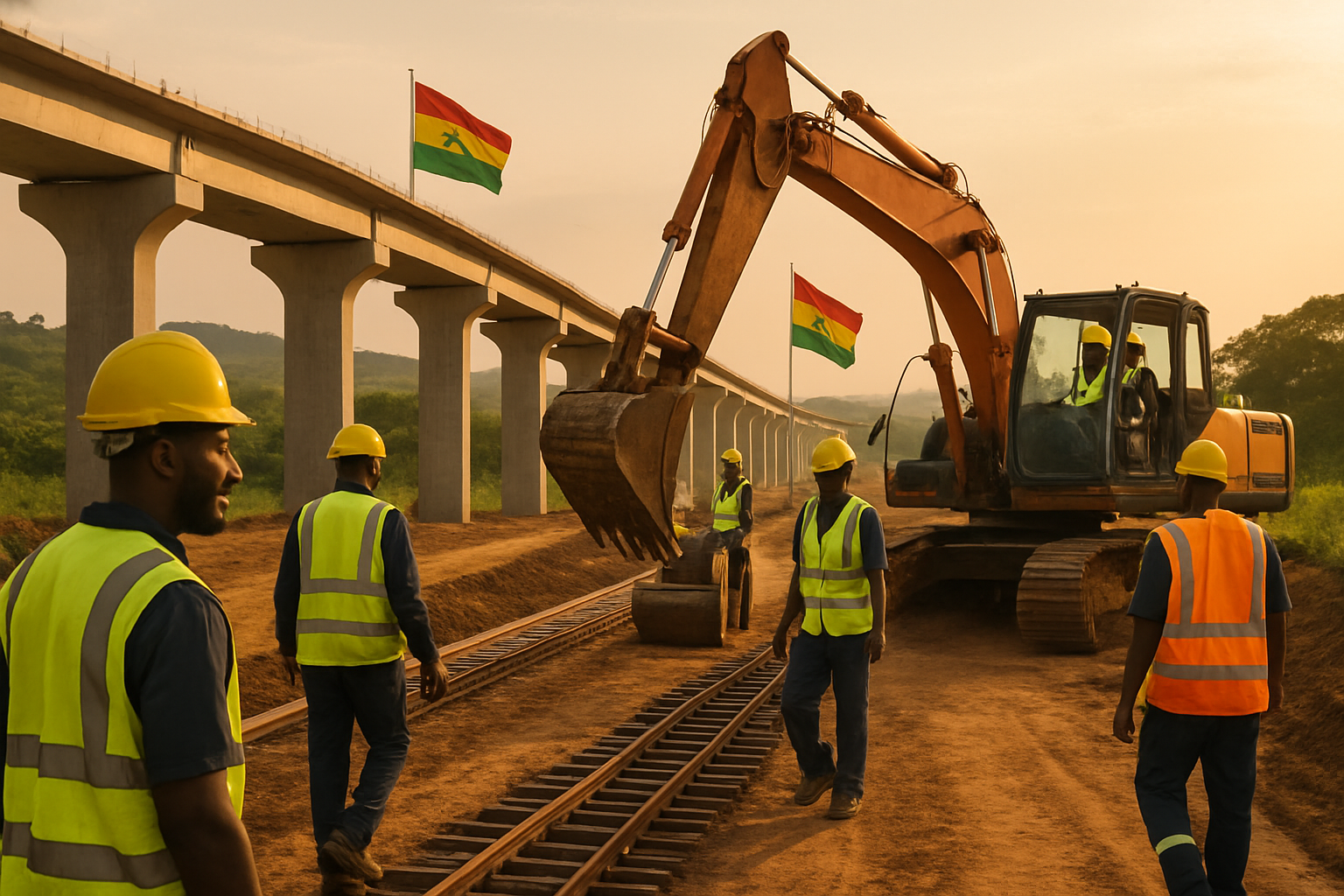
A surge of international investment and strategic partnerships is transforming Africa's economic landscape, with major mining expansions, infrastructure developments, and billion-dollar trade agreements marking 2026 as a pivotal year for continental development.
The latest developments span multiple nations and sectors, from Kazakhstan's ambitious $3 billion trade expansion with Afghanistan to Liberia's massive gold mining operations and Uganda's strategic partnerships, demonstrating Africa's emergence as a key player in global economic networks.
Mining Sector Renaissance
Liberia has become the focal point of a major mining investment boom, with Bea Mountain Mining Corporation announcing expansion plans that will double annual plant capacity from four million to eight million tons of gold production. The CEO's ambitious expansion project promises over 2,000 employment opportunities for Liberians, representing one of the largest industrial developments in the country's recent history.
"This expansion will provide unprecedented employment opportunities for Liberians while positioning the country as a significant player in global gold markets,"
— Bea Mountain Mining Corporation CEO
The mining developments extend beyond employment creation. Recent investigations reveal that US$1.62 billion in gold wealth from Bea Mountain operations has been extracted from Liberia, highlighting the scale of mineral wealth flowing from the continent. This has intensified public discussions about ensuring mining communities benefit from the resources extracted from their territories.
The continental context is equally impressive. According to the African Finance Corporation, Africa holds $29.5 trillion in mineral reserves—representing 20% of the global total—with $8.6 trillion remaining untapped. This positions the continent as crucial to global supply chain diversification efforts, particularly as seven African countries (Angola, DRC, Guinea, Kenya, Morocco, Sierra Leone, and Zambia) participate in the US-EU-Japan Critical Minerals Partnership.
Strategic International Partnerships
Kazakhstan's announcement of targeting $3 billion in annual trade with Afghanistan, up from the current $500 million, exemplifies the expanding South-South cooperation networks affecting African development. The Kazakh ambassador's particular interest in Afghanistan's mining industry and commitment to invest $500 million in railway infrastructure projects demonstrates how regional partnerships are creating new economic corridors.
Meanwhile, the African Export-Import Bank (Afreximbank) reported a remarkable 19% rise in net profit for 2025, with assets reaching $48.5 billion. This growth reflects strong lending across key African sectors and demonstrates the continent's increasing financial capacity to fund its own development projects.
Infrastructure and Economic Diversification
Uganda is pursuing a dual strategy of resource development and economic diversification. President Museveni's announcement of a nationwide fish farming project aims to unlock the economic potential of Uganda's wetlands while boosting household incomes. This initiative represents the sophisticated approach many African nations are taking—leveraging natural resources while building diverse economic foundations.
The Lamu Port-South Sudan-Ethiopia Transport (LAPSSET) Corridor project has attracted major private sector interest, with Nairobi-based Afri Fund Capital announcing plans to raise $6 billion in commercial debt to complete this regional mega-project. The corridor is viewed as key to unlocking the Horn of Africa's economic potential through improved connectivity.
Aviation infrastructure is also receiving attention, with Sudan and Ethiopia working to renew civil aviation relations. The resumption of flights between the two nations, including the reopening of Khartoum International Airport, signals the region's recovery and reconnection with global markets.
Governance and Accountability
Liberia's commitment to transparency and institutional reform gained momentum with significant progress in anti-corruption efforts. The ongoing US$6.2 million national security fund trial demonstrates the government's dedication to accountability and proper resource management. This focus on good governance is crucial for attracting and maintaining international investment confidence.
Technology and Innovation Integration
Modern African development projects are increasingly incorporating digital monitoring, renewable energy systems, and smart logistics from the design phase. Nigeria leads continental fintech innovation with 43% of fuel sales now processed through digital payments, solving liquidity challenges through same-day settlements.
This technological integration enables African nations to leapfrog traditional development constraints, adopting cutting-edge solutions without legacy infrastructure limitations. The approach creates more efficient, sustainable, and resilient development outcomes.
Regional Integration and Trade
The African Continental Free Trade Area (AfCFTA) framework is enabling unprecedented cross-border ventures, regional value chains, and coordinated development strategies. China's announcement of zero-tariff access for 53 African countries starting May 1, 2026—the most comprehensive China-Africa trade expansion in history—creates additional market opportunities while African nations maintain strategic partnerships with Western countries.
This balanced approach demonstrates African strategic autonomy in managing competing international relationships while maintaining control over development priorities.
Climate Adaptation and Sustainability
All major infrastructure projects now incorporate climate adaptation as a fundamental requirement, addressing the reality that January 2026 marked the 18th consecutive month of temperatures exceeding 1.5°C above pre-industrial levels. Projects include enhanced drainage systems, weather-resistant materials, renewable energy integration, and backup power systems designed for future climate conditions rather than historical patterns.
Economic Multiplier Effects
These infrastructure and mining developments create substantial economic impacts beyond their immediate scope. Improved transportation networks reduce logistics costs, enhanced market access improves business productivity, and major projects generate thousands of direct construction jobs plus tens of thousands of indirect opportunities.
The transformation is positioning African nations as strategic global partners capable of sophisticated investment management while maintaining sovereignty over their development priorities.
Future Implications
April 2026 represents a potential inflection point for African development patterns that could influence continental economic trajectories for decades ahead. The successful evolution from aid recipients to strategic development partners demonstrates African capacity for complex international cooperation while retaining control over national priorities.
As one industry analyst noted, these developments position Africa as an essential contributor to global prosperity, supply chain security, and climate adaptation rather than merely a beneficiary of international assistance.
The diversity of approaches—from Libya's energy partnerships to Gabon's wealth management and Uganda's value addition strategies—provides multiple templates for sustainable growth that can be adapted to various national contexts across the continent.