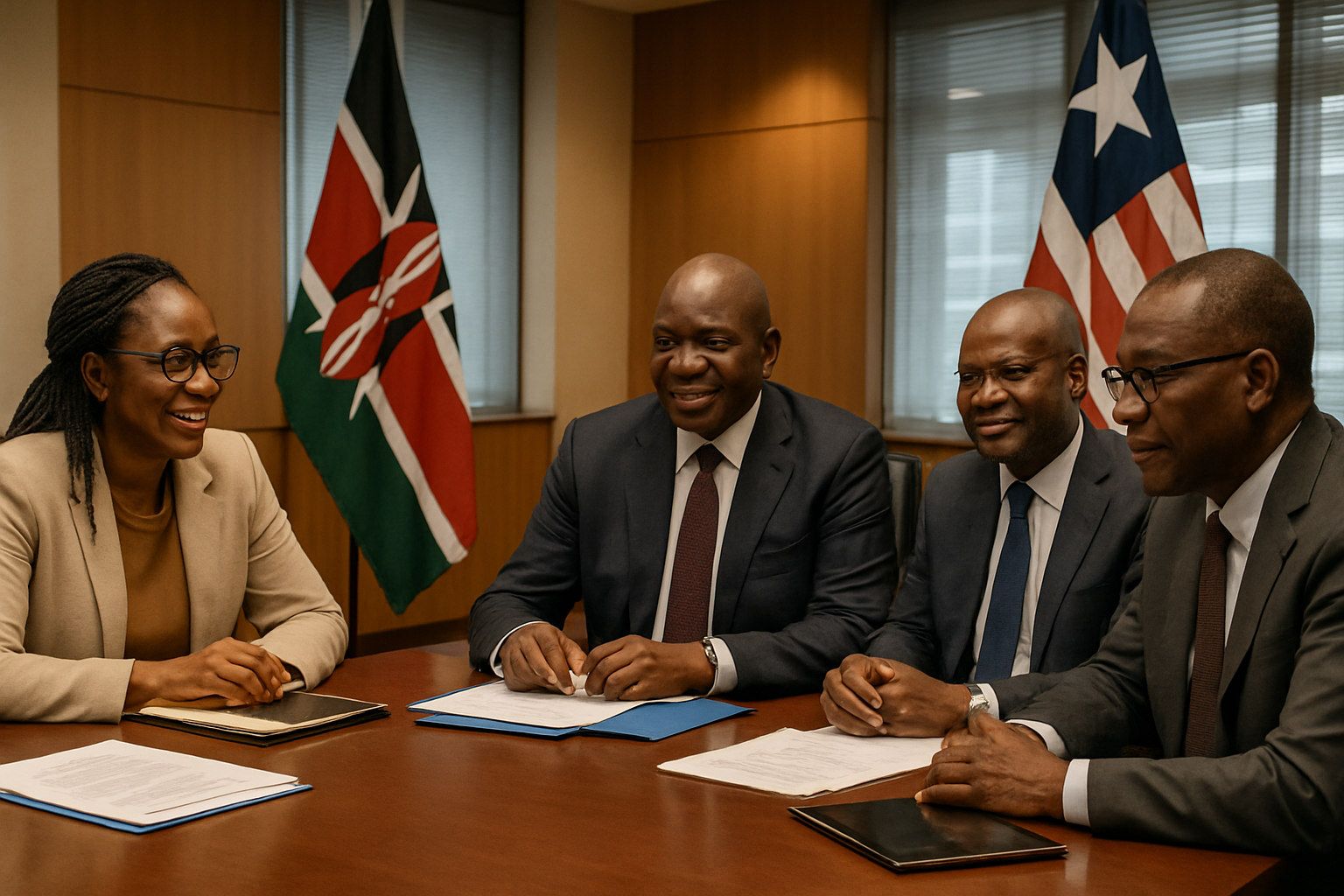
African nations are advancing unprecedented development initiatives spanning education, healthcare, and democratic governance, with Kenya implementing major technical education reforms while addressing electoral integrity concerns, as Liberia prepares to host a significant global health summit in Nairobi.
The convergence of these initiatives reflects a broader continental transformation where African nations are transitioning from aid recipients to strategic global partners capable of sophisticated policy implementation and international cooperation while maintaining sovereignty over development priorities.
Kenya's Technical Education Revolution
Kenya's Ministry of Education has ordered comprehensive standardization of fee structures across all Technical and Vocational Education and Training (TVET) institutions, marking a significant breakthrough in educational accessibility. The announcement provides crucial relief to students who have long complained about exorbitant fees charged by some technical institutions.
This reform represents a fundamental shift toward educational equity in Kenya's technical education sector. The standardized fee structure aims to eliminate the financial barriers that have prevented many students from accessing quality technical training, particularly those from economically disadvantaged backgrounds who depend on TVET programs for practical skills development.
The initiative aligns with Kenya's broader educational transformation, including the ongoing Competency-Based Curriculum (CBC) rollout scheduled for completion by December 2026. The CBC represents a departure from traditional theory-heavy instruction toward hands-on practical learning that prepares students for real-world job experiences, addressing longstanding concerns about graduate employability.
Electoral Integrity Challenges
However, Kenya's development progress faces significant challenges from the return of cash politics in the 2027 election campaign trail. Politicians have begun distributing millions in cash handouts, raising serious concerns about election integrity as experts warn that cash politics undermines democratic accountability and promotes electoral corruption.
Political analysts emphasize that cash-based campaigning creates dangerous precedents for democratic governance, potentially compromising the independence of electoral processes and undermining institutional development. The practice threatens to overshadow substantive policy discussions essential for informed democratic participation.
"Cash politics fundamentally distorts democratic processes by reducing complex governance choices to immediate financial incentives rather than policy evaluation and leadership assessment."
— Electoral Reform Expert
This challenge highlights the complex relationship between economic development and democratic consolidation, where progress in education and infrastructure must be accompanied by strengthened democratic institutions and electoral integrity safeguards.
Liberia's Global Health Leadership
Meanwhile, Liberia is positioned to demonstrate continental health leadership through hosting the World Health Summit Regional Meeting 2026 in Nairobi. This significant gathering represents West Africa's growing role in global health governance and international cooperation frameworks.
The summit theme, "Welcome to Nairobi—let's build together," emphasizes collaborative approaches to health system strengthening that have characterized the ongoing "Therapeutic Revolution of 2026." This global transformation emphasizes prevention-first healthcare strategies showing superior cost-effectiveness versus reactive treatment models.
Liberia's participation builds on impressive continental health achievements, including Sierra Leone's 29% reduction in facility-based maternal deaths and 50% decline in under-five mortality under President Julius Maada Bio's administration. The John F. Kennedy Medical Center's $132.8 million Strategic Plan (2025-2029) for cutting-edge hospital construction further demonstrates regional commitment to healthcare sovereignty and medical innovation.
Continental Development Context
These initiatives occur within Africa's broader infrastructure renaissance, supported by the African Finance Corporation's identification of $29.5 trillion in mineral reserves representing 20% of global totals, with $8.6 trillion remaining untapped. Major projects include Algeria's Gara Djebilet railway serving the world's third-largest iron ore reserves, Angola's Lobito Corridor providing Atlantic-DRC connectivity, and Tanzania's completed 1,000-kilometer railway feasibility studies.
The African Continental Free Trade Area (AfCFTA) framework enables cross-border ventures and regional value chains, transforming individual national projects into continental economic drivers. Seven African countries—Angola, DRC, Guinea, Kenya, Morocco, Sierra Leone, and Zambia—participate in the US-EU-Japan Critical Minerals Partnership, demonstrating strategic autonomy in managing competing international relationships.
Simultaneously, China announced zero-tariff access for 53 African countries starting May 1, 2026—the most comprehensive China-Africa trade expansion in history. This demonstrates African nations' sophisticated approach to international partnerships, maintaining development control while leveraging diverse cooperation opportunities.
Technology Integration and Innovation
Modern African development projects incorporate advanced technologies as standard requirements rather than optional enhancements. These include digital monitoring systems, renewable energy integration, smart logistics management, and real-time analytics enabling technological leapfrogging that avoids legacy infrastructure constraints.
Kenya's education reforms and Liberia's health initiatives exemplify this technological integration approach, combining cutting-edge digital tools with human-centered development priorities. The approach reflects lessons learned from the global semiconductor crisis, which drove memory chip prices sixfold higher, forcing innovation toward efficient and resource-conscious technological solutions.
Technology integration extends beyond infrastructure to governance systems, with Kenya's TVET standardization relying on digital monitoring for compliance verification while maintaining human relationships essential to meaningful education. Similarly, health summits like Liberia's leverage digital coordination while preserving personal medical relationships and community engagement.
Climate Adaptation and Resilience
African development initiatives increasingly incorporate climate adaptation requirements as fundamental design elements rather than afterthoughts. With January 2026 marking the 18th consecutive month of global temperatures exceeding 1.5°C pre-industrial levels, climate resilience has become essential infrastructure for sustainable development.
Projects now include enhanced drainage systems, weather-resistant materials, renewable energy integration, and backup power systems designed for future climate conditions rather than historical patterns. This forward-looking approach positions African infrastructure development as templates for global climate adaptation strategies.
Kenya's educational infrastructure improvements include climate-resilient building standards, while Liberia's health initiatives incorporate environmental health components addressing climate-related disease pattern changes. These integrated approaches demonstrate sophisticated understanding of development challenges requiring comprehensive rather than sectoral responses.
International Cooperation Evolution
The Kenya-Liberia development initiatives reflect broader evolution in international cooperation frameworks. Traditional North-South aid relationships are giving way to South-South knowledge sharing, bilateral partnerships, and peer-to-peer networks that respect African agency while facilitating beneficial international collaboration.
Despite World Health Organization funding challenges from major contributor withdrawals, innovative bilateral partnerships continue driving medical innovation and educational advancement through distributed cooperation models. These approaches allow flexible, culturally responsive strategies while maintaining evidence-based standards.
"African nations are demonstrating that effective development cooperation requires respecting national sovereignty while sharing successful approaches and maintaining international standards."
— Development Policy Analyst
The emergence of African nations as healthcare innovators and educational leaders, rather than passive recipients of international assistance, represents a paradigm shift with implications for global development cooperation decades ahead.
Implementation Challenges and Success Factors
Despite impressive progress, African development initiatives face significant implementation challenges. These include funding sustainability, technical capacity building, climate adaptation integration, and coordinated multi-country execution amid rapidly changing global conditions.
Success factors consistently identified across successful projects include sustained political commitment beyond electoral cycles, comprehensive stakeholder engagement, community ownership of development processes, transparent governance frameworks, and adaptive management responding to changing conditions.
Kenya's TVET reforms succeed through systematic consultation with educational institutions and student representatives, while addressing financing sustainability through standardized fee structures. Liberia's health summit demonstrates authentic international partnership respecting national priorities while contributing to global health governance.
Economic Multiplier Effects
African development initiatives generate substantial economic multiplier effects extending beyond immediate project benefits. Infrastructure investments reduce logistics costs, enhance market access, improve business productivity, and strengthen global competitiveness while creating employment across multiple sectors.
Educational investments like Kenya's TVET standardization create self-reinforcing cycles where improved human capital development supports economic growth, enabling further educational investment. Healthcare improvements reduce international medical referral dependency while building regional expertise and medical tourism potential.
Prevention-first approaches in both education and healthcare demonstrate superior economic outcomes through decreased crisis intervention costs, improved community resilience, and enhanced workforce productivity. These strategies position African nations for sustained economic development while addressing social development priorities.
Future Trajectory and Global Significance
April 2026 represents a potential watershed moment for African development patterns with implications decades ahead. The convergence of educational transformation, healthcare leadership, infrastructure development, and strategic international partnerships positions Africa as an essential contributor to global prosperity, supply chain security, and climate adaptation.
Success depends on maintaining momentum through continued political commitment, adequate resource allocation, international cooperation respecting African autonomy, and adaptive management responding to rapidly changing global conditions. The stakes extend beyond Africa to influence international development cooperation frameworks and educational policies worldwide.
Kenya's education reforms and Liberia's health leadership provide valuable templates for comprehensive development addressing multiple challenges simultaneously. Their success in balancing technological advancement with human development, international cooperation with national sovereignty, demonstrates sophisticated approaches to 21st-century development challenges.
As African nations continue transitioning from aid recipients to strategic global partners, their development initiatives offer crucial insights for building resilient, equitable systems serving human flourishing in an increasingly interconnected and climate-challenged world.