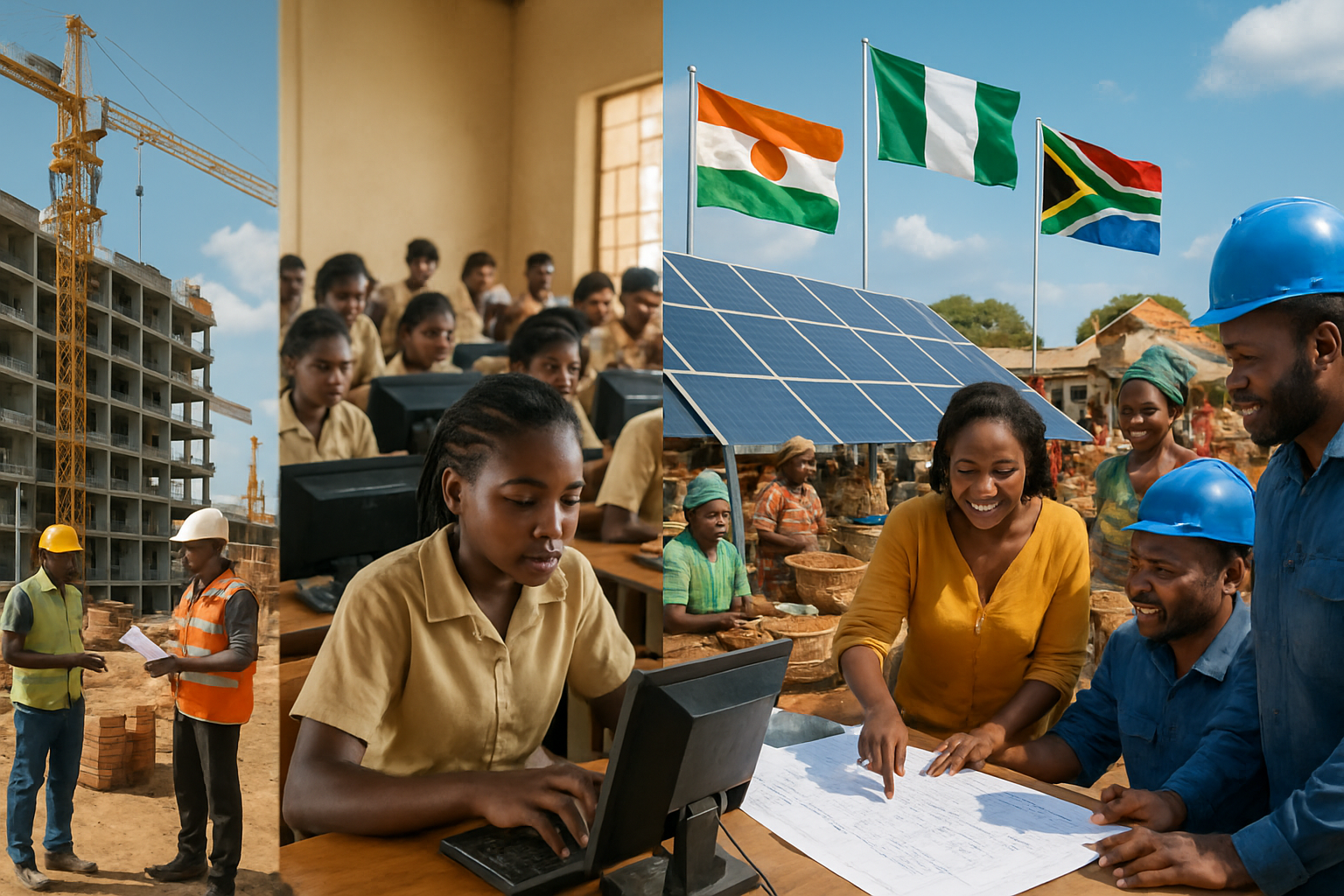
African nations continue to grapple with multifaceted challenges ranging from infrastructure disasters to ambitious educational reforms, as regional cooperation efforts gain momentum across the continent amid ongoing security concerns and development aspirations.
The complex landscape of African development revealed itself through a series of significant events spanning from West Africa's Sahel region to Central African initiatives, demonstrating both the persistent challenges and remarkable resilience that characterize the continent's current trajectory.
Niger Faces Infrastructure Catastrophe
Niger experienced yet another devastating market fire in Tillabéri, adding to a troubling pattern of commercial infrastructure losses that have plagued the country. The incident represents the latest in what local media has termed "la série noire" – a black series of market fires that has repeatedly struck commercial centers across the nation.
This recurring disaster highlights the urgent need for improved fire safety infrastructure and emergency response capabilities in Niger's commercial districts. The pattern of market fires not only represents immediate economic losses for traders and communities but also underscores broader infrastructure vulnerabilities that require sustained attention and investment.
Nigeria Launches Transformative Education Initiative
In a significant move toward educational transformation, Nigeria's government launched a comprehensive $552 million program aimed at reforming basic education across the country. The initiative, supported by the World Bank and the Global Partnership for Education (GPE), represents one of the most ambitious educational interventions in Nigeria's recent history.
"This nationwide initiative is expected to benefit more than 29 million children, train 500,000 teachers, deliver 13,000 new classrooms, and reintegrate millions of out-of-school children into the formal school system."
— Premium Times Report
The scale of Nigeria's educational reform program reflects the government's recognition that human capital development remains fundamental to the country's long-term prosperity. The initiative addresses multiple critical gaps simultaneously: teacher training, infrastructure development, and the reintegration of millions of children who have been excluded from formal education due to various circumstances including security challenges and poverty.
Burkina Faso Promotes Social Cohesion Through Religious Leadership
Burkina Faso demonstrated innovative approaches to peace-building through the Cercle d'Études, de Recherche et de Formation Islamique (CERFI), which launched a specialized training program for imams, preachers, and religious guides in Bobo-Dioulasso. The initiative, part of the "Djama Béog-Néré" project, runs from March 26-28, 2026, and specifically targets the promotion of social cohesion.
This approach recognizes the crucial role that religious leaders play in community stability and conflict resolution across the Sahel region. By investing in the training and capacity-building of religious authorities, Burkina Faso addresses security challenges through community engagement and social infrastructure rather than purely military responses.
Regional Security and Press Freedom Concerns
The broader regional security context remains complex, with multiple challenges affecting journalist safety and democratic governance. Reports from Reporters Without Borders highlight mounting threats against media workers in the Democratic Republic of Congo, where the organization warns that the country has become one of the most dangerous places for journalists in Africa's Great Lakes region.
This deteriorating media environment coincides with broader concerns about press freedom across parts of the continent, where conflicts and political instability continue to restrict information access and endanger those working to document events and hold power accountable.
International Partnerships and African Agency
The tragic report of African nationals, including 15 Zimbabweans, dying while fighting for Russia in Ukraine underscores the complex international dimensions affecting African development. These incidents highlight how global conflicts can draw in African citizens through various recruitment mechanisms, often exploiting economic vulnerabilities and limited opportunities at home.
This pattern emphasizes the importance of creating robust domestic economic opportunities and educational pathways that can provide alternatives to potentially exploitative international arrangements. It also underscores the need for African governments to strengthen diplomatic and consular services to protect their citizens abroad.
Continental Development Context
These developments occur within a broader context of African infrastructure renaissance and regional integration efforts. Historical analysis reveals that African nations have been pursuing increasingly sophisticated approaches to development challenges, combining traditional governance systems with modern institutional frameworks.
The African Continental Free Trade Area (AfCFTA) continues to provide a framework for enhanced economic cooperation, while major infrastructure projects across the continent – from Algeria's Gara Djebilet railway to Angola's Lobito Corridor – demonstrate growing continental connectivity and integration.
Recent mining sector developments, including significant investments in gold production and critical minerals extraction, have provided several African countries with enhanced revenue streams that can be reinvested in social infrastructure like education and healthcare.
Technology and Innovation Integration
African nations increasingly demonstrate capacity for integrating modern technology with traditional knowledge systems. Nigeria's fintech revolution, with 43% of fuel sales now conducted through digital payments, exemplifies how African countries are leapfrogging traditional infrastructure limitations through innovative approaches to financial technology and commerce.
This technological integration extends beyond commercial applications to governance and social services, where digital platforms enable more efficient service delivery and enhanced transparency in government operations.
Challenges and Opportunities Ahead
The convergence of infrastructure challenges, educational reforms, security concerns, and regional cooperation initiatives reflects the complex multi-dimensional nature of contemporary African development. Success requires coordinated approaches that address immediate crises while building long-term institutional capacity.
Climate adaptation remains a critical consideration, with the continent experiencing 20+ consecutive months of temperatures exceeding 1.5°C above pre-industrial levels. This environmental pressure affects everything from agricultural productivity to urban planning, requiring integrated responses that combine immediate adaptation with long-term resilience building.
Looking Forward: Regional Integration and Sustainable Development
The diversity of approaches demonstrated across different African countries – from Niger's infrastructure challenges to Nigeria's educational investments and Burkina Faso's peace-building initiatives – provides complementary models for addressing development challenges.
Regional cooperation mechanisms, including the Alliance of Sahel States and broader ECOWAS frameworks, offer platforms for sharing experiences and coordinating responses to transnational challenges. These mechanisms become increasingly important as issues like climate change, migration, and economic development transcend national boundaries.
The path forward requires sustained political commitment, enhanced international cooperation that respects African agency, and continued innovation in combining traditional governance wisdom with modern institutional capabilities. The foundation exists for significant progress, but success depends on maintaining focus on comprehensive approaches that address root causes rather than merely responding to immediate crises.