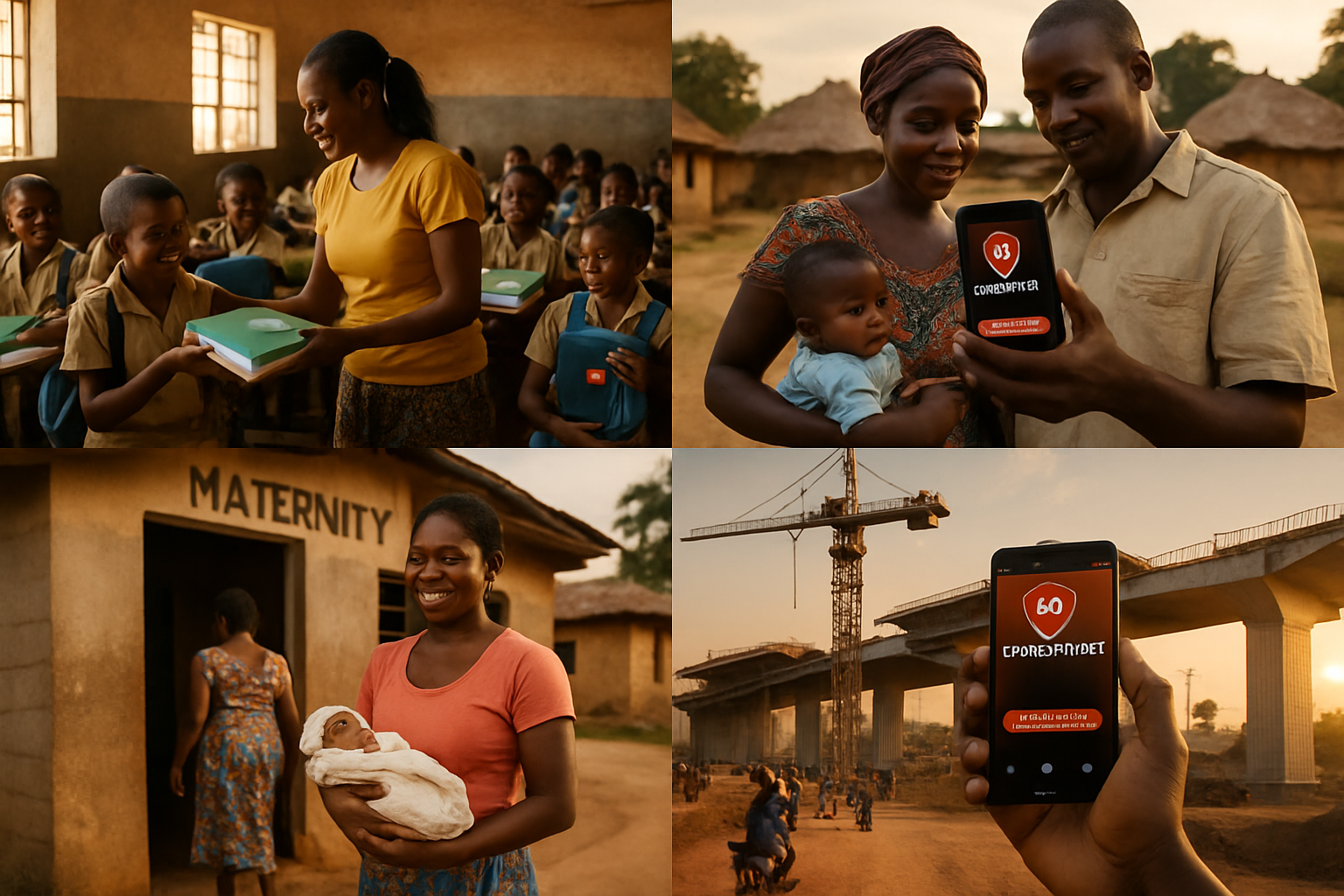
A sweeping wave of development initiatives across the Democratic Republic of Congo and Sierra Leone demonstrates the continent's accelerating transformation, as educational programs, anti-corruption technology, and maternal health projects converge to create unprecedented opportunities for millions of African citizens.
The coordinated surge of development projects comes at a critical moment for African nations, building on the momentum established during 2026's continental renaissance that has seen infrastructure investments exceeding $570 billion globally and positioning Africa as a strategic global partner rather than aid recipient.
Educational Revolution Reaches 15,000 Children
In the Democratic Republic of Congo's Ituri province, approximately 15,000 children from three educational subdivisions in Mahagi territory received comprehensive school kits and supplies through a landmark UNICEF initiative. The program, financially supported by the French Development Agency (AFD) and the Global Partnership for Education, represents one of the largest coordinated educational interventions in the region's recent history.
The distribution specifically targets children affected by armed violence, addressing the persistent educational disruptions that have plagued the territory. The initiative aligns with broader continental efforts that have seen Sierra Leone advance maritime education through partnerships with international institutions, and Ghana implement comprehensive early childhood development policies.
"This investment ensures quality education for all children, including those most affected by the ongoing challenges in our region."
— UNICEF Representative, Mahagi Distribution
The timing is particularly significant as it builds on successful educational reforms documented across the continent. Recent memory from our coverage shows Sierra Leone achieving remarkable healthcare improvements with facility-based maternal deaths declining 29% and under-five mortality dropping nearly 50%, demonstrating how coordinated development approaches can yield measurable results.
Digital Anti-Corruption Revolution
The Democratic Republic of Congo's civil society has launched a groundbreaking technological weapon against corruption with the introduction of "Tofungola miso" (Open Our Eyes), a mobile application designed to encourage systematic reporting of corruption and illicit financial flows.
Available on Google Play Store for Android devices, the application guides users through multiple reporting stages, creating a systematic approach to transparency that could revolutionize how citizens interact with government institutions. The launch represents a significant evolution in African governance, moving beyond traditional oversight mechanisms to embrace digital solutions that empower direct citizen participation.
This initiative reflects broader continental trends toward technological governance solutions. Our analysis of recent African Union developments shows similar innovations emerging across multiple countries, with digital tracking systems and real-time monitoring becoming standard components of modern governance frameworks.
Maternal and Child Health Breakthroughs
Sierra Leone continues its remarkable healthcare transformation with the launch of the Strong Foundation Project in Pujehun District. The initiative, valued at $1 million USD and funded by The Church of Jesus Christ of Latter-day Saints, establishes critical systems and infrastructure for a comprehensive three-year Maternal, Newborn, and Child Health (MNCH) program.
The project represents a sophisticated preparatory phase designed to ensure optimal implementation when Save the Children assumes full program responsibility in June 2026. This approach reflects lessons learned from previous health interventions, emphasizing systematic preparation over rapid deployment.
The Pujehun initiative builds on Sierra Leone's documented healthcare successes, including the 99% cure rate for severe acute malnutrition that exceeds global standards and the establishment of new nursing schools that demonstrate integration of traditional knowledge with modern medical practices.
Community and Cultural Integration
Sierra Leone's approach to development demonstrates sophisticated cultural sensitivity through initiatives like the JMB Wing's continued annual Ramadan food distribution across Bo District. Acting on behalf of President Julius Maada Bio and First Lady Fatima Bio, the program supports Muslim communities during the Holy Month, emphasizing interfaith harmony and national unity.
First Lady Fatima Bio's statement reflects the government's commitment to inclusive development: "This initiative reflects our dedication to compassion, unity, and interfaith harmony, emphasizing the importance of solidarity during this sacred season."
Regional Economic Integration Context
These developments occur within the broader context of Africa's economic integration through the African Continental Free Trade Area (AfCFTA), which enables cross-border development ventures and shared infrastructure projects. The continent's demonstrated capacity for sophisticated international investment management while maintaining development control positions these local initiatives within a larger strategic framework.
Recent continental developments include China's announcement of zero-tariff access for 53 African countries beginning May 1, 2026—the most comprehensive China-Africa trade expansion in history. This trade facilitation complements Western partnerships and demonstrates Africa's sophisticated approach to managing multiple international relationships.
Monetary and Economic Policy Coordination
The Democratic Republic of Congo's role in regional economic leadership was highlighted during the Central African Bank Governors' meeting hosted by the Central Bank of Congo in Kinshasa. André Wameso, serving as president of the Association of African Central Banks (ABCA), advocated for enhanced economic and monetary integration to support structural transformation of Central African economies.
This high-level coordination demonstrates the sophisticated policy frameworks supporting grassroots development initiatives. The integration of monetary policy with social development creates enabling environments for sustained progress beyond individual project cycles.
Technology Integration and Innovation
The convergence of traditional development approaches with cutting-edge technology characterizes 2026's African development model. From digital corruption reporting systems to sophisticated healthcare supply chain management, these initiatives demonstrate technology serving community development goals rather than displacing human relationships.
Sierra Leone's healthcare supply chain strengthening through the National Medical Supplies Agency (NMSA) exemplifies this integration, combining digital monitoring with community-based distribution networks to ensure reliable access to quality medicines across remote areas.
International Cooperation Models
The success of these initiatives reflects evolved international cooperation models that respect African agency while leveraging global expertise and financing. The partnership between UNICEF, AFD, and the Global Partnership for Education in Congo demonstrates sophisticated multilateral coordination, while Sierra Leone's partnerships with international healthcare organizations show how smaller nations can access specialized expertise while maintaining program ownership.
These models provide templates for sustainable development that balance international cooperation with local autonomy, addressing historical concerns about aid dependency while creating genuine partnerships for mutual benefit.
Climate Adaptation and Resilience
All initiatives incorporate climate adaptation requirements, recognizing that development must serve future conditions rather than historical patterns. With January 2026 marking the 18th consecutive month exceeding 1.5°C above pre-industrial levels, these projects integrate climate resilience as standard components rather than add-on considerations.
From school infrastructure designed to withstand extreme weather to healthcare facilities equipped for climate-related health challenges, the integration demonstrates sophisticated understanding of development challenges requiring proactive adaptation strategies.
Economic Multiplier Effects
These coordinated development initiatives generate substantial economic multiplier effects beyond their immediate beneficiaries. Educational improvements enhance workforce productivity, anti-corruption technology increases business confidence and investment attractiveness, and healthcare advances reduce economic losses from preventable diseases while building human capital.
The economic implications extend to positioning both countries as regional leaders in specific development sectors, potentially attracting additional investment and technical cooperation while contributing to continental knowledge sharing networks.
Challenges and Implementation Sustainability
Despite remarkable progress, these initiatives face common implementation challenges including funding sustainability, technical capacity building, and coordination across multiple stakeholders. Success depends on sustained political commitment surviving electoral cycles, adequate resource allocation for long-term sustainability, and adaptive management responding to changing conditions.
The diversity of approaches provides resilience against single-solution dependencies, with multiple complementary strategies addressing different aspects of development challenges simultaneously.
Regional Leadership and Global Significance
The February 2026 development surge positions both the Democratic Republic of Congo and Sierra Leone as potential regional leaders in their respective specializations. Congo's anti-corruption technology and Sierra Leone's integrated healthcare approaches provide templates that could be adapted and scaled across similar contexts throughout Africa.
These initiatives contribute to Africa's emergence as a strategic global partner capable of sophisticated policy implementation and international cooperation while maintaining development control. The success establishes precedents for comprehensive development approaches addressing multiple challenges simultaneously through coordinated multi-sector strategies.
As these programs enter implementation phases, their outcomes will likely influence regional development patterns and international cooperation frameworks for decades ahead, demonstrating whether coordinated development approaches can achieve the scale and speed required to address Africa's transformation challenges while preserving the cultural authenticity and community ownership essential for sustainable progress.