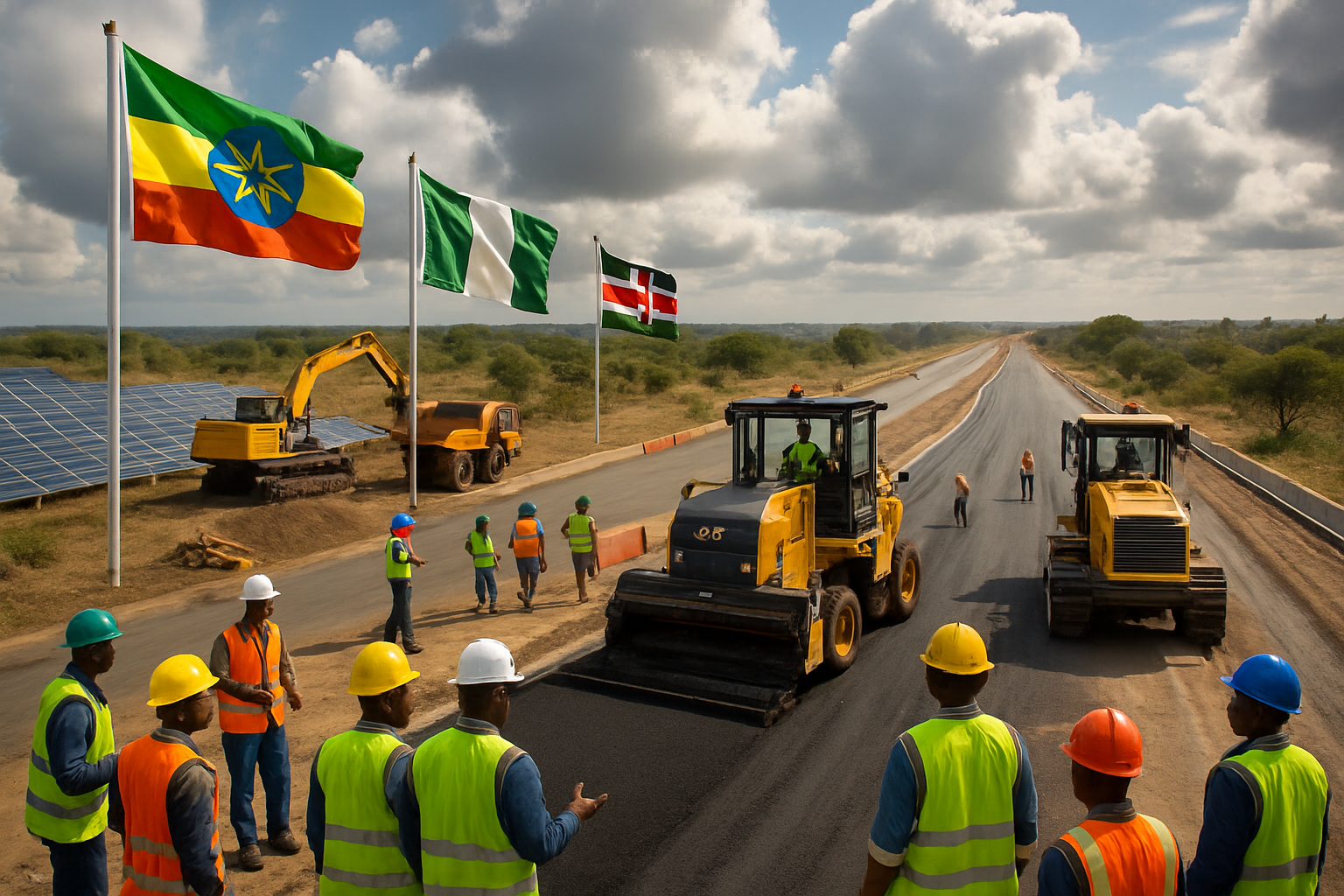
African nations are experiencing an unprecedented surge in development initiatives as multiple countries announce major infrastructure projects, healthcare partnerships, and economic development programs across the continent, signaling a new era of coordinated continental transformation.
Democratic Republic of Congo Leads Aviation and Healthcare Renaissance
The Democratic Republic of Congo is spearheading two major development fronts that exemplify the continent's ambitious growth trajectory. In Bandundu, the provincial capital of Kwilu, rehabilitation work on the national airport is entering its final phase, with the Régie des voies aériennes (RVA) confirming that the runway will be fully operational within weeks, perfectly timed for the upcoming 13th Conference of Governors.
Meanwhile, Air Congo, the nation's new national airline, is preparing to spread its wings across five African capitals starting in March 2026. This expansion marks a decisive milestone in the carrier's development plan, positioning the DRC as a major player in intra-African aviation connectivity.
The healthcare sector is witnessing equally impressive developments through a groundbreaking $1.2 billion strategic health partnership between the DRC and the United States, covering the period 2026-2031. This comprehensive agreement includes $900 million in targeted U.S. government assistance and $300 million in progressively increased domestic health expenditure by the DRC government.
West African Healthcare Infrastructure Transformation
Liberia's John F. Kennedy Medical Center has unveiled an ambitious $132.8 million Strategic Plan (2025-2029), outlining the construction of a cutting-edge hospital facility. This comprehensive reform initiative aims to transform the country's premier referral facility into a modern, high-performing, patient-centered institution that will serve as a regional healthcare hub.
"This represents a fundamental transformation in how we deliver healthcare services across West Africa,"
— JFKMC Leadership, Strategic Planning Committee
The scale and ambition of these healthcare investments reflect the broader continental shift toward prevention-first healthcare strategies that have characterized the "therapeutic revolution of 2026," positioning African nations as regional medical innovators rather than aid recipients.
Namibian Social Services Expansion
Namibia is implementing comprehensive social welfare improvements that demonstrate the country's commitment to citizen welfare. The government has announced it will cover 100% of medical aid costs for civil servants, removing the previously required 5% levy paid to service providers effective April 1, 2026. While a 5% levy on self-medication will remain in place, this change represents a significant investment in public sector healthcare.
Complementing this healthcare expansion, Finance Minister Ericah Shafudah has announced a N$100 pension increase for all pensioners, also taking effect April 1. These simultaneous social service improvements reflect Namibia's strategic approach to comprehensive citizen welfare enhancement.
Continental Context and Strategic Integration
These developments occur within the broader context of Africa's infrastructure renaissance, which has seen unprecedented investment in connectivity, healthcare, and economic diversification projects. The timing aligns with the implementation of the African Continental Free Trade Area (AfCFTA), which requires enhanced cross-border infrastructure and regional cooperation mechanisms.
Recent major infrastructure projects across the continent include Algeria's Gara Djebilet mining railway project accessing the world's third-largest iron ore reserves, Angola's Lobito Corridor revival connecting Atlantic ports to DRC mineral regions, and Tanzania's completion of feasibility studies for the 1,000-kilometer Mtwara-Mbamba Bay railway project.
International Partnership Evolution
The nature of international cooperation is evolving, with African nations increasingly positioned as strategic partners rather than aid recipients. The DRC-US health partnership exemplifies this shift, representing a mutual investment in health system strengthening that benefits both regional stability and global health security.
China's announcement of zero-tariff access for 53 African countries starting May 1, 2026, represents the most comprehensive expansion of China-Africa trade relations in history, providing additional external market opportunities that complement internal African trade expansion under AfCFTA.
Seven African countries—Angola, DRC, Guinea, Kenya, Morocco, Sierra Leone, and Zambia—are participating in the US-EU-Japan Critical Minerals Partnership, demonstrating sophisticated relationship management that maintains strategic autonomy while diversifying international cooperation.
Technology Integration and Innovation
Modern African development projects are incorporating advanced technology as standard features rather than optional additions. Digital monitoring systems, renewable energy integration, and smart logistics management are becoming commonplace, enabling these projects to leapfrog traditional development constraints.
This technology integration reflects a mature understanding that 21st-century infrastructure requires coordination across energy, transportation, digital connectivity, and environmental sustainability sectors. The approach positions African development as forward-looking investment rather than deficit addressing.
Economic Multiplier Effects
The coordinated nature of these developments creates significant economic multiplier effects. Improved aviation connectivity supports trade facilitation, healthcare infrastructure attracts medical tourism while reducing international referral dependency, and social service improvements enhance workforce productivity and social stability.
The African Finance Corporation reports that the continent holds $29.5 trillion in mineral reserves representing 20% of the global total, with $8.6 trillion remaining untapped. This resource base, combined with strategic infrastructure development, positions Africa as an essential partner in global supply chain diversification efforts.
Implementation Challenges and Success Factors
Despite the ambitious scope of these initiatives, implementation faces several challenges including funding sustainability, technical capacity building, and climate adaptation requirements. The success of these projects depends on sustained political commitment, transparent governance frameworks, and authentic community engagement.
International cooperation that respects sovereignty while enabling knowledge sharing and technical assistance has emerged as a critical success factor. The diversity of approaches across different countries provides resilience against single-solution dependencies and enables continental knowledge sharing.
Climate Adaptation Integration
All major infrastructure projects are incorporating climate adaptation as a standard requirement rather than an afterthought. This forward-looking approach addresses future environmental conditions rather than historical patterns, building resilience into development planning.
The January 2026 global temperature record—marking the 18th consecutive month exceeding 1.5°C above pre-industrial levels—has reinforced the urgency of climate-resilient development approaches across all sectors.
Strategic Continental Significance
February 2026 represents a potentially pivotal moment in African development history, with coordinated infrastructure, healthcare, and economic integration initiatives demonstrating the continent's capacity for sophisticated policy implementation and international cooperation.
The emergence of Africa as a strategic global partner capable of sophisticated international investment management while maintaining development control represents a fundamental shift in international development paradigms. Success factors include sustained political commitment, transparent governance, community engagement, and international cooperation that respects sovereignty while accessing global expertise and financing.
The diversity of development approaches provides complementary models for addressing governance challenges while maintaining democratic accountability and economic development momentum. This positions Africa as a leader in 21st-century development through continental cooperation that balances local ownership with international partnership.