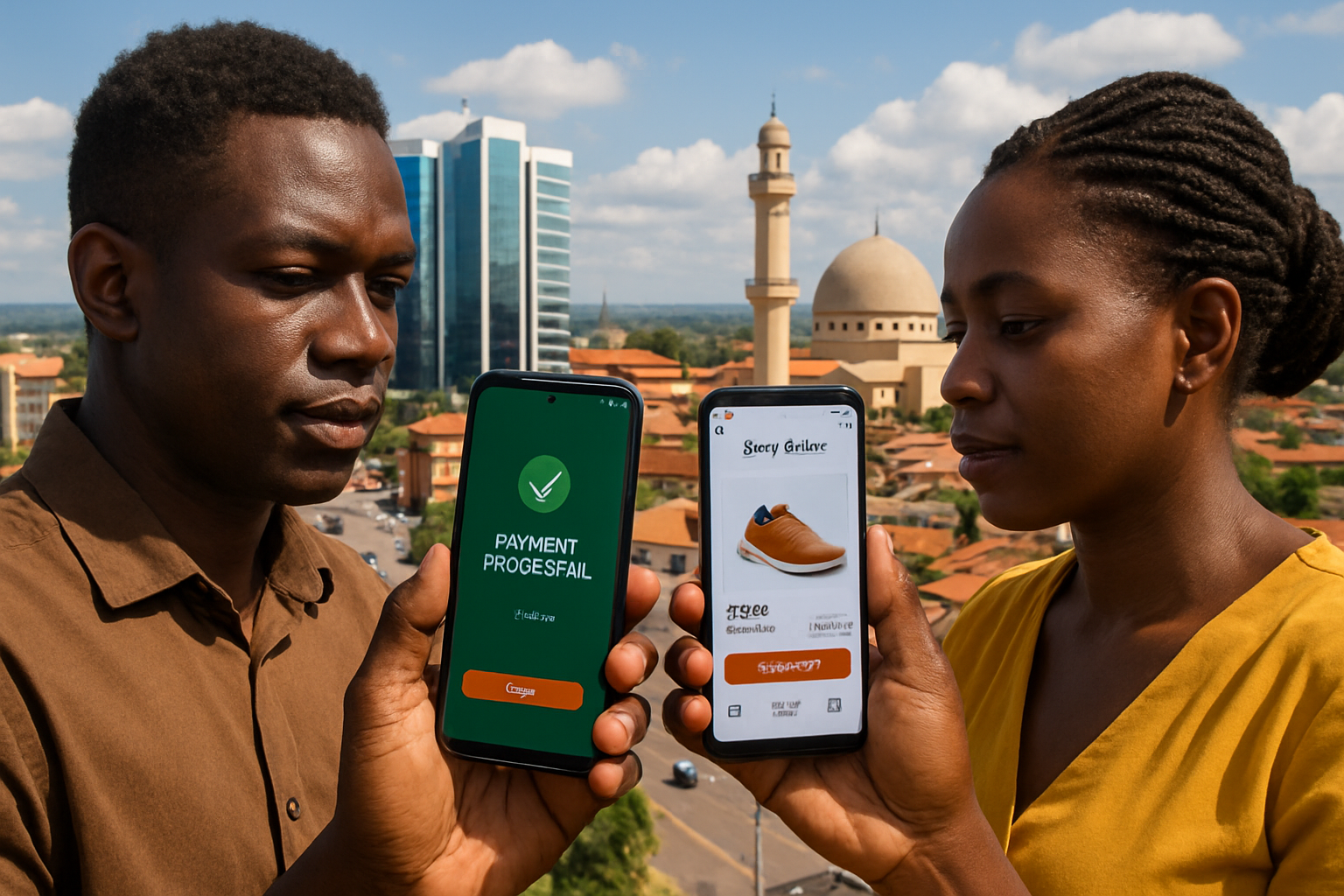
The African continent is experiencing an unprecedented surge in indigenous digital innovation, as Uganda's historic Buganda Kingdom throws its institutional weight behind a revolutionary e-commerce platform while Botswana pioneers municipal digital payment solutions, signaling a fundamental shift toward technological self-reliance and locally-driven digital transformation.
In a groundbreaking ceremony at Bulange Mengo, the Buganda Kingdom's parliament, the Katikiro (Prime Minister) Charles Peter Mayiga presided over the official launch of Kibuga, a comprehensive e-commerce platform designed specifically for Ugandan consumers and sellers. The initiative represents more than technological advancement – it embodies a strategic vision to merge centuries-old traditional governance with cutting-edge digital commerce.
"Technology is the gold and oil of the current times," Mayiga declared during the launch ceremony, drawing parallels between historical wealth creation and contemporary digital opportunities. "Just as past empires measured wealth in precious metals, today's prosperity lies in our ability to harness technology for our people's benefit."
Kingdom-Backed Digital Commerce Revolution
The Kibuga platform emerges against the backdrop of Africa's rapidly expanding digital economy, which according to recent analysis has seen countries like Nigeria achieve 43% of fuel sales through digital payments, demonstrating the continent's leapfrogging potential in financial technology adoption.
Unlike foreign-owned platforms that often struggle with local market understanding, Kibuga has been specifically designed to address uniquely Ugandan commercial practices, from mobile money integration to local language support and traditional bargaining mechanisms digitized for online commerce.
The Kingdom's backing provides Kibuga with institutional credibility that transcends typical commercial endorsements. With the Buganda Kingdom representing over 5 million people and centuries of commercial tradition, this endorsement signals potential for rapid user adoption across Central and Eastern Uganda.
Botswana's Municipal Innovation Pioneer
Simultaneously, Botswana is demonstrating how African municipalities can lead digital transformation from the ground up. Lobatse Town Council has introduced an innovative FNB App designed to revolutionize local government revenue collection, specifically targeting historically low rates collection that has plagued municipal finances across the continent.
This municipal initiative represents a sophisticated understanding of how digital technology can solve practical governance challenges. By digitizing rates collection, Lobatse is addressing a fundamental issue affecting African local government capacity – the reliable collection of property taxes and service fees that fund essential municipal services.
The timing is particularly significant given Botswana's broader economic recovery strategy outlined in the 2026/27 National Budget. As noted by MP Ketlhalefile Motshegwa, the country is implementing a clear recovery path through strategic planning and coordinated initiatives, with digital government services forming a crucial component of this approach.
Continental Context and Global Significance
These developments occur within a broader African digital renaissance that has seen remarkable innovation despite global technological constraints. The continent has demonstrated resilience amid the ongoing global memory chip crisis, which has seen semiconductor prices surge sixfold, affecting Samsung, SK Hynix, and Micron operations worldwide.
Rather than being deterred by these constraints, African innovators have focused on creating efficient, practical solutions that serve real economic needs rather than pursuing resource-intensive technological speculation. This approach has proven remarkably effective, with numerous African countries now leading global trends in mobile money adoption and practical financial technology implementation.
The success stories emerging from across the continent provide crucial context for understanding the significance of the Ugandan and Botswanan initiatives. Kenya's M-Pesa model has become a global template for mobile financial services, while countries like Ghana have implemented some of Africa's most sophisticated cryptocurrency regulatory frameworks.

Technological Infrastructure and Implementation
The technical sophistication of these initiatives reflects broader African expertise in developing appropriate technology solutions. Both the Kibuga platform and Botswana's municipal app demonstrate understanding of local connectivity constraints, device capabilities, and user preferences that foreign developers often struggle to grasp.
Kibuga's integration with existing mobile money systems acknowledges that successful e-commerce in Uganda must work seamlessly with the financial infrastructure that millions of Ugandans already use daily. This represents a mature understanding of technology adoption that prioritizes user experience over technological complexity.
Similarly, Botswana's FNB App addresses the specific challenge of municipal revenue collection – a problem that requires deep understanding of local property ownership patterns, payment preferences, and administrative processes. The solution's focus on improving collection rates rather than simply digitizing existing processes demonstrates sophisticated problem-solving approach.
Economic Impact and Development Implications
The economic implications of these developments extend far beyond their immediate technological impact. African Continental Free Trade Area (AfCFTA) implementation has created unprecedented opportunities for cross-border digital commerce, and platforms like Kibuga could facilitate trillion-dollar trade flows that bypass traditional international payment systems.
The involvement of traditional institutions like the Buganda Kingdom provides crucial legitimacy and user trust that purely commercial platforms often struggle to achieve. This institutional backing could accelerate adoption rates and create network effects that benefit both buyers and sellers across the platform.
For Botswana, improved municipal revenue collection through digital systems could significantly enhance local government capacity to deliver essential services. Reliable property tax collection forms the foundation of municipal finance across Africa, and digital solutions that improve collection rates could transform local development capacity.
"Technology is the gold and oil of the current times. Just as past empires measured wealth in precious metals, today's prosperity lies in our ability to harness technology for our people's benefit."
— Charles Peter Mayiga, Katikiro of Buganda
Regional Integration and Cross-Border Opportunities
Both initiatives position their respective countries for enhanced regional integration through digital infrastructure. Uganda's strategic location as a landlocked country serving as a gateway to East African markets makes Kibuga potentially significant for regional e-commerce development.
Botswana's municipal innovation could provide templates for other Southern African Development Community (SADC) countries facing similar local government revenue challenges. The FNB App approach could be adapted across the region, creating economies of scale and knowledge sharing opportunities.
The timing aligns with broader African infrastructure development trends, including the African Development Bank's increased focus on digital infrastructure as essential for continental integration. Countries implementing successful digital government services are likely to attract additional investment and technical cooperation.
Challenges and Success Factors
Despite promising beginnings, both initiatives face significant implementation challenges. Cybersecurity concerns, digital literacy gaps, and infrastructure limitations could affect adoption rates and user experience quality.
The global memory chip shortage affecting consumer electronics costs could impact smartphone accessibility, particularly for lower-income potential users. However, African markets have historically demonstrated remarkable adaptability to technological constraints, often developing innovative solutions that work within existing limitations.
Success will likely depend on several critical factors: sustained government and institutional support, comprehensive user education programs, robust technical infrastructure, and adaptation based on user feedback and changing market conditions.
International Recognition and Investment Implications
These developments have not gone unnoticed by international development partners and private investors. Uganda's combination of traditional institutional backing with modern technology has attracted attention from development finance institutions interested in supporting locally-owned digital infrastructure.
Botswana's municipal innovation aligns with international best practices for digital government services, potentially qualifying for technical assistance and financing from multilateral development banks focused on governance improvements.
The success of these initiatives could influence investment patterns across Africa, demonstrating that indigenous digital innovation backed by local institutions can achieve sustainable growth without requiring foreign ownership or control.
Future Implications and Scaling Potential
The longer-term implications of these developments could extend far beyond their immediate impact. Successful indigenous digital platforms could reduce African dependence on foreign technology companies while keeping digital economy profits within the continent.
The Buganda Kingdom's approach could inspire other traditional institutions across Africa to embrace digital innovation while maintaining cultural authenticity. This could create a unique African model of technology adoption that balances modernization with traditional values and governance structures.
Botswana's municipal success could accelerate digital government services adoption across Africa, improving governance capacity and citizen satisfaction with public services. Enhanced revenue collection could fund additional municipal services and infrastructure development, creating positive feedback loops for development.
As February 2026 represents a critical juncture in global digital transformation, Africa's indigenous innovation surge demonstrates the continent's capacity for technological leadership rather than mere adoption. The success of platforms like Kibuga and municipal innovations like Botswana's FNB App could establish Africa as a significant source of digital innovation for the global South.
The convergence of traditional institutional backing, practical problem-solving, and technological sophistication evident in these initiatives suggests that Africa's digital future will be characterized by locally-owned solutions that serve African needs while contributing to global digital innovation. This represents a fundamental shift from technology recipient to technology contributor, with potentially transformative implications for the continent's economic development trajectory.