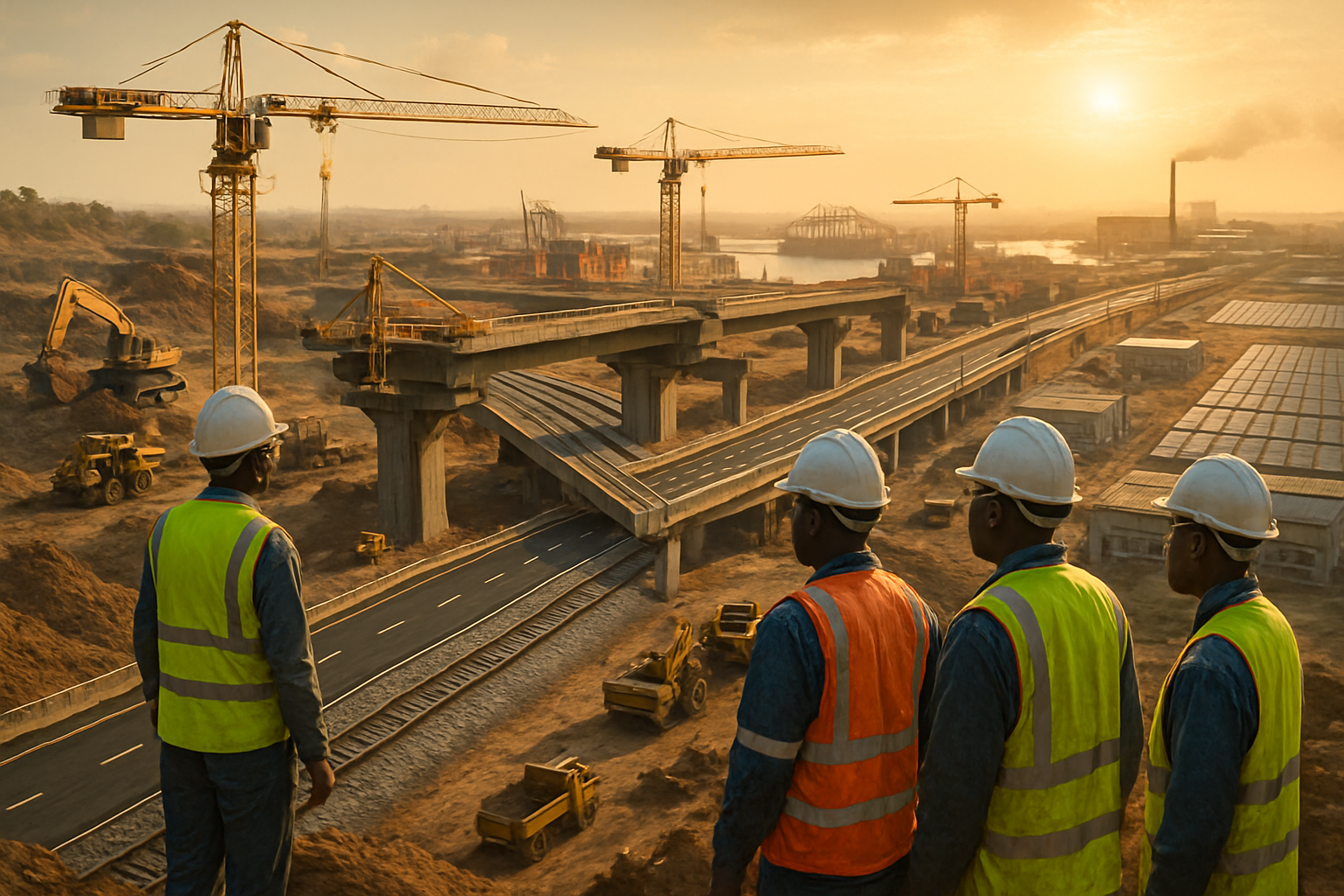
African economies are experiencing a transformative surge in March 2026, with groundbreaking mining projects, infrastructure investments worth billions of dollars, and innovative regional cooperation initiatives reshaping the continent's economic landscape and global strategic importance.
Mining Sector Renaissance Powers Growth
Gabon is launching its ambitious Baniaka iron ore mining project, targeting production of 5 million tonnes of minerals in 2026's first phase. This massive undertaking represents a cornerstone of the country's economic diversification strategy beyond petroleum dependency, creating thousands of jobs and positioning Gabon as a significant player in the global iron ore market.
Simultaneously, Mozambique has secured a seven-year graphite supply agreement between Syrah Resources and NextSource Materials, covering shipments of 34,000 to 68,000 tonnes annually from Africa's largest graphite mine in Balama. This deal feeds NextSource's planned anode plant in the UAE, highlighting Africa's crucial role in the global battery supply chain for electric vehicles and energy storage systems.
The mining boom is further evidenced by Mozambique's remarkable 37.5% increase in Foreign Direct Investment during the first half of 2025, reaching $2.532 billion. The extractive industry attracted $2.361 billion of this total, demonstrating international confidence in African mineral resources amid global supply chain diversification efforts.
Creative Economy Challenges and Opportunities
While mining drives headline growth, Africa's creative economy faces significant challenges that require urgent attention. According to Deloitte's Africa Head of Infrastructure and Capital Projects, Yaw Appiah Lartey, approximately 60% of African creators earn less than $100 per month, despite the continent's "dynamism and undeniable global footprint."
The creative sector operates largely within the informal economy, lacking basic protections and struggling to build sustainable livelihoods. This paradox—where Africa captures only a fraction of the value from its cultural exports—highlights the need for institutional development and systematic support for creative industries alongside traditional economic sectors.
"The continent captures only a small fraction of the value of its cultural exports, and the vast majority of its creators operate in the informal economy, lacking basic protections."
— Yaw Appiah Lartey, Deloitte Africa Head of Infrastructure and Capital Projects
Energy Sector Transformation
Nigeria's energy landscape is undergoing significant transformation with the implementation of Oil and Gas Revenues Executive Order 09. This initiative represents a strategic approach to maximizing revenue from the country's petroleum resources while addressing long-standing challenges in the sector's financial management and operational efficiency.
The energy sector developments occur within a broader continental context where nations are balancing traditional energy production with renewable energy investments and infrastructure modernization to support industrial growth and regional integration objectives.
Regional Integration Through AfCFTA
The African Continental Free Trade Area (AfCFTA) continues to gain momentum as a catalyst for economic transformation. Recent infrastructure developments support continental trade integration, including Algeria's Gara Djebilet railway project accessing the world's third-largest iron ore reserves, and Angola's Lobito Corridor revival connecting Atlantic ports to DRC mineral regions.
These infrastructure investments create physical foundations for the trillion-dollar trade flows that AfCFTA promises to facilitate. Cross-border connectivity enables regional value chains, shared processing facilities, and coordinated development strategies that maximize the economic impact of individual national investments.
Strategic International Partnerships
African nations are demonstrating sophisticated capacity for managing international partnerships while maintaining resource sovereignty. Seven African countries—Angola, DRC, Guinea, Kenya, Morocco, Sierra Leone, and Zambia—participate in the US-EU-Japan Critical Minerals Partnership, challenging China's 60% production and 90% refining dominance in critical materials.
Simultaneously, China announced zero-tariff access for 53 African countries starting May 1, 2026, representing the most comprehensive China-Africa trade expansion in history. This dual approach—diversifying partnerships while maintaining beneficial relationships—exemplifies Africa's strategic autonomy in international economic relations.
Technology Integration and Innovation
Modern African development projects incorporate cutting-edge technology from initial design phases. Digital monitoring systems, renewable energy integration, smart logistics management, and advanced waste management represent standard requirements rather than premium additions. This technology-first approach enables African nations to leapfrog traditional development constraints.
Nigeria's fintech sector exemplifies this technological advancement, with 43% of fuel sales now conducted through digital payments, solving critical liquidity issues through same-day settlements. Such innovations demonstrate Africa's capacity for practical technology implementation that addresses real economic challenges.
Environmental Sustainability and ESG Compliance
Environmental protection has become prerequisite for international investment rather than optional consideration. Congo's suspension of Congo Dongfang Mining operations for environmental violations demonstrates African governments' commitment to asserting regulatory oversight while maintaining investment attractiveness through transparent governance frameworks.
Modern mining and infrastructure projects incorporate environmental compliance, renewable energy systems, and community engagement as essential components. This evolution from traditional extractive models toward comprehensive development strategies benefits local populations while engaging global markets responsibly.
Economic Multiplier Effects
African infrastructure development creates substantial economic multiplier effects extending far beyond immediate project benefits. Improved trade connectivity, agricultural modernization, mining sector support, and regional integration advancement contribute to comprehensive economic transformation across multiple sectors simultaneously.
The African Finance Corporation reports that Africa possesses $29.5 trillion in mineral reserves—representing 20% of the global total—with $8.6 trillion remaining untapped. This enormous economic potential, combined with strategic infrastructure development and regional cooperation, positions Africa as an essential global economic partner.
Implementation Challenges and Success Factors
Despite remarkable progress, African economic development faces ongoing challenges including funding sustainability, technical capacity building, climate adaptation requirements, and coordinated multi-country implementation. Success depends on sustained political commitment, transparent governance, community engagement, and international cooperation frameworks that respect African agency in determining development priorities.
The continent's approach emphasizes balancing immediate economic needs with long-term sustainability through innovative financing mechanisms, enhanced governance standards, and strategic partnerships that maintain African ownership of development outcomes.
Future Trajectory and Global Implications
March 2026 represents a potentially pivotal moment establishing African economic development patterns that could influence global competitiveness and regional cooperation for decades ahead. The integration of immediate economic needs with sustainability requirements creates precedents for balancing development objectives with environmental and social considerations.
Africa's evolution from aid recipient to strategic economic partner capable of sophisticated international investment management while maintaining development control positions the continent as an essential contributor to global prosperity, supply chain security, and climate adaptation rather than merely a beneficiary of international assistance.
The convergence of mining investment, infrastructure development, technological innovation, and regional integration creates unprecedented opportunities for African economic transformation. Success requires continued coordination between national governments, international partners, private sector entities, and local communities to ensure development benefits reach all stakeholders while maintaining environmental sustainability and social equity.