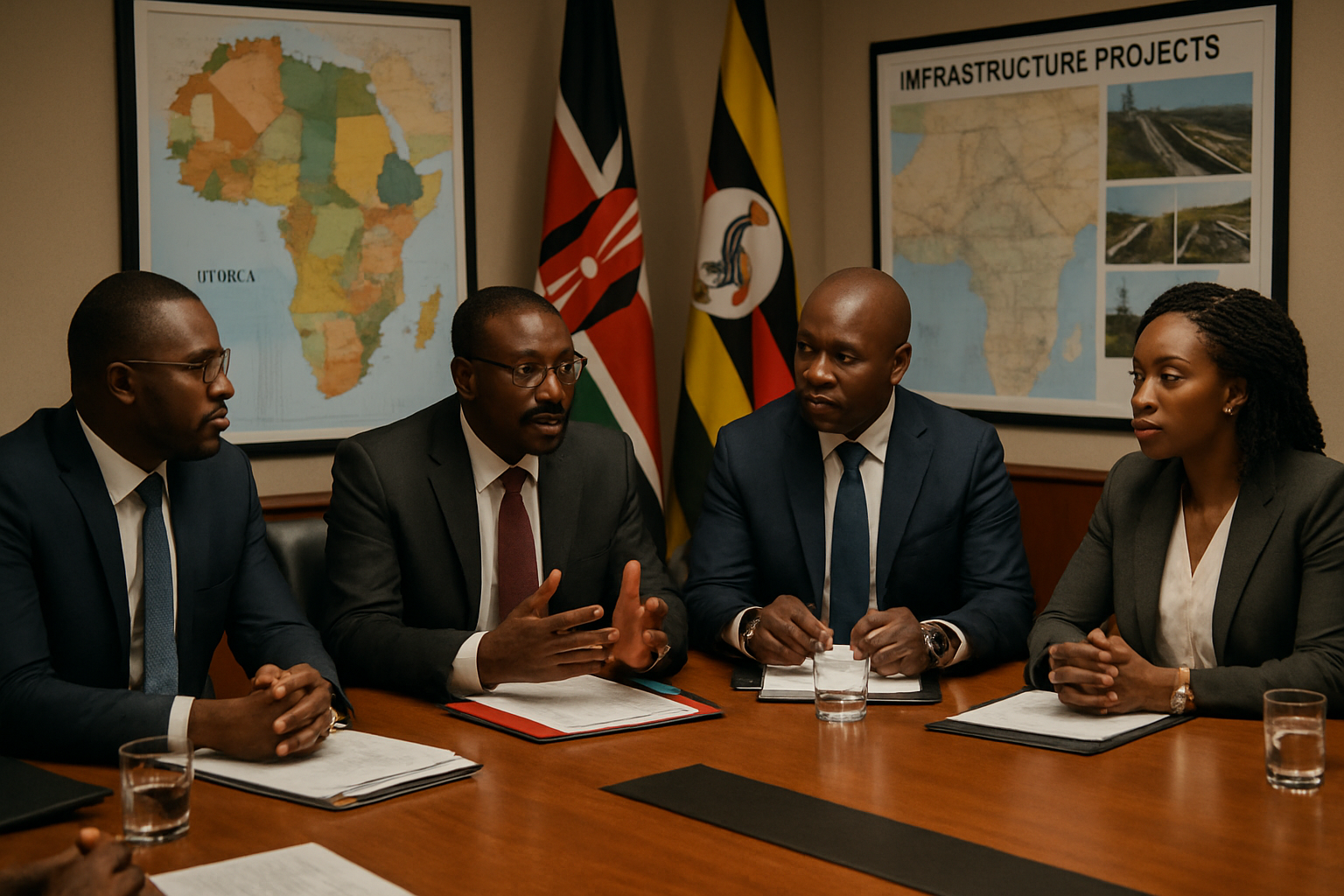
Africa's economic transformation accelerated dramatically in early 2026, with groundbreaking oil discoveries in Libya, innovative agricultural programs in Uganda, strategic gold initiatives by Uganda's central bank, and major industrial partnerships in Nigeria positioning the continent as a global economic force.
The convergence of natural resource discoveries, technological innovation, and strategic international partnerships across Algeria, Gabon, Nigeria, and Uganda demonstrates a coordinated continental approach to economic development that extends far beyond traditional extractive industries toward comprehensive value-addition strategies.
Libya's Energy Breakthrough Strengthens Regional Position
Libya's state-owned National Oil Corporation, in partnership with Sonatrach Petroleum Exploration and Production Corporation (SIPEX), announced a significant oil and gas discovery from the A1-69/02 exploratory well in the Ghadames Basin. Located 70 kilometers from the Al-Wafa field, the well achieved production rates of 13 million cubic feet of gas and 327 barrels of condensate daily from the Awaynat Winin and Awin Kaza formations.
This discovery represents the sixth successful well executed by SIPEX in contractual areas 96/95, reinforcing Libya's position as a crucial Mediterranean energy partner. The find comes at a strategic time as global energy markets continue experiencing volatility, with oil prices maintaining elevated levels above $80 per barrel and natural gas experiencing significant price fluctuations across European and American markets.
"This discovery strengthens Libya's energy sector governance and demonstrates our commitment to economic sovereignty through strategic resource development."
— SIPEX Operations Team, Ghadames Basin Project
Gabon's Wealth Assessment Reveals Continental Potential
The World Bank's "Changing Wealth of Nations 2024" report evaluated Gabon's total capital wealth at approximately 60,000 billion CFA francs (roughly $104.5 billion) as of 2020, representing a remarkable 35% increase between 1995 and 2020. This wealth consists primarily of natural capital, positioning Gabon as a regional leader in sustainable resource management.
The assessment occurs within the broader context of African economic transformation, where the African Finance Corporation reports that the continent holds $29.5 trillion in mineral reserves—representing 20% of the global total—with $8.6 trillion remaining untapped. This vast resource base, combined with strategic partnerships and infrastructure development, forms the foundation for Africa's economic renaissance.
Nigeria's Dangote Group Targets $100 Billion Revenue
The African Export-Import Bank (Afreximbank) announced its support for Dangote Group's ambitious expansion plan to reach $100 billion in annual turnover by 2030. This partnership represents a significant vote of confidence in Nigeria's industrial capabilities and demonstrates the evolving relationship between African financial institutions and continental business leaders.
Nigeria's economic leadership extends beyond traditional industries, with the country achieving 43% of fuel sales through digital payment platforms, demonstrating technological innovation in essential services. This fintech advancement has solved critical liquidity challenges through same-day settlement systems, providing a template for other African nations seeking to modernize their financial infrastructure.

Uganda's Dual Strategy: Gold Reserves and Agricultural Innovation
The Bank of Uganda signed a groundbreaking contract with Euro Gold Refinery under its Domestic Gold Purchase Programme, marking a strategic shift toward local value addition. This initiative represents part of the central bank's broader strategy to strengthen reserve bases while supporting domestic mineral processing capabilities.
Simultaneously, Uganda is revolutionizing its livestock sector through the introduction of the Jianzhou big-eared goat, a Chinese breed being evaluated at the Mbarara Zonal Agricultural Research and Development Institute (MBAZARDI). This initiative, conducted under the FAO-China South-South Cooperation Project, demonstrates how international partnerships can address longstanding agricultural productivity challenges.
"The new breed shows promising potential for faster growth rates and improved market supply consistency, which could transform our livestock sector's contribution to the economy."
— MBAZARDI Research Team
Local Value Addition Revolution
Uganda's approach exemplifies a continental trend toward capturing greater value from natural resources. The domestic gold processing initiative moves beyond raw material exports, while the livestock improvement program addresses food security and export potential simultaneously. These strategies align with broader African Continental Free Trade Area (AfCFTA) objectives of regional integration and value chain development.
Strategic International Partnerships Shape Development
The developments across these four nations occur within the context of evolving international relationships that emphasize mutual benefit and strategic autonomy. Seven African countries—including Angola, Democratic Republic of Congo, Guinea, Kenya, Morocco, Sierra Leone, and Zambia—participate in the US-EU-Japan Critical Minerals Partnership, challenging China's 60% production and 90% refining dominance in critical materials.
Simultaneously, China announced zero-tariff access for 53 African countries beginning May 1, 2026, representing the most comprehensive China-Africa trade expansion in modern history. This development demonstrates African nations' sophisticated approach to managing competing international partnerships while maintaining policy autonomy.
Infrastructure as the Foundation for Growth
The economic initiatives across Algeria, Gabon, Nigeria, and Uganda are supported by unprecedented infrastructure development throughout the continent. Major projects include Algeria's Gara Djebilet railway accessing the world's third-largest iron ore reserves, Angola's Lobito Corridor revival connecting Atlantic ports to Democratic Republic of Congo mineral regions, and Tanzania's completion of railway feasibility studies for 1,000 kilometers of new track.
These infrastructure developments create physical foundations for enhanced cooperation, enabling the regional value chains and coordinated development strategies essential for maximizing individual investments' continental impact.
Technology Integration and Environmental Considerations
Modern African development projects increasingly incorporate digital monitoring, renewable energy integration, smart logistics, and environmental optimization as standard requirements rather than optional additions. This technology-first approach enables African nations to leapfrog traditional development constraints while building climate-resilient infrastructure.
Environmental governance has evolved significantly, with countries like the Democratic Republic of Congo suspending mining operations for environmental violations, demonstrating regulatory oversight capabilities while maintaining investment attractiveness through transparent frameworks.
Climate Adaptation as Economic Strategy
All projects are designed for future climate conditions, incorporating enhanced drainage, weather-resistant materials, renewable energy integration, and backup power systems as standard components. This forward-looking approach addresses vulnerability while building resilience for sustained economic growth during the ongoing climate transition.
Economic Multiplier Effects and Regional Integration
The convergence of oil discoveries, agricultural innovation, mining development, and industrial expansion creates substantial economic multiplier effects extending far beyond individual sectors. These include employment in transportation, processing, and packaging; export revenue generation; sustainable rural employment; and infrastructure development supporting entire regional ecosystems.
The African Continental Free Trade Area framework enables cross-border ventures, regional value chains, and shared development strategies that transform national projects into continental economic drivers. This regional approach maximizes the impact of individual investments while building collective capacity for global market engagement.
Success Factors and Implementation Challenges
The success of these initiatives depends on several critical factors: sustained political commitment transcending electoral cycles, community engagement and ownership of development processes, transparent governance frameworks, and international cooperation that respects local autonomy while providing technical and financial support.
Implementation challenges include funding sustainability for developing nations facing immediate economic pressures, technical capacity building requiring sustained investment in education and institutions, and climate disruption affecting project timelines and requiring adaptive management approaches.
Strategic Significance for Global Development
April 2026 represents a potential inflection point for African development patterns that could influence global economic competitiveness for decades ahead. The evolution from aid recipient to strategic partner demonstrates Africa's capacity for sophisticated international investment management while maintaining sovereignty over development priorities.
This transformation positions Africa as an essential contributor to global prosperity, supply chain security, and climate adaptation, rather than merely a beneficiary of international assistance. The diversity of approaches provides resilience against single-solution dependencies while offering multiple pathways for other developing regions.
"Africa's economic transformation in 2026 demonstrates that sustainable development requires balancing immediate economic needs with long-term environmental and social goals."
— African Development Bank Analysis
Looking Forward: Templates for Sustainable Growth
The coordinated developments across Algeria, Gabon, Nigeria, and Uganda provide practical templates for scaling successful approaches globally. The combination of strategic resource management, regional cooperation, technological integration, and balanced international partnerships creates a sustainable development model that other regions can adapt to their specific contexts.
As these initiatives mature and deliver concrete results, they may influence broader international development cooperation patterns, offering alternatives to traditional aid relationships while preserving the benefits of coordinated global action on shared challenges.
The window for building resilient, equitable economic systems continues to narrow as environmental pressures intensify and global competition increases. However, the tools, knowledge, and cooperation frameworks demonstrated across these African initiatives provide evidence that comprehensive economic transformation remains achievable when supported by political commitment, community engagement, and innovative international partnerships.