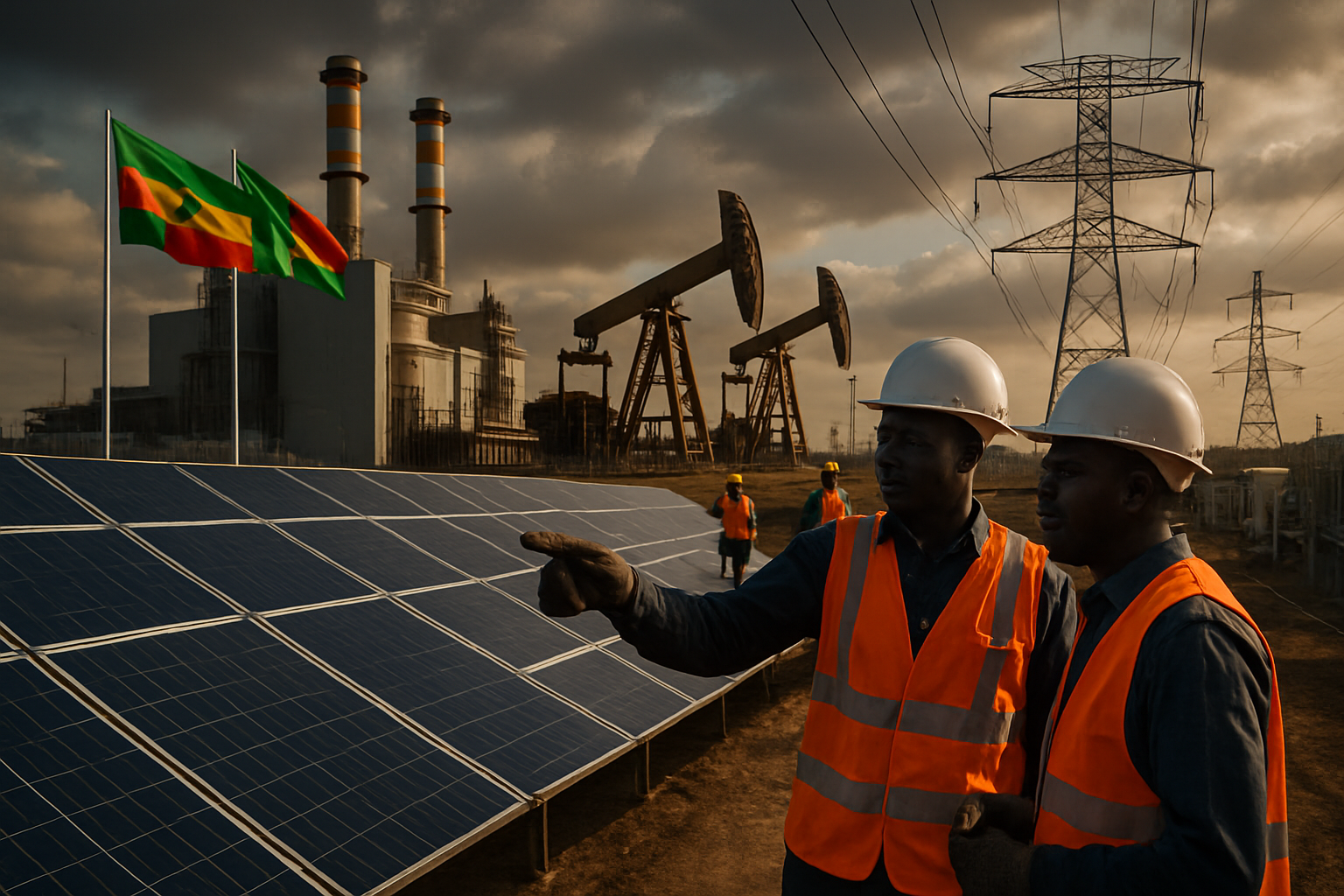
Africa's energy sector is experiencing a transformative surge as nine nations advance major infrastructure projects, oil discoveries, and cross-border cooperation initiatives that signal the continent's evolution from aid recipient to global strategic partner in energy development.
From Algeria's groundbreaking electricity cooperation with Niger to Egypt's significant natural gas discoveries and Uganda's oil production countdown, March 2026 has witnessed unprecedented coordination across African energy markets, reflecting broader continental integration under the African Continental Free Trade Agreement (AfCFTA) framework.
Algeria-Niger Energy Partnership: A Model for Regional Cooperation
Algerian Prime Minister Nacer Khalifi laid the foundation stone for a landmark 40-megawatt electricity generation plant in Niger's capital Niamey, alongside Niger's Prime Minister Ali Lamin Zeine. The project, located in the Goro Banda area, represents a significant milestone in the strategic partnership between the two nations.
The initiative emerged from the second session of the Algeria-Niger Higher Committee for Cooperation, demonstrating how political dialogue translates into concrete infrastructure development. Algeria's Minister of Pharmaceutical Industries, Dr. Wassim Qouaidri, accompanied the delegation, highlighting the comprehensive nature of bilateral cooperation extending beyond energy into healthcare and industrial development.
"The positive climate enabled an objective and realistic assessment of our bilateral cooperation path, establishing foundations for renewed and ambitious partnership between our countries," stated Prime Minister Khalifi during the committee's conclusion.
— Nacer Khalifi, Algerian Prime Minister
Egypt's Natural Gas Breakthrough in Western Desert
Apache Corporation, in partnership with the Egyptian General Petroleum Corporation (EGPC), announced a significant natural gas discovery in Egypt's Western Desert following successful drilling of the SKAL-1X exploratory well in the South Kalabsha area, 50 kilometers south of Aswan.
Preliminary well test results indicate impressive daily production rates of 26 million cubic feet of natural gas and 2,700 barrels of condensate. The discovery's strategic location near Apache's existing operations enhances economic feasibility by leveraging nearby infrastructure and production facilities.
Egypt's Ministry of Petroleum emphasized that this discovery represents tangible results from measures implemented to encourage expanded exploration and research activities while increasing investments in previously unexplored areas.
Regional Energy Integration Momentum
Niger's energy cooperation extends beyond Algeria, with recent agreements strengthening petroleum and gas partnerships. The Trans-Saharan Gas Pipeline project between Niger, Algeria, and Nigeria exemplifies the continental approach to energy infrastructure development, connecting domestic production with regional markets.
These developments align with historical context from memory archives showing Africa's $29.5 trillion mineral reserves (20% of global total) with $8.6 trillion remaining untapped despite growing international demand for critical materials. Seven African countries—Angola, DRC, Guinea, Kenya, Morocco, Sierra Leone, and Zambia—participate in the US-EU-Japan Critical Minerals Partnership, challenging China's dominance in supply chains.
Uganda's Oil Production Countdown
Uganda edges closer to its historic first oil production milestone through the Tilenga Project, which has reached 67% completion and spans the northern and southern banks of the Nile in Nwoya and Buliisa districts. The project expects to produce 190,000 barrels of crude per day at peak capacity.
Despite global shipping disruptions, the bulk of materials required for first oil are already in the country, with only limited amounts still in transit from Asia. This achievement represents years of careful planning and international cooperation in one of Africa's most ambitious oil development projects.
Gabon's Energy Infrastructure Renaissance
Libreville is set to host the 10th edition of the Africa Energy Market Place from April 8-9, 2026, organized by the African Development Bank in partnership with the Gabonese state. The event, themed "Stakeholder Consultation on the National Energy Pact for Mission 300 Implementation," supports the ambitious initiative to connect 300 million Africans to electricity by 2030.
This initiative builds on Gabon's recent energy sector achievements, including February's Grand N'Gongui oil field discovery—the first major petroleum discovery under the Fifth Republic government—and March's Assala Energy hydrocarbon discovery at the Magoga-1 offshore field.
Technology and Environmental Integration
Modern African energy projects incorporate advanced technologies as standard features rather than optional additions. Digital monitoring systems, renewable energy integration, smart logistics, and comprehensive environmental compliance have become prerequisites for international investment and development financing.
The evolution reflects sophisticated understanding that sustainable energy development requires balancing immediate economic needs with long-term environmental protection. Projects demonstrate the continent's capacity for implementing cutting-edge solutions while respecting traditional communities and environmental stewardship.
Strategic Partnerships and Investment Flows
Recent developments demonstrate Africa's strategic autonomy in managing international partnerships. While China announced zero-tariff access for 53 African countries beginning May 1, 2026, African nations simultaneously strengthen partnerships with the United States, European Union, and Japan through diversified cooperation frameworks.
This approach allows African countries to leverage global expertise and financing while maintaining sovereign control over development priorities. The success of these partnerships depends on sustained political commitment, transparent governance, community engagement, and adaptive management strategies that respond to changing global conditions.
Economic Implications and Future Outlook
The current surge in African energy development creates substantial economic multiplier effects beyond direct infrastructure investment. Enhanced energy access supports agricultural modernization, mining sector expansion, manufacturing development, and regional trade facilitation under AfCFTA implementation.
Nigeria's innovative approach demonstrates technological leadership with 43% of fuel sales now processed through digital payments, solving liquidity challenges through same-day settlements. This financial technology integration positions African energy markets at the forefront of global digital transformation.
The infrastructure developments occur during a critical period when 19 consecutive months have exceeded 1.5°C above pre-industrial levels, making climate adaptation and sustainable energy development urgent priorities. African energy initiatives provide templates for developing resilient systems that serve both economic development and environmental sustainability goals.
Continental Integration and Global Significance
March 2026 represents a potential inflection point in African development patterns that may influence continental competitiveness for decades ahead. The coordination across multiple countries—from Algeria's power plants in Niger to Uganda's oil countdown and Egypt's gas discoveries—demonstrates unprecedented cooperation in addressing shared energy security challenges.
These developments position Africa as an essential contributor to global prosperity, supply chain security, and climate adaptation rather than merely a beneficiary of international assistance. The successful implementation of current projects could establish Africa as a strategic global partner capable of sophisticated investment management while maintaining development control.
The energy sector transformation reflects broader continental trends toward evidence-based policy making, international cooperation that respects sovereignty, and development models that integrate immediate economic benefits with long-term sustainability goals. As Africa approaches the critical 2030 target for connecting 300 million people to electricity, the current momentum suggests the continent is positioned to exceed expectations while establishing new paradigms for sustainable energy development worldwide.