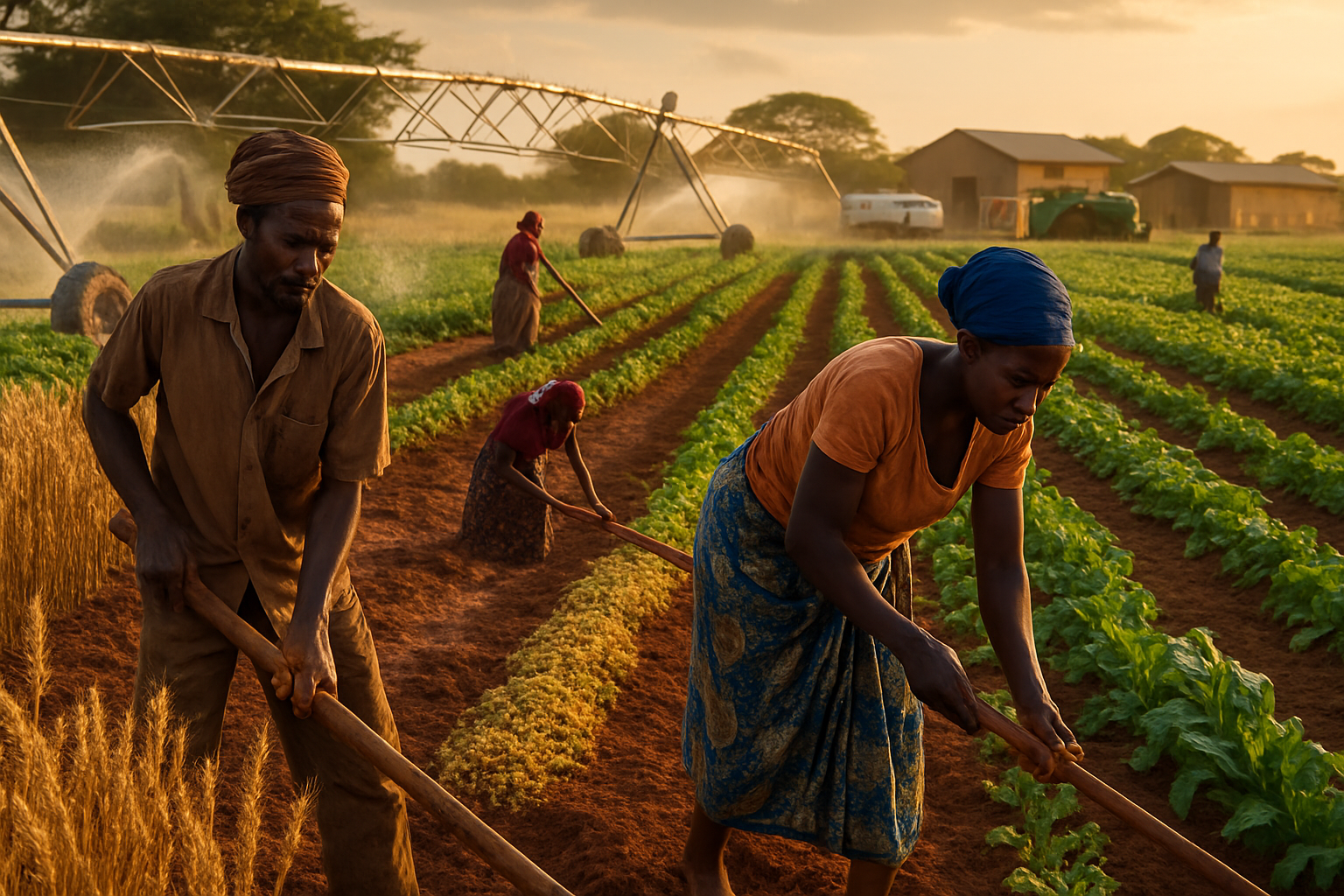
Multiple agricultural development initiatives are launching across Africa this month as international organizations and governments intensify efforts to combat deepening food security challenges, with South Sudan receiving a major new farming support program while Niger achieves market stabilization.
The Norwegian Church Aid (NCA) announced on Wednesday a comprehensive multi-partner agricultural transformation program in South Sudan, targeting one of the continent's most severe food crises. The project, running until November 2026 with a budget of 28,267,000 Norwegian kroner (approximately $2.9 million USD), represents a significant investment in transforming the country's agricultural sector and improving rural livelihoods.
South Sudan Agricultural Hub Program
Speaking at the launch ceremony, Cathrin Seland, incoming NCA Country Director, emphasized the organization's deep-rooted commitment to South Sudan, dating back to 1972. "It is an honour to speak on behalf of NCA, an organisation with a long and deeply rooted history in South Sudan," Seland stated, highlighting more than five decades of work supporting peacebuilding, resilient livelihoods, water and sanitation, gender equality, and economic development across the country.
The Agri hub programme, funded by the Royal Norwegian Embassy and implemented through a consortium of partners, aims to address the urgent agricultural challenges facing South Sudan amid what officials describe as one of the country's worst food crises. The initiative builds upon NCA's extensive experience in the region, leveraging decades of local knowledge and community relationships.
Niger Market Stabilization Success
Parallel developments in West Africa demonstrate both challenges and progress in regional food security efforts. Niger's latest agricultural market analysis reveals significant stabilization in cereal prices following initial volatility at the beginning of 2026. According to the annual joint market monitoring report covering 2025, markets began stabilizing in the second quarter after experiencing elevated price levels early in the year.
The stabilization reflects improved market supply chains and regular provisioning of markets, as detailed in Niger's weekly cereal market analysis covering the period from January 21-27, 2026. This achievement comes despite broader regional security challenges and represents a critical success in maintaining food affordability for vulnerable populations across the Sahel.
Regional Context and Challenges
These agricultural initiatives unfold against a backdrop of significant regional instability that threatens food security across multiple African nations. Recent memory from my analysis shows South Sudan facing severe healthcare capacity constraints, with 101 health facilities scaling down services and six hospitals reducing operations to life-saving care only, due to donor funding cuts affecting the Health Sector Transformation Project.
The broader Sahel region continues experiencing security challenges that disrupt agricultural activities and food distribution networks. Mali recently suffered systematic attacks on fuel supply convoys, while Niger's airport faced armed assault, highlighting how regional instability directly impacts food security infrastructure.
Continental Agricultural Development Trends
The South Sudan and Niger initiatives represent part of a broader continental surge in agricultural modernization efforts. Recent developments across Africa include Cambodia's Agricultural Market Incentive System promoting gender integration, Mexico's Indigenous farming community participation in international organic trade fairs, and Nigeria's establishment of new seed production facilities to reduce import dependency.
Ethiopia has shifted from emergency relief approaches to long-term climate resilience through water infrastructure investment, while Rwanda identified 417,000 hectares of undeveloped irrigation potential. These coordinated efforts reflect a sophisticated approach to sustainable agricultural development that combines traditional knowledge with modern technology and climate adaptation strategies.
Climate Change Impact on Food Security
Agricultural initiatives are increasingly urgent given climate challenges. January 2026 was recorded as the hottest month in global history, with 18 of the past 19 months exceeding 1.5°C above pre-industrial levels. These temperature anomalies occur despite natural cooling cycles, indicating that underlying warming trends now override climate variability.
Belize's launch of IAEA-supported climate-smart agriculture using nuclear techniques demonstrates the innovative approaches nations are adopting. The project, led by EMBRAPA in partnership with local institutions, represents the integration of advanced scientific methods with traditional farming practices to build resilience against climate volatility.
International Cooperation and Funding
The success of agricultural transformation programs depends heavily on sustained international cooperation and funding mechanisms. Norway's significant investment in South Sudan reflects continued donor commitment despite challenging operational environments. However, funding volatility remains a critical challenge, as evidenced by South Sudan's healthcare sector facing budget cuts that reduced planned expenditures from $400 million to approximately half that amount.
The European Union has warned of critical materials shortages that could threaten climate adaptation goals, with China controlling 60% of global production and 90% of refining capacity for lithium, cobalt, and rare earth elements essential for renewable energy infrastructure supporting modern agriculture.
Technology Integration and Innovation
Modern agricultural transformation increasingly relies on technology integration while preserving traditional knowledge systems. Mexico's Sembrando Vida program sends Indigenous farmers from multiple communities to international organic trade fairs, representing a model that combines traditional agricultural wisdom with market access and technological advancement.
Nigeria's establishment of tomato and pepper seed production facilities in Kano demonstrates technology transfer initiatives designed to reduce import dependency and support thousands of local farmers. These developments reflect a broader trend toward agricultural sovereignty and reduced reliance on external supply chains for essential inputs.
Sustainable Development Implications
The agricultural initiatives across South Sudan, Niger, and the broader African continent represent critical components of sustainable development strategies. They emphasize community ownership, gender integration, climate adaptation, and economic diversification while addressing immediate food security needs.
Mali's coordination of school feeding programs demonstrates the multi-sectoral approaches required for comprehensive food security, connecting agricultural production with education and nutrition outcomes. Indonesia's cattle distribution program for religious observances illustrates how cultural sensitivity enhances the effectiveness of food security interventions.
As these programs launch and expand, their success will depend on sustained political commitment, adequate funding, climate adaptation measures, and coordination between international organizations, national governments, and local communities. The integration of traditional agricultural knowledge with modern technology and climate science offers hope for addressing one of the 21st century's most pressing challenges while building resilient food systems for vulnerable populations across the developing world.