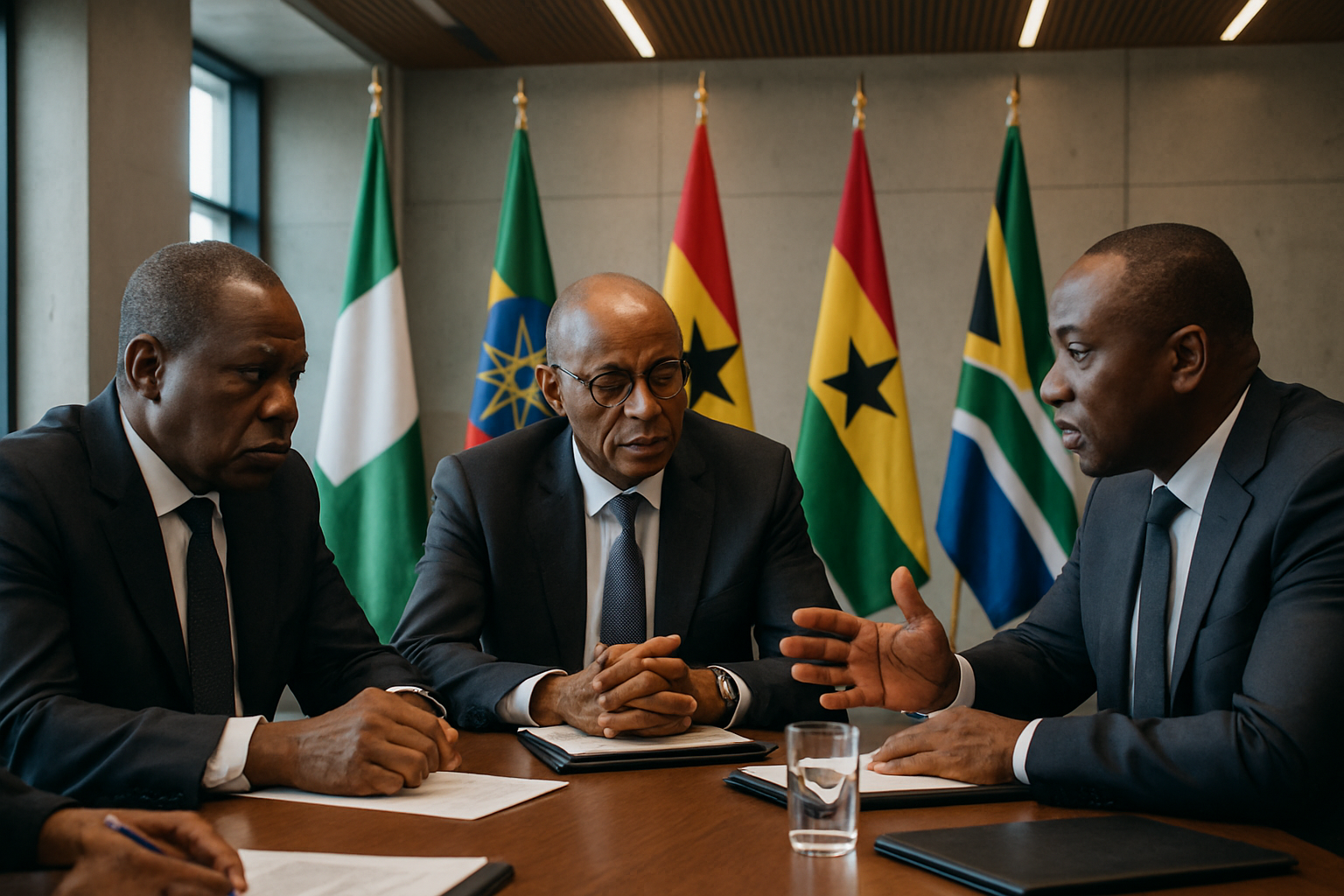
African nations across the continent are implementing transformative governance and infrastructure reforms that reflect a coordinated shift toward institutional modernization, economic integration, and democratic consolidation, as revealed by comprehensive developments spanning eight countries in February 2026.
Border Infrastructure Advances Continental Integration
Botswana's strategic positioning as a regional gateway received a significant boost with the announcement that the Kazungula One Stop Border Post (OSBP) will commence 24-hour operations as part of its evolution toward a non-stop border facility. This development, reported by Botswana Daily News, represents a crucial step in implementing the African Continental Free Trade Agreement (AfCFTA) objectives by reducing trade barriers and facilitating seamless commerce across borders.
The Kazungula border post serves as a critical link in regional trade networks, connecting Botswana with neighboring countries and supporting the broader vision of continental economic integration. The move toward round-the-clock operations demonstrates African nations' commitment to practical implementation of trade facilitation measures beyond symbolic agreements.
Constitutional Reform Debates Shape Democratic Future
Botswana is experiencing significant constitutional discourse regarding the establishment of a Constitutional Court, with divergent views emerging from both political leadership and citizens. Member of Parliament for Thamaga/Kumakwane, Palelo Motaosane, has called for halting the multimillion-pula Constitutional Court establishment, arguing that resources would be better allocated to refurbishing deteriorating colonial-era schools and addressing persistent drug shortages in the healthcare sector.
Public opinion remains divided, as evidenced by mixed reactions from Kang residents. While some welcome the Constitutional Court proposal as a long-overdue step toward equality and access to justice, others urge authorities to prioritize constitutional reforms and economic recovery. This debate reflects broader challenges facing African democracies as they balance institutional development with immediate social needs.
"The funds are better spent on refurbishing the decaying colonial-era schools and addressing persistent drug shortages in the health sector."
— Palelo Motaosane, MP for Thamaga/Kumakwane
Strategic Leadership Appointments Strengthen Institutions
Ghana's President John Mahama has demonstrated strategic institutional strengthening through key appointments across critical government sectors. The swearing-in of Daniella Mawusi Ntow Sarpong as substantive Chief Fire Officer of the Ghana National Fire Service represents a commitment to professional excellence in public safety institutions.
Simultaneously, President Mahama appointed Aaron Kanor as Acting Commissioner for the Customs Division of the Ghana Revenue Authority (GRA), a position critical to revenue mobilization, trade facilitation, border security, and anti-smuggling operations. The appointment was made under Article 195(1) of the 1992 Constitution and Section 16(1) of the Ghana Revenue Authority Act, pending constitutionally required advice from the Governing Board in consultation with the Public Services Commission.
These appointments reflect a broader pattern of institutional modernization across African governments, emphasizing technical competence and professional leadership in critical state functions.
Civil Service Modernization Across Multiple Nations
Namibia's government approved a substantial 5% salary increase for civil servants for the 2026/27 financial year, with an additional 5% planned for 2027/28, according to leaked government documents. This development signals recognition of the importance of adequately compensating public sector workers who deliver essential services to citizens.
The salary adjustments come amid broader discussions about public sector effectiveness and the role of civil service in national development. Modern governance requires skilled, motivated public servants capable of implementing complex development programs and maintaining institutional continuity across political transitions.
Political Financing and Democratic Governance
Namibia's political landscape faces scrutiny over state funding allocations, with projections indicating political parties will receive N$1.6 billion between 2020 and 2030. This substantial financial commitment to democratic institutions raises important questions about resource allocation and the balance between supporting political pluralism and addressing urgent social needs.
The scale of political party funding reflects the costs of maintaining democratic systems while highlighting the need for transparent and accountable use of public resources in supporting competitive political processes.
Security Challenges and Regional Cooperation
Nigeria continues to face complex security challenges that highlight the interconnected nature of continental stability. A U.S. Congressional report identifying Nigeria as potentially the "deadliest place to be a Christian" underscores religious and ethnic tensions that require comprehensive approaches involving bilateral agreements against insecurity and religious violence.
The report specifically calls for removal of what it terms "Fulani militias" from confiscated productive farmlands to allow voluntary return of displaced communities to their homes. This situation demonstrates how local conflicts can have broader implications for regional stability and economic development, particularly in agricultural sectors critical to food security.
Continental Integration Through Infrastructure Development
These governance developments occur within the broader context of Africa's infrastructure renaissance, building on historical memory of successful continental cooperation. Previous analysis has documented major projects including Algeria's Gara Djebilet railway accessing world's third-largest iron ore reserves, Angola's Lobito Corridor revival connecting Atlantic ports to DRC mineral regions, and Tanzania's Mtwara-Mbamba Bay railway feasibility studies.
The success of Orange Côte d'Ivoire's $2.16 billion revenue performance in telecommunications demonstrates how modern infrastructure investments can generate substantial returns while supporting broader continental integration objectives. Nigeria's achievement of 43% fuel sales through digital payments showcases practical applications of financial technology supporting economic modernization.
Democratic Resilience and Institutional Innovation
African governance reforms reflect sophisticated understanding of 21st-century challenges requiring innovative institutional responses. The balance between constitutional development, economic needs, and democratic participation evident in Botswana's debates mirrors similar challenges across the continent.
Success factors identified through historical analysis include sustained political commitment, transparent governance frameworks, community engagement, and international cooperation that respects sovereignty while enabling knowledge sharing and technical assistance.
Regional Economic Integration and Trade Facilitation
The movement toward 24-hour border operations at Kazungula represents practical implementation of AfCFTA objectives, creating enabling environments for increased intra-African trade. This development aligns with China's announcement of zero-tariff access for 53 African countries starting May 1, 2026, creating unprecedented external market opportunities supporting continental economic integration.
These trade facilitation measures, combined with infrastructure investments and governance reforms, position African nations to capitalize on the continent's $29.5 trillion mineral reserves and growing technological capabilities.
Challenges and Implementation Requirements
Despite significant progress, African governance and development initiatives face common challenges including funding sustainability, technical capacity building, climate adaptation requirements, and coordination across multiple countries and sectors.
Implementation success depends on several critical factors: maintaining political commitment across electoral cycles, ensuring transparent and accountable resource utilization, engaging communities meaningfully in development processes, and balancing immediate needs with long-term institutional development.
Future Trajectory and Continental Impact
February 2026 represents a significant moment in African development, with coordinated initiatives across governance, infrastructure, and economic integration demonstrating the continent's capacity for sophisticated policy implementation and international cooperation.
The diversity of approaches—from Botswana's constitutional debates to Ghana's institutional appointments and Namibia's civil service reforms—provides complementary models for addressing governance challenges while maintaining democratic accountability and economic development momentum.
Success in these initiatives will likely influence regional integration patterns, establish precedents for democratic governance during economic transformation, and demonstrate African leadership in addressing 21st-century development challenges through coordinated continental cooperation.