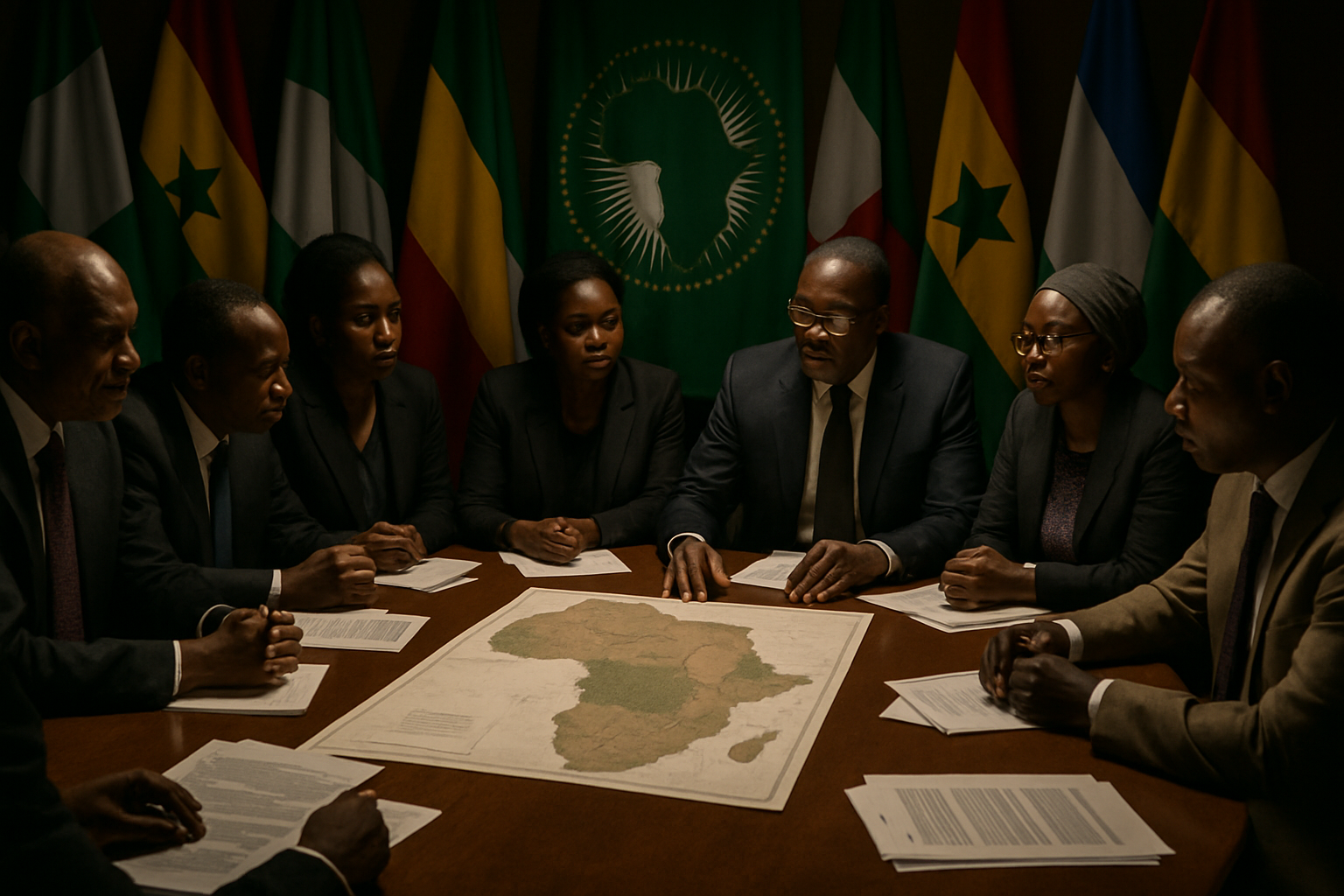
A major continental assessment reveals Africa's political landscape in 2026 presents a complex picture of governance challenges and evolving international dynamics, as detailed in the "Forces of the Future" report examining the continent's political trajectory amid regional demonstrations and shifting global alignments.
The comprehensive report portrays Africa's outlook as "neither marginal nor passive," highlighting significant developments across multiple nations that demonstrate both democratic resilience and concerning authoritarian trends. From Senegal's demonstrations against foreign military interventions to Guinea's systematic dismantling of political opposition, the continent faces crucial decisions that will shape its political future for decades.
Regional Political Tensions and International Responses
Recent demonstrations in Dakar underscore Africa's growing assertiveness in international affairs, with protesters gathering to voice opposition to ongoing military conflicts and express solidarity with affected populations. The demonstrations reflect broader continental concerns about external military interventions and their impact on regional stability.
These protests represent part of a larger pattern of African civil society engagement with global issues, demonstrating the continent's evolution from passive recipient of international decisions to active participant in shaping global responses to conflicts and humanitarian crises.
Democratic Institutions Under Strain
The political landscape reveals significant tensions within democratic frameworks across multiple African nations. Recent memory of the March 2026 developments in Guinea, where 40 political parties were dissolved by the military government citing "failure to comply with legal provisions," exemplifies the broader challenges facing democratic institutions across West Africa.
"The dissolution of political parties represents the most extensive elimination of political opposition in Guinea's recent history under Colonel Mamadi Doumbouya's military government."
— Analysis from International Observers
Similar patterns have emerged across the Sahel region, where the Alliance of Sahel States continues to challenge traditional regional cooperation frameworks, raising questions about the effectiveness of institutions like ECOWAS in maintaining democratic governance standards.
Continental Integration Amid Political Challenges
Despite political uncertainties, Africa continues advancing economic integration through the African Continental Free Trade Agreement (AfCFTA). The recent developments demonstrate how economic cooperation persists even amid political tensions, with infrastructure projects like Algeria's Gara Djebilet railway and Angola's Lobito Corridor representing tangible progress in continental connectivity.
The African Finance Corporation's data showing $29.5 trillion in mineral reserves (20% of global total) with $8.6 trillion untapped highlights the economic potential that requires stable governance frameworks to realize. Recent investments including Ivory Coast's $1.2 billion gold projects and South Africa's R325 million rare earth commitments demonstrate continued investor confidence in specific markets.
Strategic Partnerships and Resource Sovereignty
Africa's strategic positioning has become increasingly complex with multiple international partnerships. Seven African countries (Angola, DRC, Guinea, Kenya, Morocco, Sierra Leone, Zambia) participate in the US-EU-Japan Critical Minerals Partnership, challenging China's 60% production and 90% refining dominance in critical materials.
Simultaneously, China announced zero-tariff access for 53 African countries starting May 1, 2026, representing the most comprehensive China-Africa trade expansion in history. This dual engagement strategy demonstrates Africa's sophisticated approach to maintaining strategic autonomy while leveraging beneficial international relationships.
Democratic Resilience and Civil Society
African civil society organizations continue demonstrating remarkable resilience despite increased pressure from authoritarian governments. The recent condemnation by Niger's civil society of EU resolutions demanding former president releases illustrates coordinated resistance to external interference in domestic affairs.
However, concerning trends include the targeting of transparency advocates, journalists, and activists across multiple countries. The correlation between press freedom restrictions and declining governance scores suggests systematic efforts to constrain civil society space.
Institutional Reform and Accountability
Progressive developments include Ghana's establishment of specialized high courts for corruption and environmental crimes, demonstrating institutional innovation in addressing governance challenges. Botswana's strategic economic planning through transparent budget processes exemplifies democratic accountability in action.
The contrast between countries strengthening democratic institutions and those restricting political space illustrates the divergent pathways African nations are pursuing in 2026.
Climate Governance Intersection
The 20th consecutive month of temperatures exceeding 1.5°C above pre-industrial levels adds complexity to governance challenges. Climate pressures affect agricultural systems, urban planning, and resource management, requiring coordinated governmental responses that test institutional capacity.
Countries like Namibia and Uganda have positioned themselves as climate leaders, demonstrating how environmental challenges can create opportunities for progressive governance and international cooperation.
Economic Development and Governance
The relationship between governance quality and economic development remains central to Africa's future. Recent successes in digital innovation, including Nigeria's 43% fuel sales through digital payments and Uganda's traditional-modern technology integration, show how effective governance enables technological advancement.
Infrastructure development continues despite political challenges, with projects incorporating advanced technologies, environmental compliance, and community engagement as standard features rather than optional additions.
International Cooperation Evolution
Africa's international relationships are evolving toward greater sophistication and strategic autonomy. The continent increasingly engages multiple partners simultaneously while maintaining sovereignty over development priorities.
Success factors identified across multiple African initiatives include sustained political commitment, transparent governance frameworks, community engagement, and international cooperation that respects local autonomy while providing necessary technical and financial support.
Future Trajectory Assessment
The "Forces of the Future" report's characterization of Africa as "neither marginal nor passive" reflects a continent actively shaping its political destiny amid complex internal and external pressures. The coming months will be crucial in determining whether positive trends in economic integration and technological innovation can overcome challenges posed by democratic backsliding and regional conflicts.
Regional organizations like the African Union face tests of their effectiveness in addressing continental challenges while supporting member states' development goals. The balance between sovereignty and integration, democratic governance and stability, economic development and environmental sustainability will define Africa's political trajectory.
March 2026 represents a potential inflection point where Africa's capacity for sophisticated international cooperation, innovative governance solutions, and coordinated continental responses will determine whether current challenges become opportunities for strengthened democratic institutions and enhanced regional integration.