African nations are positioning themselves at the forefront of a global mining transformation, with Ghana, Botswana, Guinea, and Tanzania leading efforts to showcase innovative mining potential and strengthen economic partnerships through sustainable resource extraction strategies.
The continent's emergence as a critical player in the global energy transition has reached a pivotal moment, as countries prepare for the 32nd edition of the African Mining Indaba 2026, scheduled to take place from February 9-12 at the Cape Town International Convention Centre (CTICC). This gathering represents more than a traditional industry conference—it embodies Africa's strategic repositioning in the global minerals market.
Strategic Positioning for Critical Minerals
Africa's geological wealth has long been recognized, with the continent holding approximately one-third of the world's known reserves of minerals essential to the energy transition and emerging industrial technologies. However, as recent analysis suggests, this figure is beginning to shift from rhetorical potential to realized strategy at a discernibly faster pace.
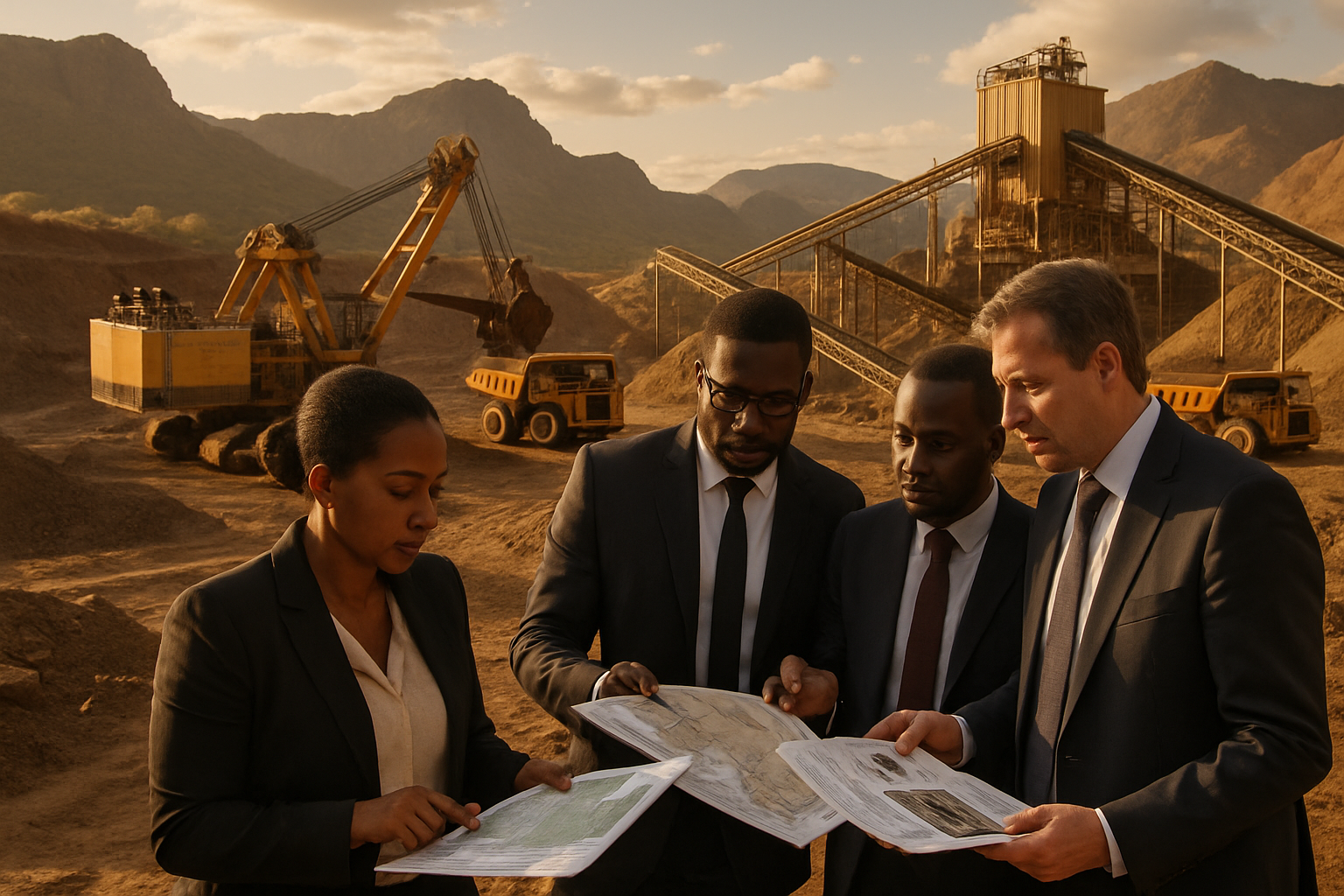
Ghana and Botswana are pioneering a new model for African mining that emphasizes sustainability, technological innovation, and local value addition. This approach marks a significant departure from traditional extractive models, focusing instead on comprehensive economic development that benefits local communities while attracting international investment.
Guinea's Simandou Strategy
Guinea's participation in the Mining Indaba 2026 follows its recent engagement at the Critical Minerals Summit in Washington, demonstrating the country's commitment to positioning itself as a key player in global supply chain diversification. The West African nation is leveraging its substantial mineral reserves, particularly in the Simandou region, to attract international partnerships while maintaining sovereignty over its resources.
"Guinea's participation in Mining Indaba 2026 represents a strategic opportunity to showcase our mining potential and present our comprehensive Simandou strategy to international investors,"
— Guinea Mining Ministry Statement
The timing of Guinea's participation is particularly significant, coming after the country's involvement in the US-EU-Japan Critical Minerals Strategic Partnership, which aims to challenge China's current dominance in the sector—holding 60% of global production and 90% of refining capacity.
Tanzania's International Mining Strategy
Tanzania's Minister of Minerals, Anthony Mavunde, is set to lead a high-profile delegation to the conference as part of the country's national strategy to strengthen its position in the international mining sector. The East African nation seeks to attract government leaders, investors, large mining companies, and financial institutions from around the world.
Tanzania's approach represents a calculated effort to market its mineral wealth through enhanced international cooperation and strategic partnerships. The country's participation builds on recent infrastructure developments, including significant investments in railway projects designed to connect mineral-rich regions to export facilities, supporting both mining operations and broader economic development.
Continental Context and Global Implications
The Mining Indaba 2026 takes place against a backdrop of unprecedented African mining investment, with recent developments including Ivory Coast's approval of gold mining projects worth $1.2 billion and South Africa's R325 million commitment to rare earth elements extraction. These investments align with the broader implementation of the African Continental Free Trade Area (AfCFTA), creating opportunities for cross-border ventures and regional value chains.
The conference occurs during a period of heightened international attention to critical minerals supply chains. The recent Critical Minerals Ministerial in Washington D.C. involved seven African countries—Angola, Democratic Republic of the Congo, Guinea, Kenya, Morocco, Sierra Leone, and Zambia—as part of efforts to diversify global supply chains and reduce dependency on single-source suppliers.
Sustainable Development and ESG Compliance
Modern African mining projects increasingly incorporate Environmental, Social, and Governance (ESG) compliance as a prerequisite for international investment. This shift reflects both global investor demands and African governments' recognition that sustainable practices are essential for long-term economic development.
Recent regulatory enforcement actions across the continent, including Congo's suspension of mining operations due to environmental violations, demonstrate that African governments are increasingly asserting their sovereignty while maintaining investment attractiveness through transparent governance frameworks.
Technology Integration and Innovation
The new generation of African mining projects emphasizes technological innovation, including advanced waste management systems, renewable energy integration, and community engagement platforms. Countries like Burkina Faso have achieved record gold production—94 tons in 2025 worth over $6 billion—through sovereignty reforms and technological modernization.
Algeria's recent launch of the Gara Djebilet mining railway, providing access to the world's third-largest iron ore reserves, exemplifies the infrastructure development supporting Africa's mining renaissance. These projects demonstrate how strategic infrastructure investment can unlock previously inaccessible mineral wealth while creating employment and regional development opportunities.
Economic Diversification and Regional Integration
The Mining Indaba 2026 represents more than industry networking—it embodies Africa's broader economic diversification strategy. Countries are leveraging mining development to support manufacturing capabilities, technology transfer, and regional integration through shared infrastructure and value chains.
The success of projects like Angola's Lobito Corridor railway revival, which connects Atlantic ports to mineral-rich interior regions, demonstrates how mining development can catalyze broader economic transformation while reducing dependence on raw material exports.
Future Implications
As African nations prepare for Mining Indaba 2026, they bring with them hard-earned lessons about balancing resource extraction with environmental protection, community development, and economic sovereignty. The conference will likely showcase not just mineral wealth, but innovative approaches to sustainable development that could serve as models for resource-rich nations worldwide.
The gathering represents a critical moment for African mining, as countries demonstrate their capacity to move beyond traditional extractive models toward comprehensive economic development strategies that benefit local populations while engaging productively with global markets.
Success at Mining Indaba 2026 will depend on African nations' ability to present compelling investment opportunities while maintaining their commitment to sustainable development, transparent governance, and community benefit—principles that are increasingly defining the continent's approach to resource development in the 21st century.