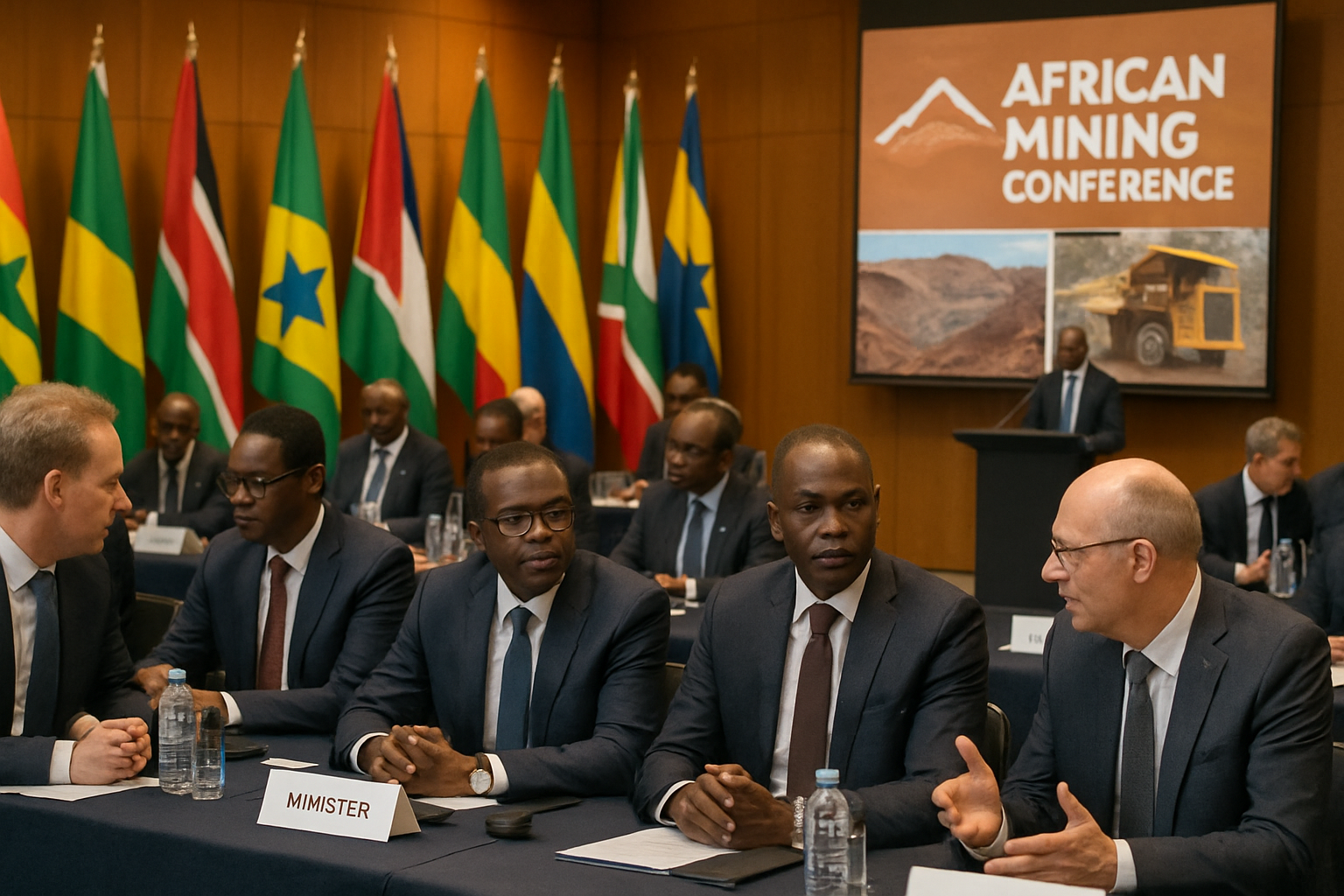
The 32nd African Mining Indaba opened in Cape Town under the theme "Stronger Together," marking a pivotal moment for Africa's mining sector as continental leaders showcase unprecedented investment momentum, regional cooperation, and a strategic shift toward sustainable resource development that prioritizes local value addition over traditional extractive models.
The summit, running February 9-12, 2026, at the Cape Town International Convention Centre, brings together ministers, investors, and industry leaders amid a transformative period for African mining that has seen massive investment surges and the emergence of new geopolitical dynamics challenging traditional supply chain dependencies.
Strategic Regional Cooperation Takes Center Stage
Ghana's Minister for Lands and Natural Resources, Emmanuel Armah-Kofi Buah, delivered a keynote address emphasizing the critical importance of aligning domestic mining reforms with broader Pan-African objectives. Speaking at a policy forum, Minister Armah-Kofi Buah stated that "despite our challenges, Africa stands on the threshold of true integration."
"Our success hinges on our collective will to align national reforms with continental goals, building institutions that transcend political cycles and fostering a transparency that earns both investor confidence and citizen trust."
— Emmanuel Armah-Kofi Buah, Ghana Minister for Lands and Natural Resources
The minister's remarks underscore a fundamental shift in African mining strategy, where countries are increasingly viewing resource development through the lens of continental integration rather than isolated national projects. This approach aligns with the African Continental Free Trade Area (AfCFTA) implementation, which enables cross-border mining ventures, regional value chains, and shared infrastructure development.
Gabon Unveils New Mining and Industrial Vision
Gabon emerged as a significant voice at the summit, with Minister of Mines and Geological Resources Sosthène Nguema Nguema presenting the country's strategic transformation from traditional mining approaches to comprehensive industrial development. The Gabonese delegation highlighted their new mining and industrial ambitions, emphasizing value-addition processing and technological innovation.
Gabon's participation reflects the broader trend across francophone Africa, where countries are asserting greater control over their mineral resources while maintaining openness to international investment. This approach has been particularly evident in recent developments across the Sahel region, where nations have increasingly demanded better terms for resource extraction partnerships.
Mozambique Strengthens Mining Investment Attraction
Mozambique reinforced its position as a leading mining investment destination during the summit, showcasing the country's significant mineral potential and improved regulatory framework. The southern African nation has positioned itself as a key player in the global energy transition, particularly given its substantial graphite reserves essential for battery production and renewable energy storage systems.
The Mozambican delegation emphasized the country's strategic location and port infrastructure, which provides access to both regional African markets and global export opportunities. This positioning becomes increasingly valuable as the world seeks to diversify supply chains away from traditional dominant suppliers.
Unprecedented Investment Momentum Drives Continental Transformation
The summit occurs amid an extraordinary surge in African mining investments that has fundamentally reshaped the continental landscape. Recent developments include Ivory Coast's approval of 732.7 billion CFA francs ($1.2 billion) worth of gold mining projects, positioning the country among West Africa's leading producers within five years.
South Africa's Industrial Development Corporation committed R325 million ($18 million) to Frontier Rare Earths' Zandkopsdrift project in the Northern Cape, representing the country's strategic response to supply chain vulnerabilities and supporting domestic beneficiation. These investments demonstrate the sophisticated financing models now available across the continent.
Burkina Faso achieved record gold production of 94 tons in 2025, generating over $6 billion in revenue under Captain Ibrahim Traoré's resource sovereignty reforms. This spectacular achievement positions the country among Africa's leading gold producers despite ongoing security challenges, demonstrating the sector's resilience and potential.
Infrastructure Development Enables Mining Growth
Continental infrastructure advancement provides the foundation for mining sector transformation. Algeria launched its western mining railway accessing the Gara Djebilet deposit, which contains the world's third-largest iron ore reserves with approximately 3.5 billion tons. President Abdelmadjid Tebboune's strategic railway connects previously inaccessible mineral wealth to transport networks and export facilities.
Angola continues reviving the historic Lobito Corridor railway, originally built in the early 1900s but now modernized to access the Democratic Republic of Congo's copper belt. This infrastructure enables regional integration while reducing dependence on raw material exports through value-added processing opportunities.
Tanzania completed feasibility studies for the 1,000-kilometer Mtwara-Mbamba Bay Standard Gauge Railway project, including branches to the Liganga iron ore deposits and Mchuchuma coal fields. Deputy Transport Minister David Kihenzile positioned this infrastructure as critical for LNG implementation and southern region development.
Geopolitical Shifts Challenge Traditional Supply Chains
The Mining Indaba occurs within the context of major geopolitical realignments affecting global mineral supply chains. Seven African countries—Angola, Democratic Republic of Congo, Guinea, Kenya, Morocco, Sierra Leone, and Zambia—participate in the US-EU-Japan Critical Minerals Partnership, challenging China's dominance of 60% global production and 90% refining capacity in critical materials.
This strategic partnership represents a fundamental shift from market-driven to security-based supply chain coordination, with Western allies seeking to diversify away from Chinese-controlled supply networks. The initiative includes minimum pricing mechanisms, alternative supply chains, and strategic stockpiling coordination designed to eliminate Chinese leverage in critical materials markets.
The African Finance Corporation released data showing Africa possesses $29.5 trillion in mineral reserves, representing 20% of the global total, yet $8.6 trillion remains untapped despite growing international demand for critical materials essential to renewable energy and electric vehicle production.
Environmental and Social Governance Evolution
Modern African mining projects increasingly incorporate advanced environmental compliance, renewable energy systems, and comprehensive community engagement frameworks. The Democratic Republic of Congo's suspension of Congo Dongfang Mining operations following environmental violations demonstrates African governments' willingness to enforce higher standards while maintaining investment attractiveness.
This regulatory evolution reflects a sophisticated balance between economic development and environmental protection, with African governments asserting resource sovereignty while ensuring projects meet international ESG standards. Companies operating in Africa must now demonstrate genuine commitment to environmental protection and community development to maintain their licenses.
Technology Integration Transforms Operations
Contemporary African mining operations integrate cutting-edge technology including advanced waste management systems, smart monitoring, renewable energy integration, and digital optimization addressing traditional infrastructure limitations. Projects incorporate sophisticated environmental monitoring, automated processing systems, and real-time data analytics that enhance both efficiency and environmental compliance.
The technology transformation enables previously uneconomical deposits to become viable through advanced extraction techniques, improved processing efficiency, and enhanced safety protocols. This technological advancement attracts international investment while building local technical capacity and knowledge transfer.
Regional Integration Through Mining Development
The African Continental Free Trade Area implementation creates unprecedented opportunities for cross-border mining ventures, shared infrastructure development, and regional value chains that benefit multiple countries simultaneously. Mining development increasingly catalyzes broader economic transformation through manufacturing capabilities, technology transfer, and regional integration initiatives.
Examples include the proposed mining corridors connecting multiple countries, shared processing facilities serving regional markets, and coordinated infrastructure development that benefits both mining operations and general economic development. This integration approach maximizes the development impact of mining investments while promoting continental unity.
Future Implications for Continental Development
The 2026 Mining Indaba represents more than a traditional investment conference; it showcases Africa's capacity for sophisticated large-scale international investment management while maintaining control over development priorities. The continent demonstrates remarkable progress in balancing immediate economic needs with long-term sustainability goals through innovative financing, enhanced governance, and strategic international partnerships.
The energy transition demand makes previously uneconomical African deposits viable while improved governance frameworks attract responsible international investment. Success depends on maintaining this balance between economic opportunity and sustainable development while ensuring mining benefits reach local communities and contribute to broader continental development objectives.
As delegates conclude their deliberations in Cape Town, the consensus emerges that Africa's mining future lies not in traditional extractive models but in comprehensive development approaches that combine resource extraction with value addition, environmental protection, and regional integration—positioning the continent as a crucial partner in global supply chain diversification while asserting African agency in determining the terms of engagement.