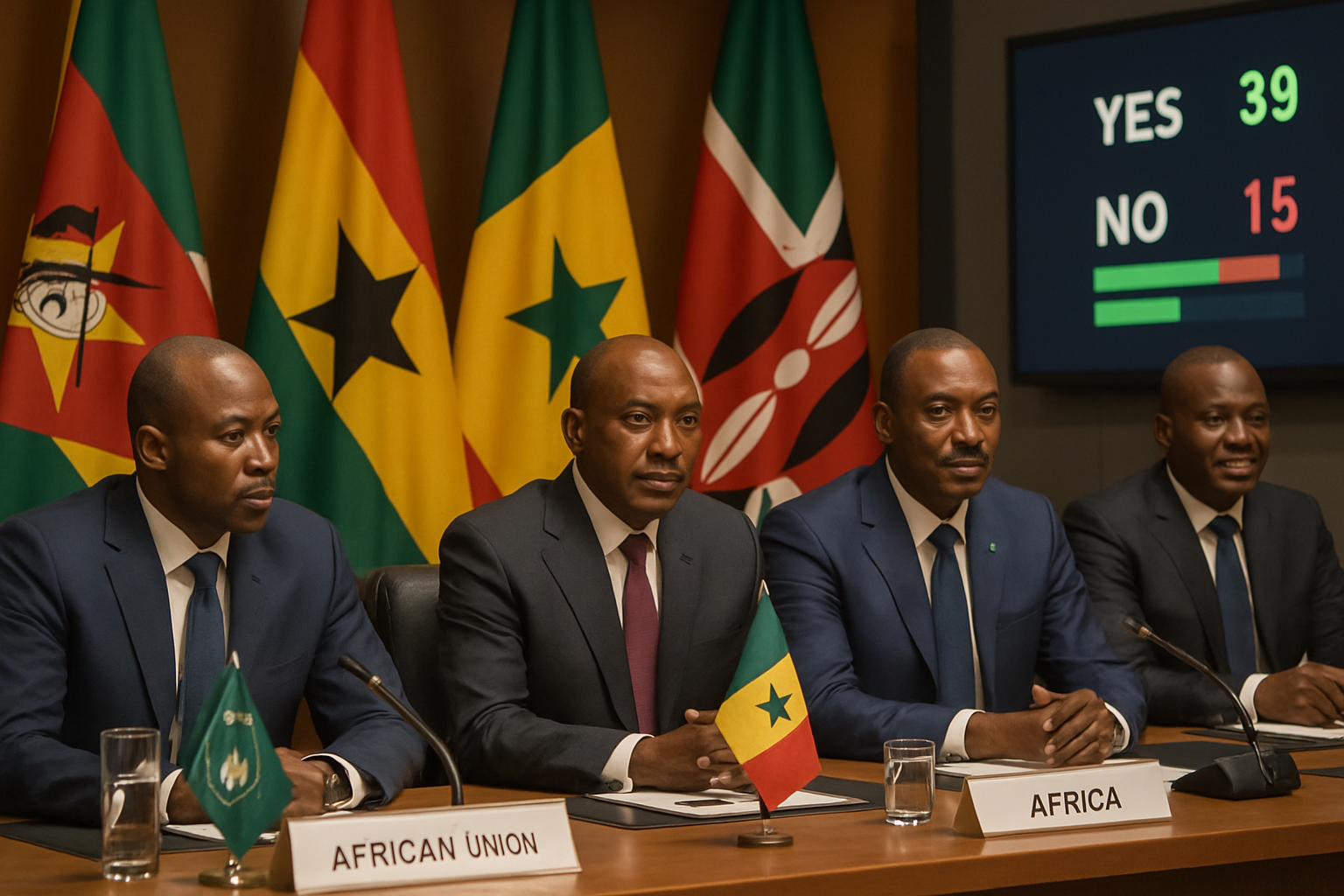
Continental Africa is witnessing unprecedented political transformation as multiple nations navigate constitutional reforms, electoral processes, and governance challenges that reflect the continent's growing political sophistication and institutional maturity.
The Democratic Republic of Congo stands at the center of significant constitutional debate as the ruling Union sacrée de la Nation (USN) has formally called for constitutional revision proposals, creating intense controversy across the political spectrum. Opposition parties and civil society organizations have strongly denounced these calls as both a "distraction" from pressing governance issues and a "rebellion" against established democratic norms.
According to reports from Le Potentiel, the USN has adopted what it describes as a "new approach" that prioritizes constitutional revision before engaging in broader national dialogue. This sequencing has generated substantial controversy among political observers who argue that constitutional changes should emerge from inclusive national discussions rather than precede them.
Tanzania's Electoral Integrity Commission
In a parallel development showcasing African approaches to electoral accountability, Tanzania has released a government-led inquiry into election violence that occurred during the country's previous electoral cycle. The commission, notably appointed by President herself, represents a significant step toward institutional accountability and democratic transparency.
This commission's work occurs against the backdrop of broader West African electoral challenges, where democratic institutions face mounting pressure to maintain independence, transparency, and public trust. The Tanzanian approach of presidential appointment for electoral investigation has drawn both praise for executive accountability and criticism regarding potential conflicts of interest.
Constitutional Reform Controversies
The DRC constitutional debate reflects broader continental tensions between institutional stability and democratic evolution. Constitutional experts argue that the timing and methodology of proposed revisions raise fundamental questions about democratic process and popular sovereignty.
Civil society groups have characterized the USN's approach as undermining the principle that constitutional changes should emerge from broad-based national consensus rather than partisan political calculations. The controversy highlights the delicate balance African nations must strike between necessary institutional modernization and respect for democratic procedures.
"Constitutional revision should serve the people's interests, not political party agendas. The sequence of consultation versus revision matters fundamentally for democratic legitimacy."
— Constitutional Law Expert, Kinshasa University
Regional Electoral Patterns
These developments occur within a broader context of African electoral evolution. Recent successful democratic transitions in countries like Benin, where President Romuald Wadagni achieved a historic landslide victory with 94.05% of votes, demonstrate the continent's capacity for peaceful democratic transitions when institutions function effectively.
The contrast between successful electoral processes and controversial constitutional manipulations highlights the diversity of African democratic experiences. Countries that have maintained transparent electoral procedures continue to build public confidence in democratic institutions, while those experiencing constitutional controversies face mounting legitimacy challenges.
Economic Development and Political Stability
These political developments unfold against the backdrop of Africa's remarkable economic transformation. The African Finance Corporation reports that the continent holds $29.5 trillion in mineral reserves, representing 20% of the global total, with $8.6 trillion remaining untapped. This economic potential creates both opportunities for development-driven political stability and risks of resource-related governance challenges.
Major infrastructure projects across the continent, including Algeria's Gara Djebilet railway accessing the world's third-largest iron ore reserves and Angola's Lobito Corridor connecting Atlantic ports to DRC mineral regions, are creating new economic realities that require sophisticated governance frameworks.
International Cooperation and Sovereignty
African nations are demonstrating increasing strategic autonomy in managing international partnerships while maintaining development sovereignty. Seven African countries—Angola, DRC, Guinea, Kenya, Morocco, Sierra Leone, and Zambia—participate in the US-EU-Japan Critical Minerals Partnership, challenging China's dominance in production and refining.
Simultaneously, China has offered zero-tariff access to 53 African countries beginning May 1, 2026, representing the most comprehensive China-Africa trade expansion in history. This dual engagement strategy demonstrates African sophistication in managing competing international relationships while pursuing continental development objectives.
Institutional Challenges and Opportunities
The current political developments reveal both the strengths and weaknesses of African democratic institutions. Countries with transparent constitutional processes and inclusive political dialogue continue to strengthen democratic governance, while those experiencing institutional manipulation face mounting internal and external pressure.
The African Continental Free Trade Area (AfCFTA) framework provides new opportunities for regional integration that could support democratic consolidation through economic interdependence. Cross-border trade relationships create stakeholder incentives for political stability and transparent governance.
Climate Adaptation and Governance
Political developments occur during an unprecedented climate challenge, with January 2026 marking the 18th consecutive month of temperatures exceeding 1.5°C above pre-industrial levels. This climate reality requires governance systems capable of long-term planning and adaptive management, making institutional stability increasingly critical.
Countries implementing climate-resilient governance frameworks while maintaining democratic accountability are positioning themselves for sustainable development success. Those experiencing constitutional instability face greater challenges in addressing climate adaptation requirements effectively.
Future Implications
The convergence of constitutional debates, electoral processes, and economic transformation creates a critical juncture for African political development. Success in maintaining democratic legitimacy while pursuing necessary institutional modernization could establish templates for 21st-century governance that balance stability with accountability.
International observers are monitoring these developments closely, as African approaches to constitutional reform and electoral integrity may influence democratic governance patterns globally. The continent's experience managing political transitions during rapid economic change provides valuable lessons for other regions facing similar challenges.
The stakes extend beyond individual countries to continental integration success. Political stability and institutional credibility are prerequisites for fully realizing Africa's economic potential and achieving the development objectives outlined in frameworks like AfCFTA and various national transformation strategies.
As April 2026 unfolds, these political developments represent a potential inflection point that could determine African governance patterns for decades ahead. The continent's ability to navigate constitutional challenges while maintaining democratic legitimacy will significantly influence its emergence as a strategic global partner capable of sophisticated policy implementation while preserving development sovereignty.