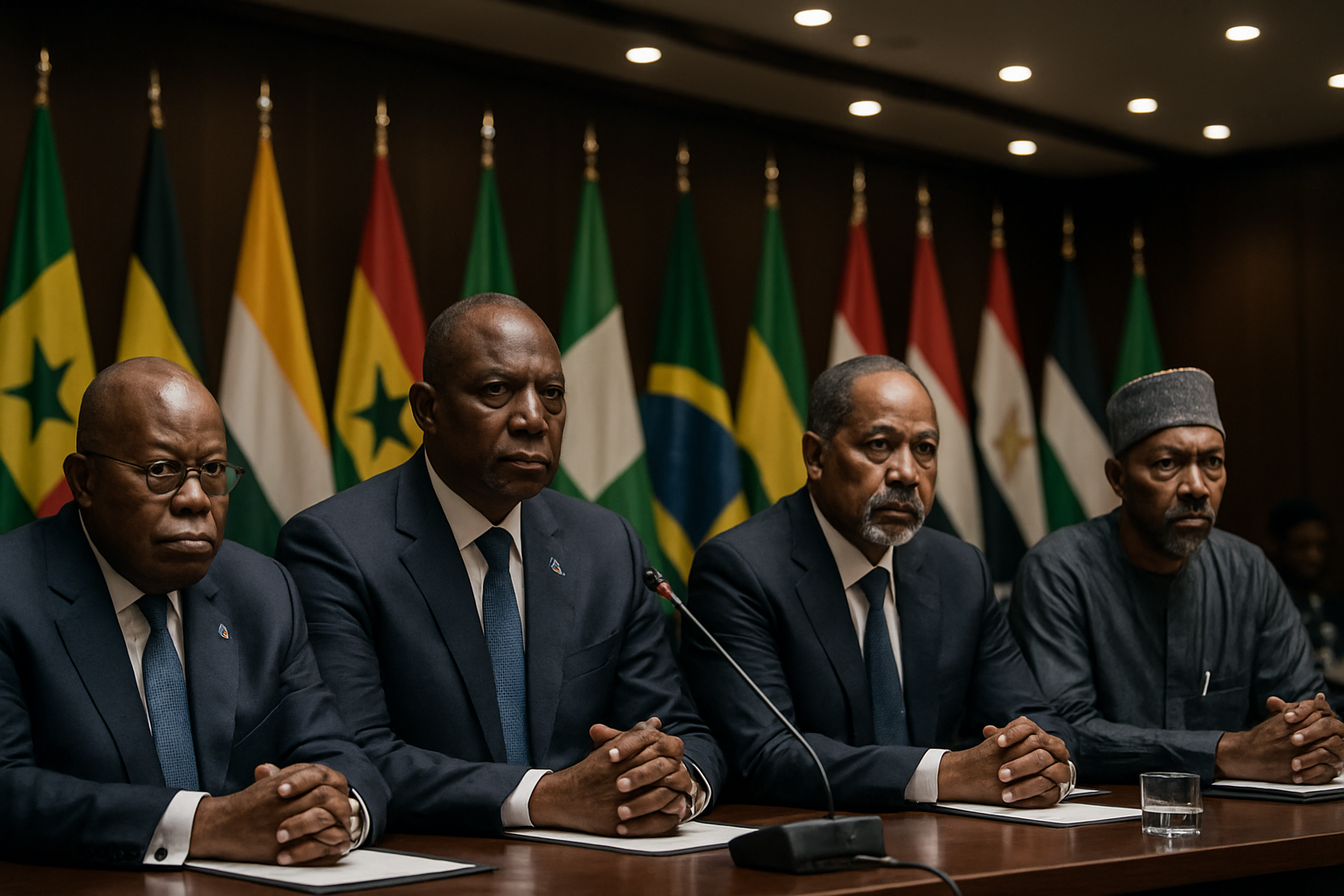
Significant political developments across the African continent in February 2026 are reshaping regional alliances and governance structures, with diplomatic strengthening between North African nations coinciding with major peacekeeping transitions in Central Africa and democratic developments in the Balkans.
Algeria-Egypt Relations Reach New Heights
In a remarkable display of North African unity, Egyptian President Abdel Fattah El-Sisi publicly welcomed statements made by Algerian President Abdelmadjid Tebboune regarding bilateral relations, describing them as reflective of "the depth of the historical bonds between the two brotherly countries." The Egyptian leader, posting on his official Facebook page, emphasized that what unites Egypt and Algeria represents "a journey full of struggle and cooperation in facing various common challenges."
This diplomatic strengthening comes as President Tebboune praised the "level of brotherhood and friendship relations with Egypt" during his regular media briefing, while firmly rejecting any threat to Algeria's security and stability. The exchange marks a significant moment in Arab regional politics, demonstrating sustained cooperation between two of North Africa's most influential nations.
Central African Peacekeeping Transition
Meanwhile, Central Africa experienced a major shift in international peacekeeping arrangements as the United Nations Organization Stabilization Mission in the Democratic Republic of the Congo (MONUSCO) confirmed the withdrawal of South Africa's last remaining military contingents from the DRC. In a communiqué published Sunday, February 8, MONUSCO announced it had been informed by the UN Secretariat of South Africa's decision to withdraw its final soldiers still deployed in the Democratic Republic of Congo.
The UN mission expressed "profound gratitude to the South African government and people for their long-standing commitment in the DRC, as well as to the Blue Helmets who served, sometimes at the cost of their lives, under the United Nations flag." This withdrawal marks the end of a significant chapter in South Africa's peacekeeping involvement in Central Africa and reflects broader changes in international military engagement on the continent.
Congolese Presidential Politics
In a development that has captured continental attention, Republic of Congo President Denis Sassou Nguesso announced his candidacy for a fifth term in office. At 82 years old, the leader who has been in power for over four decades made the announcement on February 5 during a fair event, demonstrating his intention to continue governing despite his advanced age.
Commentary from Burkina Faso media outlets suggested that this announcement was hardly surprising, with analysts noting that "it would be the opposite that would have been astonishing." Sassou Nguesso's decision reflects the persistence of long-term leadership patterns across parts of Africa, where veteran politicians continue to seek extended mandates.
Balkan Electoral Developments
Beyond the African continent, significant electoral developments occurred in the Balkans region with direct implications for regional stability. The Central Election Commission of Bosnia and Herzegovina released official preliminary results of repeated snap presidential elections in Republika Srpska, with the Alliance of Independent Social Democrats (SNSD) candidate Siniša Karan securing victory.
The electoral process, which involved 84,474 eligible voters, concluded with polling stations closing at 7 PM. Prior to the voting, Social Democratic Party (SDS) candidate Branko Blanuša had entered with a lead of 6,245 votes, but Karan ultimately prevailed in what became a decisive electoral outcome for the entity's political future.
Karan's victory represents a significant political development in the complex constitutional structure of Bosnia and Herzegovina, where entity-level elections carry substantial implications for state-level governance and regional stability in the Western Balkans.
Regional Security Implications
These political developments occur against a backdrop of evolving security dynamics across both Africa and Southeastern Europe. The withdrawal of South African forces from the DRC comes at a time when the region continues to face significant security challenges, requiring sustained international attention and potentially new peacekeeping arrangements.
In North Africa, the strengthened Algeria-Egypt relationship provides a foundation for enhanced regional cooperation on security matters, economic development, and continental governance issues. Both nations play crucial roles in African Union mechanisms and Mediterranean partnerships, making their collaboration significant for broader regional stability.
Implications for African Continental Governance
The February 2026 political developments reflect broader trends in African governance, including the persistence of long-term leadership, evolving international partnerships, and changing dynamics in peacekeeping and conflict resolution. The strengthening of Algeria-Egypt relations demonstrates the potential for enhanced South-South cooperation, while peacekeeping transitions in Central Africa highlight the ongoing challenges of maintaining stability in conflict-affected regions.
These developments come as African nations continue to navigate complex relationships between domestic governance needs, regional integration objectives, and international partnership arrangements. The African Continental Free Trade Area implementation and various regional economic community initiatives provide frameworks for enhanced cooperation, while individual national political dynamics continue to shape the continental landscape.
The political shifts observed in February 2026 suggest that African governance is entering a new phase characterized by both continuity in leadership patterns and evolution in international engagement approaches. Success in addressing the continent's governance challenges will depend on balancing these dynamics while maintaining focus on citizen welfare and democratic institutional development.