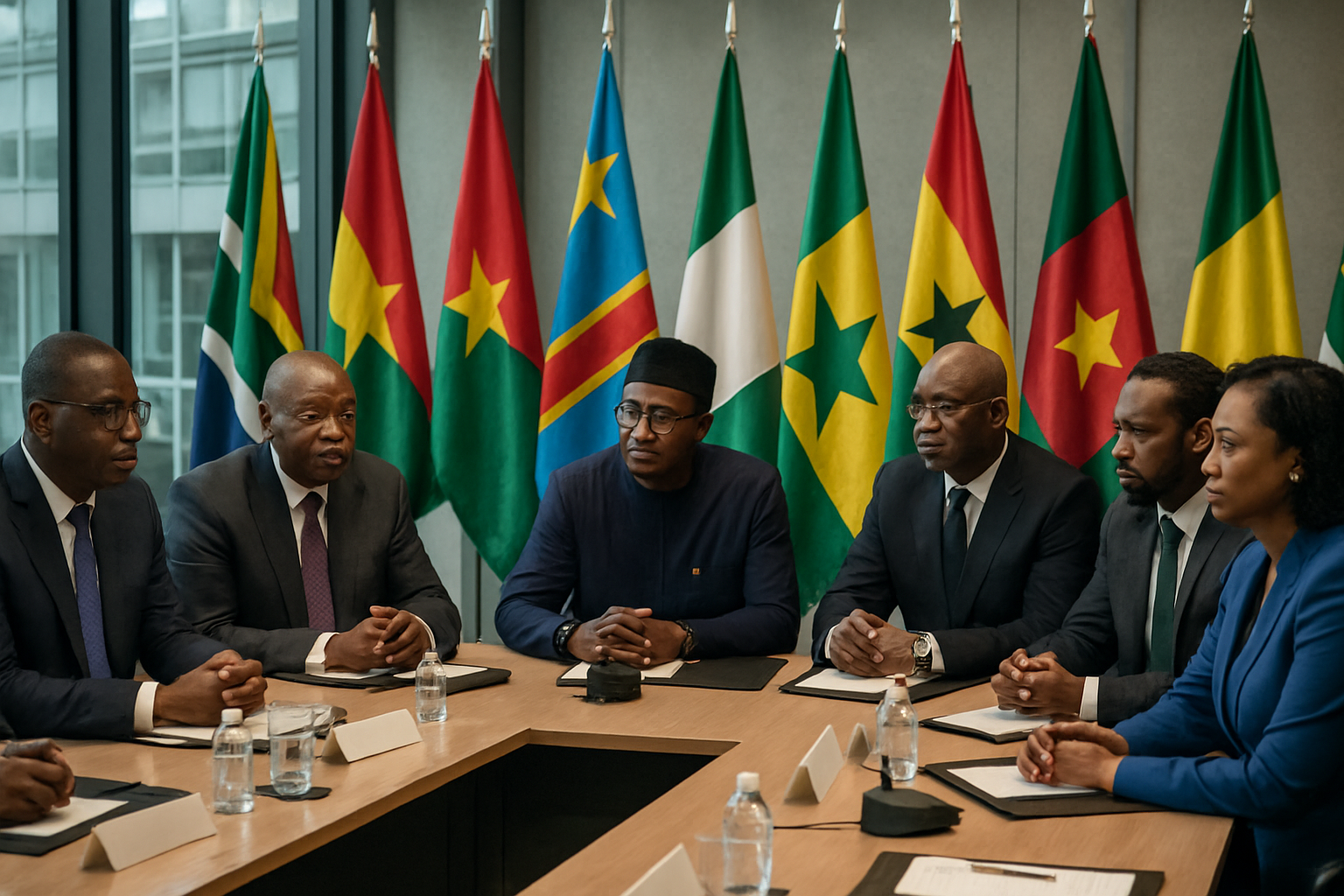
A wave of significant political and economic developments swept across Africa in March 2026, from the passing of former political leaders to major financial sector reforms, underscoring the continent's rapid transformation amid growing international partnerships and internal governance evolution.
The month opened with sobering news from Botswana, where the nation mourned the death of a former parliamentary Speaker at age 78. The loss was commemorated with poignant words reflecting on great souls who "existed" and inspired others to "be better," highlighting the passing of an influential political generation that helped shape modern African governance structures.
Justice and Accountability in Central Africa
Central African Republic marked a significant moment in its justice system as militia leader Maturin Kombo died in custody, bringing renewed focus to the country's ongoing efforts to address past conflicts and ensure accountability. Human Rights Watch emphasized that Kombo's death "highlights continued need for justice" in a nation still working to consolidate peace and democratic institutions after years of conflict.
This development reflects broader continental trends toward strengthening rule of law and transitional justice mechanisms, building on previous African Union initiatives and the work of international criminal courts in addressing serious crimes committed during conflicts across the region.
Kenya's Budget Transparency Initiative
In a move toward greater fiscal transparency, Kenya's Parliament invited public comments on a supplementary budget proposal that would nearly double State House spending to Ksh17 billion. The initiative represents a significant step in democratic accountability, allowing citizens to directly engage with government spending decisions ahead of the 2026/2027 budget announcement scheduled for June.
The budget discussions come as Kenya continues to demonstrate fiscal responsibility with its recently approved Ksh4.7 trillion national budget, projecting Ksh3.53 trillion in revenue and maintaining a 5.3% GDP deficit ratio that has earned continued IMF support for the country's economic trajectory.
"Through deliberate policy actions, we eliminated the system of multiple exchange rates and significantly reduced the parallel market premium."
— Central Bank Governor Cardoso, on Nigeria's forex reforms
Nigeria's Financial Sector Revolution
Nigeria achieved a major breakthrough in foreign exchange market stability, with Central Bank Governor Cardoso announcing that forex market reforms have raised capital inflows by 200%. The comprehensive policy overhaul eliminated multiple exchange rate systems and significantly reduced parallel market premiums, creating a more unified and transparent currency market.
These reforms build on Nigeria's broader fintech revolution, where the country now processes 43% of fuel sales through digital payments with same-day settlements, solving critical liquidity challenges while positioning Nigeria as a continental leader in financial technology innovation.
Continental Integration Momentum
The political and economic developments occur against the backdrop of accelerating African continental integration. The African Continental Free Trade Area (AfCFTA) continues to drive cross-border collaboration, while major infrastructure projects like Algeria's Gara Djebilet railway and Angola's Lobito Corridor are creating the physical foundations for enhanced trade flows.
Recent data from the African Finance Corporation shows the continent holds $29.5 trillion in mineral reserves—representing 20% of global reserves—with $8.6 trillion still untapped. This vast resource base, combined with improving governance frameworks and international partnerships, is attracting unprecedented investment interest.
Strategic International Partnerships
Africa's growing strategic importance is reflected in diverse international partnerships. Seven African countries—Angola, DRC, Guinea, Kenya, Morocco, Sierra Leone, and Zambia—are participating in the US-EU-Japan Critical Minerals Partnership, challenging Chinese dominance in critical materials processing while maintaining strategic autonomy.
Simultaneously, China announced zero-tariff access for 53 African countries starting May 1, 2026, representing the most comprehensive China-Africa trade expansion in history. This dual-track approach demonstrates sophisticated African diplomacy, leveraging multiple partnerships while maintaining development control.
Democratic Governance Evolution
The political developments in March reflect broader trends in African democratic governance. From Botswana's constitutional debates to Kenya's budget transparency initiatives and the Central African Republic's justice processes, nations across the continent are grappling with how to balance institutional development with immediate social needs.
These governance challenges occur amid significant continental infrastructure development, including ongoing negotiations for enhanced border facilities, regional cooperation frameworks, and digital government services that are transforming how African states interact with their citizens and each other.
Economic Diversification Success Stories
Nigeria's forex reforms represent part of a broader pattern of economic modernization across the continent. Countries are moving beyond traditional extractive models toward comprehensive development strategies that emphasize value addition, regional integration, and technological advancement.
The success of mobile money systems, with Nigeria leading digital payment adoption, demonstrates Africa's capacity for financial innovation that leapfrogs traditional banking infrastructure. These technological advances are creating new opportunities for regional trade and economic integration under the AfCFTA framework.
Climate Adaptation and Resilience
Political and economic developments are increasingly shaped by climate adaptation requirements, with January 2026 marking the 18th consecutive month of temperatures exceeding 1.5°C above pre-industrial levels. African governments are integrating climate resilience into infrastructure planning, economic policies, and international cooperation frameworks.
This climate focus is driving innovation in renewable energy, sustainable agriculture, and environmental governance, positioning Africa as both a climate solutions provider and a responsible steward of global environmental resources.
Looking Forward: Continental Trajectory
The March 2026 developments signal Africa's evolution from aid recipient to strategic partner capable of sophisticated international cooperation while maintaining development autonomy. Success factors include sustained political commitment, transparent governance frameworks, community engagement, and international cooperation that respects sovereignty.
As African nations continue to strengthen democratic institutions, implement economic reforms, and build continental integration mechanisms, the trajectory points toward enhanced global influence and improved prosperity for the continent's 1.4 billion people. The combination of democratic accountability, economic innovation, and strategic international partnerships positions Africa as an increasingly important global actor in addressing 21st-century challenges.