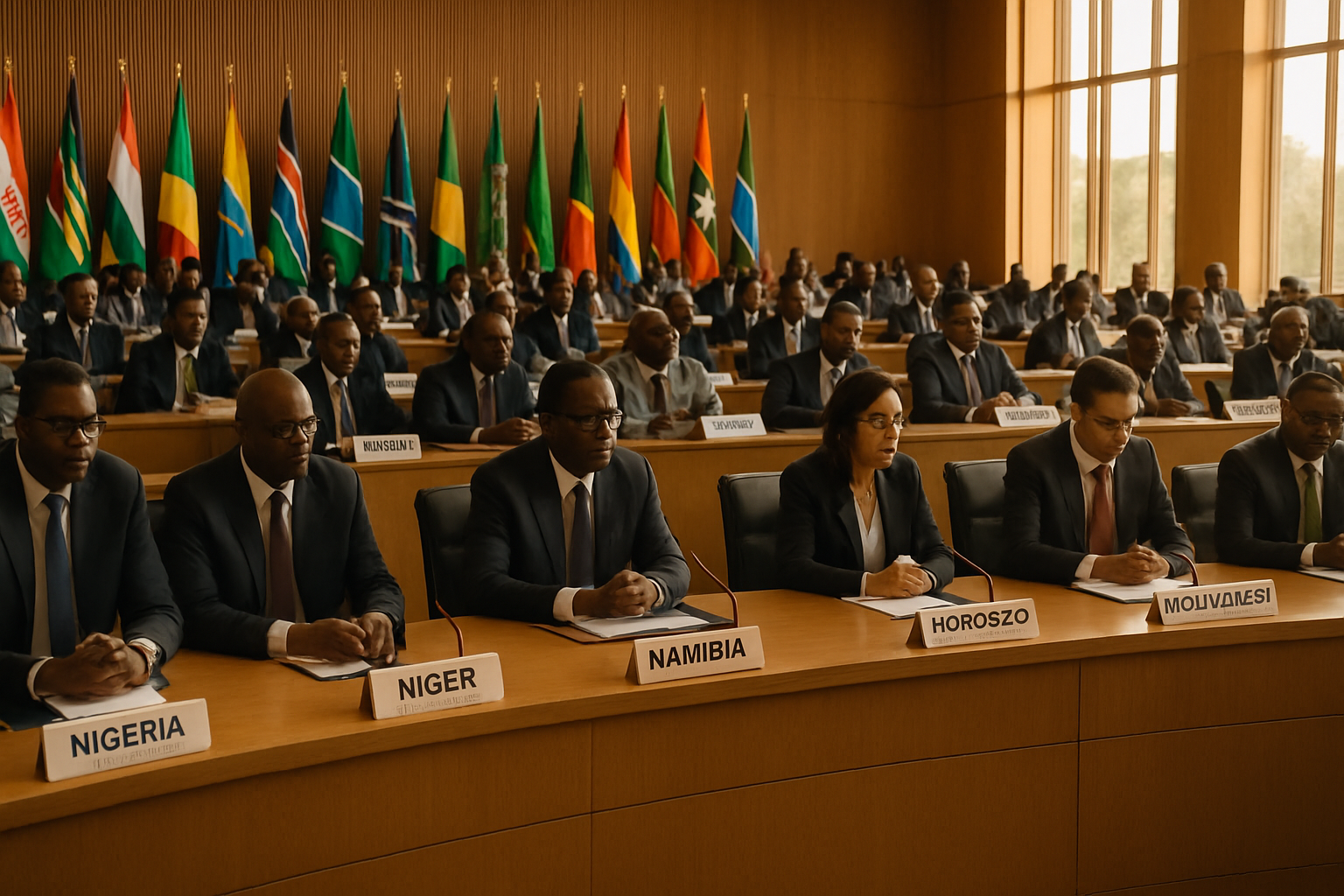
Across the African continent, nations are grappling with a complex web of political instability, security threats, and governance challenges that underscore the urgent need for coordinated regional responses and sustained international engagement.
Sudan: The World's Worst Humanitarian Crisis
Sudan continues to dominate African security concerns, with the ongoing civil war entering its third year amid escalating violence. Recent reports from the Blue Nile region reveal devastating attacks, with coalition forces comprising the Sudan People's Liberation Movement-North and Rapid Support Forces launching drone strikes on Karamak city, resulting in civilian casualties and damage to civilian infrastructure.
The systematic targeting of civilian areas represents a clear violation of international humanitarian law, adding to what the UN has described as the world's worst humanitarian crisis. The conflict has displaced over 11 million people and killed tens of thousands, creating ripple effects throughout the region.
South Sudan: Political Tensions and Democratic Aspirations
South Sudan faces its own political crisis as the government maintains that the fate of suspended First Vice President Dr. Riek Machar "rests entirely with the judiciary," rejecting international calls for his release. This stance comes despite demands from Nigeria and other African Union members for the "immediate and unconditional release" of detained opposition figures.
The Kenya-mediated Tumaini Initiative continues to offer hope for political dialogue, with the United Peoples' Alliance expressing readiness to participate in new peace talks while demanding the release of political prisoners. However, ceasefire monitoring reports reveal 407 alleged violations between August 2025 and January 2026, highlighting the fragility of South Sudan's 2018 peace agreement.
"Agreements are upheld not by signatures, but through consistent compliance. Protection of civilians must be unconditional, and ceasefire adherence must be uniform."
— Teshome Anagawe Ayana, Chairperson of South Sudan's Ceasefire Monitoring Mechanism
In a move that has drawn international attention, President Salva Kiir signed the controversial Cyber Crimes and Computer Abuse Act 2026, aimed at tackling online offenses and curbing harmful content including hate speech. Critics worry about potential restrictions on freedom of expression during this critical political period.
Nigeria: Coup Investigations and Security Challenges
Nigeria confronts multiple security crises, with fresh arrests made in connection with alleged coup plots against President Bola Tinubu. Military officers accused of plotting against the government have been held in custody for nearly five months without access to relatives or legal counsel, according to their families, raising concerns about due process and fair hearing rights.
The security situation has deteriorated further with the killing of traditional ruler Oba Kehinde Jacob Faledon in Ondo State during a failed abduction attempt by suspected bandits. This incident exemplifies the broader security challenges facing Nigeria, particularly in northern regions where armed groups continue to target civilians.
In a positive development, troops of Operation Enduring Peace successfully eliminated five suspected kidnappers and rescued an abducted woman in Plateau State, demonstrating ongoing efforts to combat criminality and restore security.
Regional Counterterrorism Efforts
Niger has reported significant success in counterterrorism operations, with security forces neutralizing 43 terrorists in coordinated air-ground operations between February 9-15. These operations represent part of broader regional efforts to combat extremist groups operating across the Sahel region.
However, the investigation "Le Business du Désespoir" (The Business of Despair) has revealed the troubling recruitment of African fighters by Russian forces, highlighting how regional conflicts have become entangled with global geopolitical tensions. The report documents "the unbearable martyrdom of African combatants in the Russian army," exposing exploitation of vulnerable populations for foreign military objectives.
Chad: Labor Disputes and Educational Challenges
Chad faces internal challenges as the Teachers' Union continues its strike despite government proposals for a negotiation schedule. The union demands concrete action on implementing decree no. 2850 concerning the special status of education personnel, reflecting broader issues with public sector employment and educational system funding across the continent.
Democratic Republic of Congo: Military Justice and Child Protection
The DRC demonstrates both progress and ongoing challenges in its justice system. A military tribunal in Kamina sentenced a soldier to life imprisonment for murder, showing efforts to hold security forces accountable. However, the Initiative Eminent Mwanda organization has raised alarms about the deterioration of children's situation in eastern DRC, with grave violations of children's rights increasing due to persistent armed conflicts.
According to their investigations conducted between October 2025 and January 2026, violence against children has "exploded" in eastern regions, with widespread recruitment by armed groups and systematic targeting of educational and health facilities.
West African Political Dynamics
In Liberia, political tensions have emerged around the controversial "National Fula Security of Liberia" organization. The Ministry of Justice ordered immediate cessation of the group's activities, citing "serious national security concerns," while President Joseph Boakai's Press Secretary has defended the organization, calling for its reform rather than an outright ban.
The Liberian House of Representatives has demanded appearances by the Minister of Justice, National Security Agency, and Police Inspector General to provide clarity on the security implications of such organizations.
Sierra Leone continues its impressive trajectory in gender equality under President Julius Maada Bio, with UN Women's Regional Director reaffirming support for the country's implementation of the Gender Equality and Women's Empowerment Act during high-level meetings in Freetown.
East African Security Concerns
In Kenya, political tensions continue as Rigathi Gachagua and the United Opposition plan demonstrations at the Inspector General's office, raising concerns among Nairobi traders about security ahead of these political activities.
Uganda faces its own political crisis with opposition leader Robert Kyagulanyi (Bobi Wine) announcing that his entire family has fled the country for safety reasons, citing concerns about the "violent military dictatorship." This development has drawn international attention to Uganda's human rights situation.
Continental Response Mechanisms
The African Union's recently reconstituted Peace and Security Council, including new members Somalia, DRC, Morocco, Uganda, and others, faces immediate challenges in addressing these multiple concurrent crises. The AU's capacity for effective continental governance is being tested by the scope and complexity of security challenges spanning from the Sahel to East Africa.
The recent 39th AU Summit's focus on water security and sustainable development, while important, highlights the tension between addressing immediate security crises and long-term development goals. With Sudan's civil war, South Sudan's political instability, Nigeria's security challenges, and various other conflicts, the continent requires both emergency response mechanisms and sustainable governance solutions.
International Engagement and Support
International partners continue to play crucial roles in supporting African security and governance initiatives. The Netherlands Embassy's football campaign for peace in South Sudan exemplifies innovative approaches to conflict prevention, while Norway's support for youth enterprise development demonstrates sustained international commitment to addressing root causes of instability.
However, the scale of challenges requires enhanced coordination between African institutions, regional organizations, and international partners. The interconnected nature of security threats—from terrorism in the Sahel to political instability in Central Africa—demands comprehensive, continent-wide responses that address both immediate security needs and underlying governance deficits.
Looking Forward: The Path to Stability
The current crisis across multiple African nations underscores the critical importance of strengthening democratic institutions, ensuring accountability of security forces, and addressing root causes of conflict including poverty, inequality, and weak governance structures.
Success in addressing these challenges will require sustained political will from African leaders, enhanced capacity of regional organizations like the AU and ECOWAS, and continued international support that respects African agency while providing necessary resources and expertise.
As the continent faces these interconnected challenges, the resilience and determination of African civil society, youth movements, and democratic institutions offer hope for eventual stability and prosperity. The path forward requires comprehensive approaches that combine immediate security responses with long-term investments in governance, education, economic opportunity, and conflict prevention mechanisms.