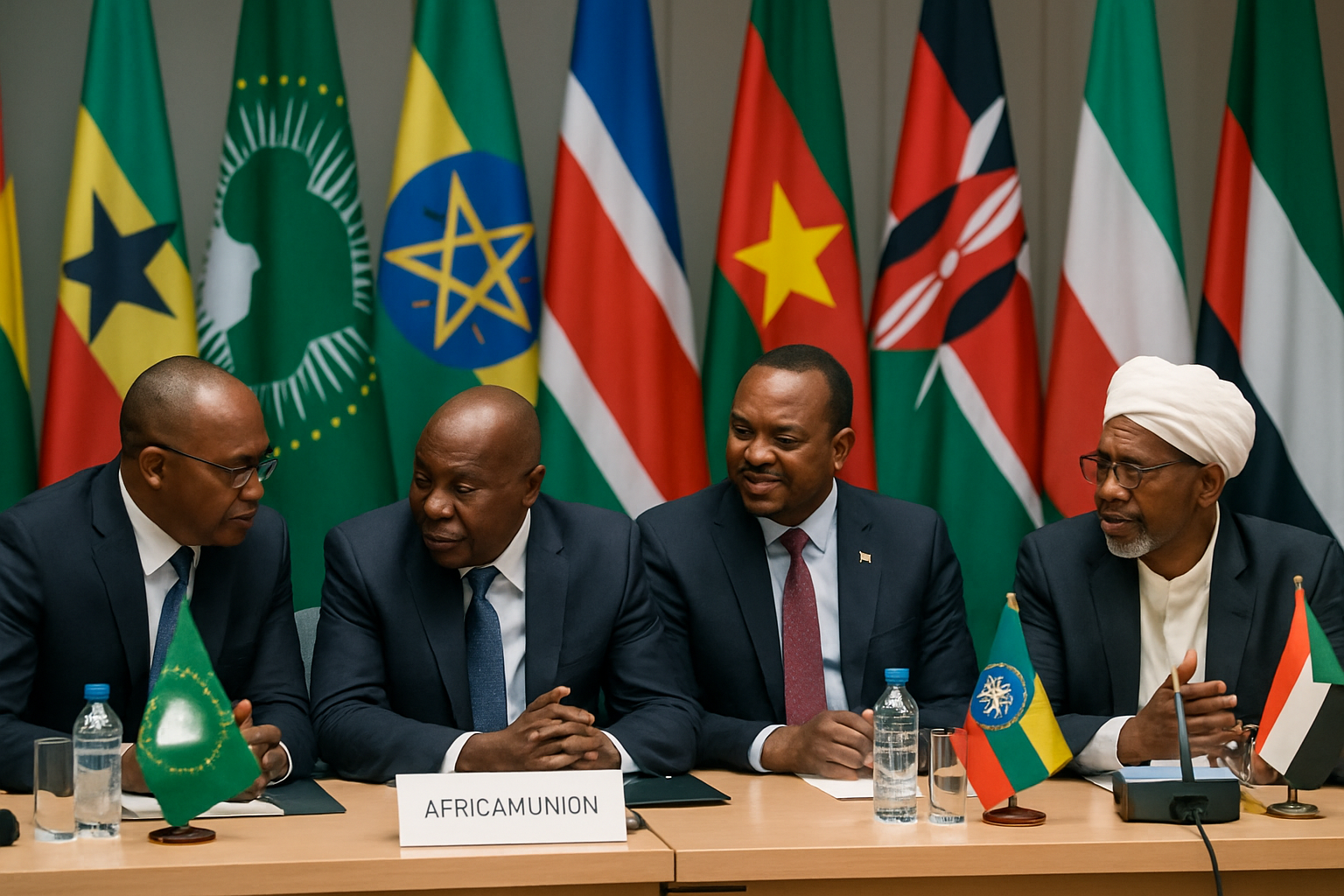
Across the African continent, April 2026 has witnessed a remarkable convergence of political developments that underscore both the complexity and sophistication of contemporary African governance. From military governance consolidation in West Africa to diplomatic breakthroughs in East Africa, the continent's political landscape reflects an evolving balance between sovereignty, regional cooperation, and international engagement.
West Africa: Governance Innovation Under Military Leadership
Burkina Faso continues to showcase innovative approaches to governance under Captain Ibrahim Traoré's leadership, with significant developments emerging from the April 16 Council of Ministers meeting. The government announced the nationalization of SOFITEX, the country's major cotton company, marking a decisive shift toward resource sovereignty that builds on the nation's record-breaking gold production achievements of 2025.
The decision to abrogate decrees establishing the National Commission for Human Rights (CNDH) represents a restructuring of institutional frameworks, with government spokesman Pingdwendé Gilbert Ouédraogo emphasizing alignment with the "full development of the Burkinabé people." This institutional reorganization occurs alongside the creation of the Burkinabé Economic and Social Development Fund (FBDES Tõogo), a consolidated financial mechanism merging seven existing funds to streamline development financing.
"These reforms demonstrate our commitment to sovereignty and effective governance structures that serve our people's needs,"
— Captain Ibrahim Traoré, President of Burkina Faso
The broader regional context includes the Alliance of Sahel States (AES) maintaining its distinctive approach to governance and regional cooperation. Niger's partnership with Algeria on higher education and reproductive health initiatives demonstrates the continued emphasis on South-South cooperation, with the UNFPA collaboration focusing on demographic transition and youth empowerment.
East Africa: Diplomatic Tensions and International Relations
Somalia's political landscape has been marked by significant diplomatic tensions, particularly regarding Somaliland's appointment of an ambassador to Israel. The Federal Government of Somalia's strong objection to this diplomatic initiative highlights the complex relationship between Mogadishu and the self-declared republic of Somaliland.
In a separate but equally significant development, Puntland has formally rejected the extension of Somalia's federal institutions' terms, warning of potential constitutional and political instability. This resistance from the semi-autonomous region reflects deeper challenges in Somalia's federal governance structure and the ongoing negotiations over power-sharing arrangements.
The tensions demonstrate the intricate balance between regional autonomy and federal authority that continues to shape Somali politics, with implications for stability and governance effectiveness across the Horn of Africa.
Southern and Central Africa: Justice, Development, and Regional Integration
Uganda's political discourse has been dominated by demands from Karamoja regional leaders for comprehensive prosecutions related to the iron sheet scandal. Following the conviction of former State Minister Agnes Nandutu, local leaders are calling for accountability that extends beyond individual cases to address systemic corruption affecting vulnerable communities.
This push for broader justice reflects a growing demand for institutional accountability across the continent, with civil society organizations playing increasingly important roles in maintaining democratic oversight and transparency.
North Africa: Diplomatic Leadership and Regional Cooperation
Algeria has emerged as a key diplomatic player, with Foreign Minister Ahmed Attaf representing President Tebboune at the Antalya Diplomatic Forum in Turkey. This high-level participation demonstrates Algeria's renewed engagement with international diplomatic initiatives and its positioning as a bridge between Africa, the Mediterranean, and the broader international community.
The participation also reflects Algeria's broader strategy of leveraging its resource wealth and diplomatic experience to play a constructive role in regional and continental affairs, particularly in light of ongoing Sahel challenges and the need for enhanced cooperation mechanisms.
International Partnerships and Continental Cooperation
Recent developments highlight Africa's increasingly sophisticated approach to international partnerships. The arrest of activist Kémi Seba in South Africa, related to alleged involvement in a failed coup attempt in Benin, demonstrates the complex intersection of pan-African activism, national sovereignty, and international legal cooperation.
Meanwhile, Algeria's participation in the inauguration of Congo-Brazzaville President Denis Sassou Nguesso showcases continued diplomatic solidarity among African nations, with these ceremonial events serving important functions in maintaining continental relationships and cooperation frameworks.
Economic Development Amid Political Evolution
The political developments occur against the backdrop of continued economic transformation across the continent. Burkina Faso's institutional reforms build on its successful gold sector management, which generated over $6 billion in revenue in 2025. The nationalization of SOFITEX represents a strategic move to maintain control over key agricultural exports while ensuring value addition remains within national borders.
This approach reflects broader continental trends toward resource sovereignty and value addition, with countries increasingly asserting control over their natural resources while maintaining beneficial international partnerships. The strategy aligns with the African Continental Free Trade Agreement's objectives of promoting intra-African trade and industrial development.
Security Challenges and Regional Responses
Throughout these political developments, security challenges continue to influence governance decisions across the continent. The emphasis on institutional reform in countries like Burkina Faso partially reflects the need for more effective governance structures capable of addressing transnational security threats while maintaining democratic accountability.
Regional cooperation mechanisms, including through the African Union and sub-regional organizations, continue to evolve in response to these challenges. The balance between national sovereignty and regional cooperation remains a central theme in contemporary African politics.
Looking Forward: Continental Integration and Governance Innovation
The developments of April 2026 illustrate the complex navigation required as African nations balance multiple priorities: maintaining sovereignty, addressing security challenges, promoting economic development, and participating in regional and international cooperation frameworks. The diversity of approaches across different regions demonstrates the absence of a one-size-fits-all solution to governance challenges.
What emerges clearly is the continent's increasing confidence in charting its own course while maintaining beneficial relationships with international partners. From Burkina Faso's institutional innovations to Somalia's federal negotiations, African nations are demonstrating sophisticated approaches to governance that reflect both local contexts and global realities.
The continued emphasis on South-South cooperation, resource sovereignty, and institutional accountability suggests that African political evolution will continue to prioritize African-led solutions while remaining open to beneficial international partnerships. This balance between independence and cooperation may well define the continent's political trajectory in the years ahead.
As these developments unfold, they contribute to a broader narrative of African agency in global affairs, with the continent increasingly positioned as a strategic partner rather than a passive recipient of external initiatives. The sophistication of current diplomatic and governance innovations suggests that this trend will only accelerate as African nations continue to consolidate their political institutions and expand their international engagement.