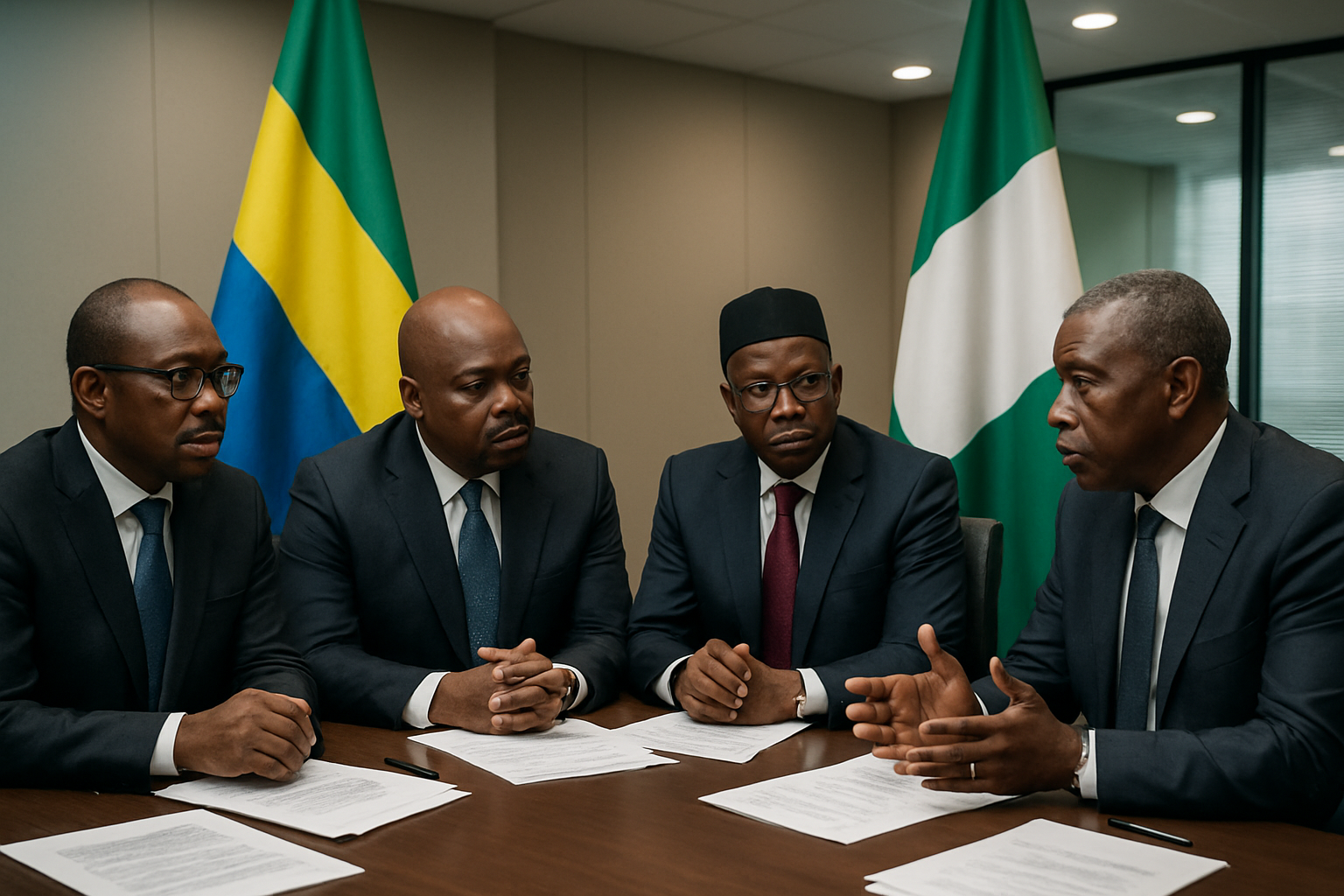
African political and social developments in April 2026 reveal a continent increasingly confident in its diplomatic capacity while pursuing ambitious domestic reforms, as nations from Gabon to Nigeria implement comprehensive governance initiatives that balance sovereignty with strategic international partnerships.
The current wave of African political evolution extends far beyond isolated national policies, representing coordinated continental transformation that has been building momentum since early 2026. From civil service modernization to cybersecurity infrastructure and regional diplomatic cooperation, African leaders are demonstrating sophisticated governance approaches that reflect institutional maturation across the continent.
Gabon's Administrative Innovation Sets Continental Standard
Gabon's recent unveiling of a comprehensive civil service reform program represents perhaps the most ambitious public administration modernization effort seen across francophone Africa in recent years. The initiative, spearheaded by Minister of the Civil Service Laurence Mengue Me Nzoghe-Ndong, established a centralized processing center designed to accelerate and streamline administrative procedures for public sector employees.
The introduction of this "guichet unique" (one-stop service center) addresses long-standing bureaucratic inefficiencies that have historically hindered effective governance across the region. By consolidating previously scattered administrative functions into a single coordination point, Gabon is positioning itself as a leader in African public sector reform.
"This initiative demonstrates how African nations are moving beyond reactive governance toward proactive institutional building,"
— Analysis from previous continental governance assessments
The reforms occur within Gabon's broader effort to diversify its economy beyond petroleum dependency while maintaining political stability during a critical transitional period. This approach reflects lessons learned from other African nations that have successfully balanced economic transformation with institutional strengthening.
Nigeria's Multi-Sector Reform Agenda
Nigeria's political landscape in April 2026 reveals a government pursuing comprehensive reforms across multiple sectors simultaneously. The establishment of a National Cybersecurity Coordination Council represents a significant step forward in addressing the growing digital threats facing Africa's largest economy and most populous nation.
The Federal Government's announcement of this cybersecurity initiative comes at a critical time when digital infrastructure protection has become essential for economic stability and international competitiveness. As Nigeria continues leading Africa's fintech revolution—with 43% of fuel sales now processed through digital payments—robust cybersecurity frameworks have become indispensable for sustaining this technological advancement.
Equally significant is President Bola Ahmed Tinubu's approval of a N3.3 trillion payment plan targeting long-standing debts in the power sector. This massive financial commitment addresses one of Nigeria's most persistent infrastructure challenges while demonstrating the government's commitment to resolving systematic issues that have hampered economic development for decades.
Political Competition and Democratic Consolidation
The ongoing political discourse surrounding the African Democratic Congress (ADC) coalition illustrates Nigeria's vibrant democratic competition. The All Progressives Congress (APC) National Publicity Secretary Felix Morka's dismissive characterization of prominent opposition figures as "twinkle little stars" reflects the increasingly sophisticated nature of Nigerian political debate, where arguments are made through media channels and public discourse rather than through traditional power structures.
This development shows how democratic institutions have matured across the continent, with political competition now occurring primarily through established democratic channels rather than alternative means that characterized earlier periods of African political development.
Regional Diplomatic Cooperation and Cultural Exchange
The symbolic importance of Gabon's military participation in Senegal's independence day celebrations cannot be understated in understanding contemporary African diplomatic relations. This gesture represents the depth of regional cooperation that has developed through shared historical experiences and mutual recognition of sovereignty.
Senegal's 66th independence anniversary celebrations in Thiès highlighted the evolution from post-colonial uncertainty to confident sovereignty. The choice of Thiès rather than Dakar as the ceremonial location demonstrates how African nations are increasingly comfortable celebrating their achievements in ways that reflect their own priorities rather than external expectations.
"The presence of Gabonese forces at Senegal's independence celebration symbolizes the fraternal bonds that have strengthened between African nations sharing common experiences of sovereignty and development,"
— Regional diplomatic analysis
Continental Context and Strategic Partnerships
These developments occur within a broader context of African political and economic transformation that has accelerated throughout 2026. The continent's approach to international partnerships demonstrates increasing strategic sophistication, with nations like Nigeria and Gabon successfully managing relationships with multiple global powers while maintaining policy autonomy.
The African Continental Free Trade Agreement (AfCFTA) continues providing a framework for regional integration that supports both political cooperation and economic development. Infrastructure projects including Algeria's Gara Djebilet railway and Angola's Lobito Corridor revival create physical foundations for enhanced continental cooperation while individual nations pursue governance reforms that strengthen institutional capacity.
China's zero-tariff access for 53 African countries beginning May 1, 2026, alongside the US-EU-Japan Critical Minerals Partnership involving seven African nations, illustrates how African countries are navigating complex international relationships without compromising their sovereignty or development priorities.
Challenges and Institutional Resilience
The persistence of security challenges across various regions requires continued attention, but the governmental responses demonstrate institutional resilience and adaptive capacity. Nigeria's cybersecurity initiatives and power sector reforms address infrastructure vulnerabilities that could otherwise undermine development progress.
Similarly, Gabon's administrative modernization occurs alongside its active participation in regional diplomatic initiatives, showing how nations can simultaneously address domestic governance challenges while maintaining active continental leadership roles.
Economic Development and Governance Integration
The integration of economic development strategies with governance reforms represents a sophisticated understanding of contemporary development challenges. Nigeria's power sector payment plan addresses fundamental infrastructure requirements while the cybersecurity framework protects the technological advances that have driven economic modernization.
This coordinated approach reflects lessons learned from previous African development experiences, where economic progress and institutional strengthening must proceed together to achieve sustainable transformation.
Looking Forward: Continental Leadership
April 2026 developments suggest African nations are entering a phase of mature governance where domestic reforms and international cooperation proceed simultaneously. The confidence demonstrated through initiatives ranging from civil service modernization to cybersecurity infrastructure reflects institutional capacity that enables effective policy implementation.
The diplomatic cooperation between Gabon and Senegal, Nigeria's comprehensive reform agenda, and the broader context of strategic international partnerships position Africa as an increasingly important global actor capable of managing complex challenges through innovative approaches that respect sovereignty while enabling beneficial cooperation.
As African nations continue building institutional capacity while maintaining active international engagement, the developments of April 2026 may be viewed as representative of a continent that has successfully transitioned from post-colonial adjustment to confident participation in global affairs, with domestic governance capabilities that support both national development and continental cooperation.