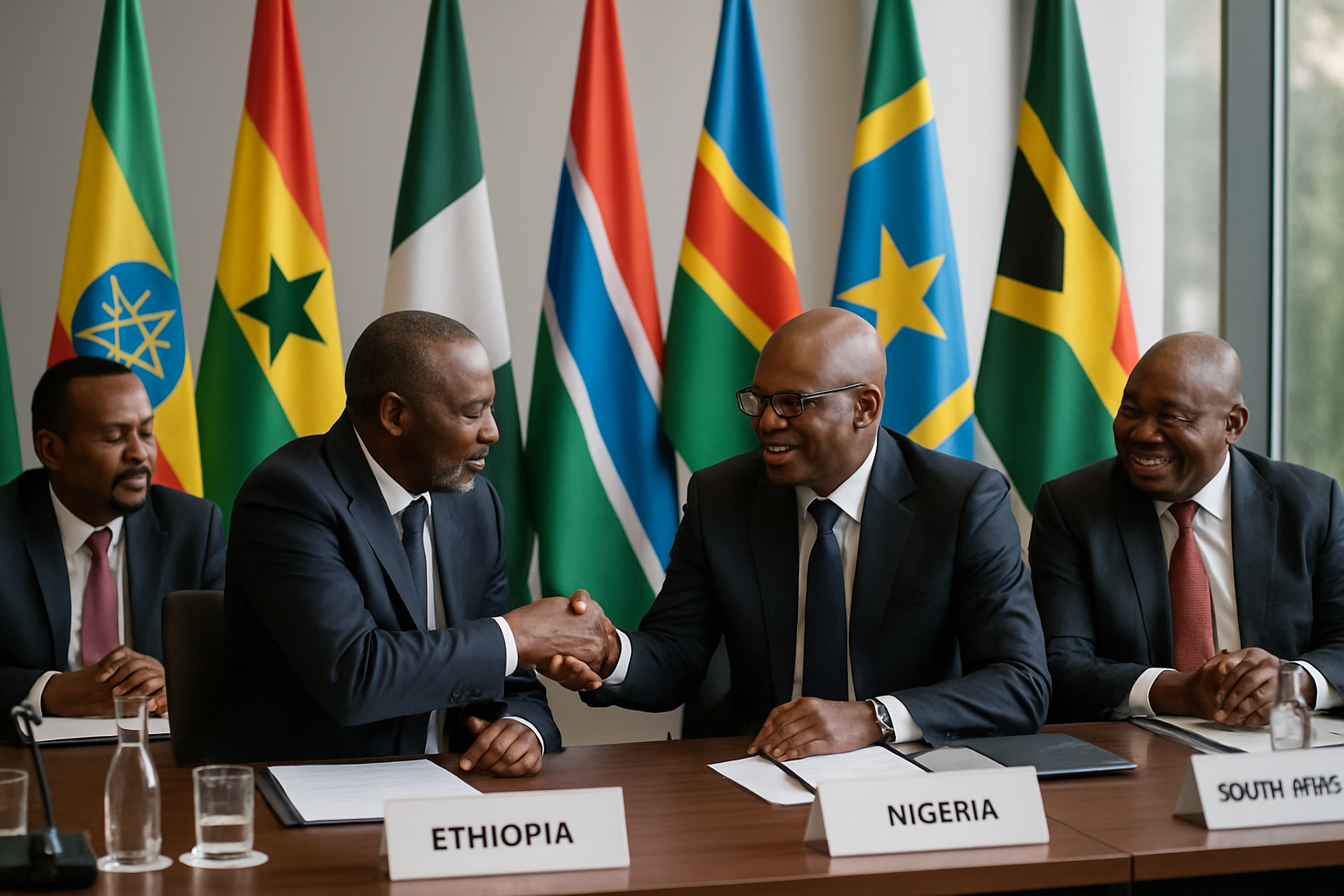
A wave of political transformations across Africa reveals both the resilience and fragility of democratic institutions, as military governments seek legitimacy, regional organizations adapt pragmatic approaches, and international powers prioritize resource access over governance principles.
Recent developments from Guinea-Bissau to South Africa demonstrate how African political transitions are unfolding amid growing international indifference to democratic backsliding, creating a complex landscape where pragmatic diplomacy increasingly trumps democratic ideals.
ECOWAS Strikes "Peace of the Braves" with Guinea-Bissau
The Economic Community of West African States (ECOWAS) has reached a significant diplomatic accommodation with the military leaders who took power in Guinea-Bissau in November 2025, marking a notable shift in regional approach to unconstitutional government changes. This "modus vivendi," as described by Burkinabé sources, represents ECOWAS's most pragmatic response yet to military takeovers in the region.
The agreement comes after months of tense negotiations and reflects ECOWAS's evolving strategy following the formation of the Alliance of Sahel States (AES) by Niger, Mali, and Burkina Faso, which withdrew from the regional body in protest over sanctions policies. The Guinea-Bissau arrangement suggests ECOWAS has learned from these losses and is adopting more flexible diplomatic approaches.
"The peace achieved between ECOWAS and Guinea-Bissau's military leadership demonstrates the organization's capacity to adapt and find common ground even in challenging circumstances."
— Regional diplomatic source, as reported by Editions Le Pays
This accommodation contrasts sharply with ECOWAS's earlier hardline approach toward military governments, which resulted in the exodus of three Sahelian states and the formation of a competing regional bloc under Captain Ibrahim Traoré's leadership in Burkina Faso.
Democratic Republic of Congo: Persistent Crisis in Mineral-Rich Territory
The Democratic Republic of Congo continues to grapple with deadly violence in its eastern provinces, particularly around the mining town of Rubaya. With over 2 million square kilometers of territory, the DRC faces challenges "proportional to its vast size," as analysts note, yet the scale of problems threatens regional stability and global mineral supply chains.
The ongoing violence in Rubaya and surrounding areas highlights the complex intersection of local conflicts, resource extraction, and international economic interests. The region's critical mineral deposits, essential for global technology and renewable energy industries, make the DRC's stability a matter of international concern beyond humanitarian considerations.
Recent attacks and displacement in the region underscore the Kinshasa government's continued struggle to project effective authority across its vast territory. The situation has drawn international attention not only for human rights concerns but also for its potential impact on global supply chains for cobalt, lithium, and other critical materials.
International Indifference to Democratic Decline
A striking theme emerging from multiple African contexts is the growing international indifference to democratic backsliding across the continent. As Le Monde reports, "the twilight of democracy in Africa is occurring amid global indifference," with international powers prioritizing resource access over governance principles.
The recent visit by Nick Checker, the new head of African affairs at the U.S. State Department, to Bamako exemplifies this shift. His message emphasized "respect for Mali's sovereignty" rather than democratic values, signaling the Trump administration's pragmatic approach to working with military governments when strategic interests align.
This policy shift reflects broader changes in international engagement with Africa. As one diplomatic source noted, "foreign powers are making little effort to address the multiple coups that have occurred across the continent in recent years," focusing instead on securing access to natural resources and strategic partnerships.
South Africa's Political Realignment
South Africa's political landscape is experiencing significant shifts as the country's second-largest party prepares for leadership changes. Democratic Alliance leader John Steenhuisen's decision not to stand for re-election ahead of local government elections later this year represents a major political development in Africa's largest economy.
This announcement comes as South Africa faces complex domestic challenges, including economic pressures, service delivery issues, and questions about the country's role in continental affairs. The timing of Steenhuisen's decision suggests internal party pressures and broader strategic considerations about the DA's future direction.
The leadership change in South Africa's main opposition party occurs against the backdrop of broader continental political transitions, reflecting both local democratic dynamics and the country's evolving relationship with other African states and international partners.
Regional Security Implications
These political transitions are occurring within a broader context of regional security challenges. The Alliance of Sahel States continues to assert independence from traditional regional organizations, while countries like Guinea-Bissau seek new forms of legitimacy through pragmatic agreements with established bodies like ECOWAS.
The formation of competing regional blocs and the breakdown of traditional diplomatic approaches reflect deeper questions about post-colonial governance structures and the effectiveness of existing regional institutions. The success or failure of arrangements like the Guinea-Bissau "modus vivendi" will likely influence how other military governments seek international legitimacy.
Economic factors also play crucial roles in these transitions. Countries rich in natural resources, like the DRC, face different pressures than those seeking to diversify their economies or maintain stability through regional cooperation. These economic imperatives often override democratic concerns in international engagement.
Future Implications
The current wave of African political transitions suggests several emerging patterns that will likely shape the continent's political future. Pragmatic diplomacy is increasingly replacing idealistic approaches to governance issues, while regional organizations are adapting their strategies to maintain relevance amid changing political dynamics.
The international community's focus on resource access over democratic governance creates incentives for political leaders to prioritize stability and economic partnerships over democratic reforms. This dynamic is particularly evident in countries with significant mineral resources or strategic geographic positions.
For African citizens, these transitions present both opportunities and challenges. While some arrangements may bring short-term stability, the long-term implications for democratic development remain uncertain. The success of pragmatic approaches like the Guinea-Bissau agreement may influence whether similar accommodations become the norm rather than the exception.
As these political transitions continue to unfold, they reflect broader questions about governance, sovereignty, and international relations in a changing global order. The outcomes will significantly influence both continental development and Africa's role in global affairs for years to come.