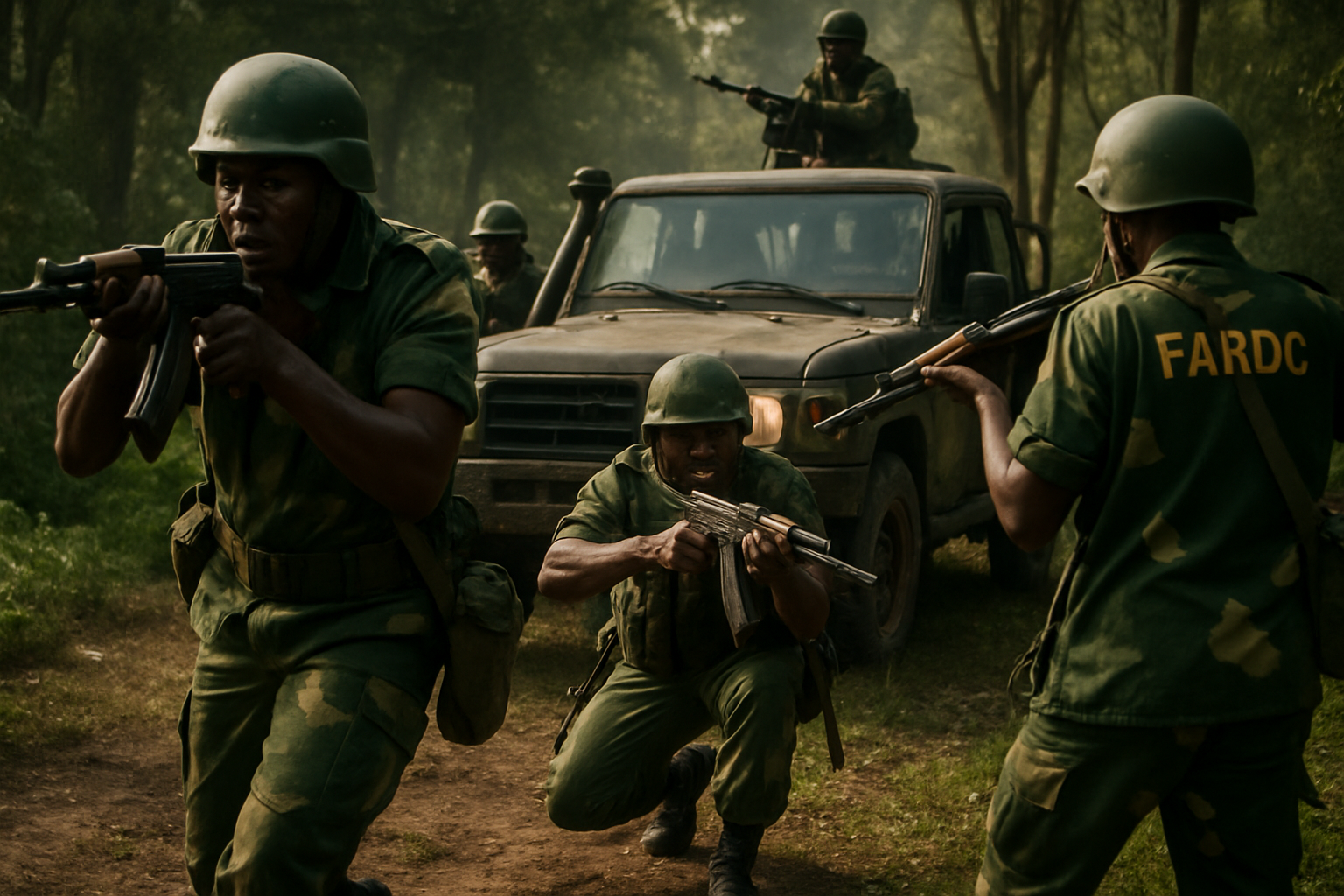
Military forces across Africa continue to grapple with complex regional conflicts as government troops in the Democratic Republic of Congo announce successful operations to reclaim territory from rebel coalitions, while political tensions escalate in Somalia over military actions in strategic areas.
DRC Forces Claim Territorial Gains in South Kivu
The Democratic Republic of Congo's Defense Minister announced during Friday's cabinet meeting that the Armed Forces of the DRC (FARDC) have successfully repelled attacks from what officials describe as a "coalition of RDF-M23-AFC" forces in South Kivu province. The military operation has resulted in the recapture of several localities, including the strategic center of Minembwe.
According to government sources, FARDC forces are currently maintaining defensive positions across the high and middle plateaus of Fizi, Uvira, and Mwenga regions. These areas have been focal points of ongoing conflict involving various armed groups operating in eastern DRC, a region that has experienced persistent instability for decades.
The announcement represents a rare positive development for government forces, which have struggled to maintain control over vast swaths of territory in the mineral-rich eastern provinces. The success in Minembwe-centre is particularly significant, as this area has been contested by multiple factions seeking control over local resources and trade routes.
Somalia's Political Crisis Deepens
Meanwhile, in Somalia, federal parliamentarians have directly accused the Federal Government of Somalia (FGS) of orchestrating severe fighting in the strategic city of Baidoa. Members of Parliament belonging to the Federal Parliament have leveled serious accusations against Mogadishu, claiming government involvement in military actions that have destabilized this crucial southwestern hub.
Baidoa, the capital of South West State, has witnessed intense fighting that has raised concerns about the federal government's approach to regional governance. The city serves as a critical administrative and commercial center, making any instability there particularly damaging to the country's overall stability.
The accusations from federal MPs suggest deep fractures within Somalia's federal system, highlighting ongoing tensions between the central government in Mogadishu and regional authorities. These internal political conflicts complicate efforts to address persistent security challenges from groups like Al-Shabaab while rebuilding state institutions.
Broader Regional Security Context
These developments occur against the backdrop of a challenging security environment across both Central and East Africa. In the DRC, the presence of numerous armed groups, including the M23 movement and various local militias, has created a complex web of alliances and conflicts that government forces struggle to navigate.
The reference to an "RDF-M23-AFC coalition" in the DRC government's statement suggests the ongoing internationalization of the conflict, with multiple actors pursuing different strategic objectives in the region's unstable territories. International observers have long noted the involvement of various external actors in eastern DRC's conflicts, complicating peace efforts.
In Somalia, the federal system established in recent years has faced numerous challenges in balancing central authority with regional autonomy. The current tensions over Baidoa highlight the difficulties in creating effective governance structures in a country still recovering from decades of civil war and ongoing insurgency threats.
International Response and Implications
The international community continues to monitor these developments closely, given the strategic importance of both regions for continental stability. The DRC's vast mineral resources make stability there crucial for global supply chains, while Somalia's position along key maritime routes affects international shipping and counter-terrorism efforts.
Regional organizations, including the African Union and the East African Community, face ongoing challenges in coordinating effective responses to these interconnected conflicts. The success or failure of current military and political initiatives will likely influence broader approaches to conflict resolution across the continent.
As government forces in both countries navigate complex political and military landscapes, the coming weeks will be crucial for determining whether recent developments represent genuine progress toward stability or temporary tactical gains in longer-term conflicts. The international community's ability to support sustainable solutions while respecting national sovereignty remains a key factor in these ongoing regional challenges.