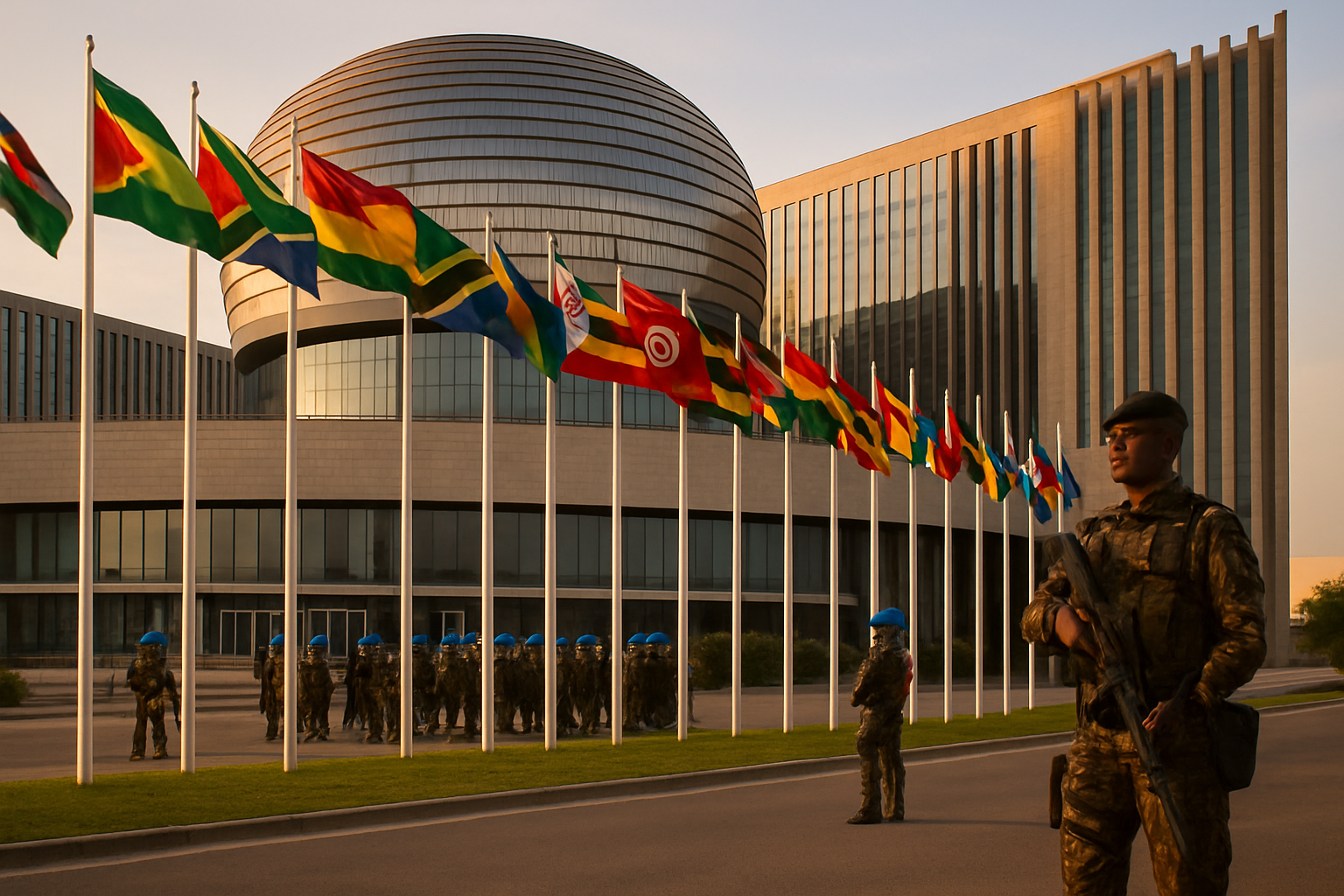
Multiple African nations are grappling with a worsening security crisis as drone attacks, armed conflicts, and cross-border violence spread across the continent, prompting urgent international intervention and raising concerns about regional stability.
The latest wave of security incidents began over the weekend with drone attacks on Kisangani's strategic airport in the northeastern Democratic Republic of Congo (DRC), marking a significant escalation in the region's ongoing conflict. Provincial authorities confirmed the targeting of the crucial transport hub, which serves as a vital link between the conflict-torn eastern provinces and the capital Kinshasa.
DRC Faces Multiple Security Threats
The drone strikes on Kisangani airport represent a new phase in the DRC's protracted security crisis, with authorities calling for calm as they assess the damage and implications. The attack comes as the United Nations prepares to deploy a ceasefire monitoring mission to Uvira in eastern DRC, signaling international concern about deteriorating conditions in the region.
The UN mission to Uvira aims to closely monitor adherence to existing ceasefire agreements, though previous peace initiatives have struggled to maintain lasting stability in the mineral-rich eastern provinces where numerous armed groups operate. This deployment follows the catastrophic Rubaya mine collapse in February that killed approximately 300 people in North Kivu province, highlighting the human cost of ongoing instability in areas controlled by armed groups including M23 rebels.
Sudan Military Operations Amid Humanitarian Crisis
In Sudan, military forces announced they have broken a siege on the key city of Kadugli in South Kordofan state, opening what officials describe as a crucial supply route to the famine-stricken area. The development comes after more than two and a half years of blockade that had created severe humanitarian conditions in the region.
However, the military breakthrough was immediately followed by tragedy as drone strikes targeted a health center in Kadugli, killing at least eight civilians including women and children, with 11 others wounded, according to medical sources. The attack occurred just hours after army forces reached the city, underscoring the volatile security situation and the targeting of civilian infrastructure.
"The suspect identified as Makim Maru Makur, who killed a woman and one person from the passengers' vehicle, has been captured on Monday morning by security forces. He will be dealt with in accordance with the law of Lakes State."
— Governor Madhang Majok Meen, Lakes State
South Sudan's Continuing Military Operations
In neighboring South Sudan, military tensions persist despite international peace efforts. The South Sudan People's Defence Forces (SSPDF) has been conducting major operations against the opposition SPLA-IO in Jonglei state since January, led by senior generals under direct supervision of Chief of Defence Forces General Paul Nang Majok.
The operations, spearheaded by commanders including Major General Michael Makal Kuol Deng, focus on northern Jonglei state, particularly in Lou Nuer areas. These military actions occur despite provisions in the 2018 peace agreement calling for army unification as part of security sector reforms ahead of planned national elections.
Lakes State authorities reported the arrest of a suspect in connection with an ambush on a military vehicle that killed a soldier and a civilian woman. Governor Madhang Majok Meen announced the capture of Makim Maru Makur during stakeholder consultations on renewing commitment to security and stability in the region.
Regional Diplomatic Initiatives Face Challenges
Kenya's mediation efforts in South Sudan face scrutiny as observers question the effectiveness of the proposed Tumaini framework circulated in late January. Critics argue that despite Kenya's strong diplomatic credentials and history of constructive engagement in regional peace processes, the new charter lacks the concrete mechanisms needed to achieve lasting peace.
The challenges facing Kenya's initiative reflect broader difficulties in achieving sustainable peace in a region where, as observers note, "too many actors have prolonged South Sudan's war by feeding it with weapons, financing, political cover, and sometimes force." The UN Security Council's imposition of arms embargoes and repeated deployment of expert monitoring missions underscore the complex web of external influences complicating peace efforts.
Cross-Border Violence Spreads
The security crisis extends beyond central and eastern Africa, with Libya reporting casualties in border clashes with Niger. Three soldiers from the army of eastern strongman Khalifa Haftar were killed in confrontations at the Libya-Niger frontier, according to military sources.
This incident adds to regional tensions that erupted dramatically in January with the attack on Niger's Diori Hamani International Airport in Niamey, where armed mercenaries conducted a pre-dawn assault that left 20 attackers dead and 11 captured. The Alliance of Sahel States (AES), comprising Niger, Mali, and Burkina Faso, condemned the attack as premeditated aggression.
International Response and Regional Cooperation
The escalating security challenges highlight the complex nature of African regional stability, where local conflicts increasingly intersect with broader geopolitical dynamics. The deployment of UN monitoring missions, African Union peacekeeping efforts, and regional diplomatic initiatives reflect attempts to address these multifaceted crises through coordinated international response.
However, the persistence of violence across multiple theaters – from the DRC's eastern provinces to Sudan's contested regions and cross-border incidents involving Libya and Niger – suggests that current approaches may be insufficient to address the root causes of instability.
The humanitarian consequences continue to mount, with South Sudan alone facing a crisis affecting 17.3 million children due to three years of ongoing conflict. The targeting of civilian infrastructure, including hospitals and airports, represents a particularly concerning trend that threatens to further destabilize already fragile communities.
Looking Forward
As African nations and international partners grapple with these interconnected security challenges, the need for comprehensive approaches addressing both immediate threats and underlying drivers of conflict becomes increasingly urgent. The success of regional cooperation initiatives and international support will be crucial in determining whether current diplomatic and security efforts can restore stability to affected areas.
The coming weeks will likely prove critical as UN missions begin operations, military campaigns continue, and regional diplomatic frameworks face tests of their effectiveness in addressing the continent's complex security landscape.