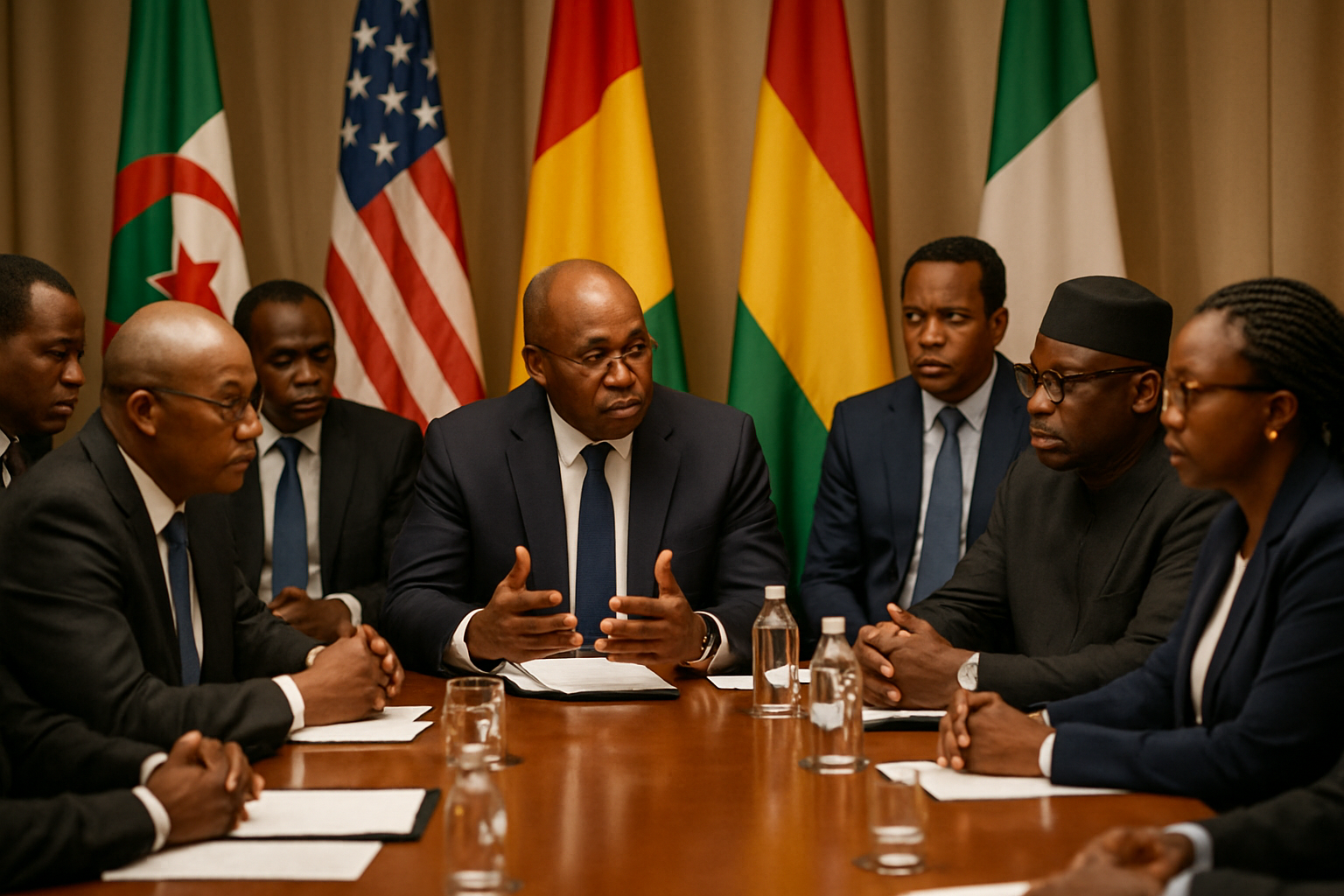
African nations are confronting an unprecedented regional security crisis that demands immediate coordinated responses, as border disputes escalate across West Africa and terrorism expands beyond traditional strongholds, forcing diplomatic initiatives to address mounting cross-border challenges.
The crisis has reached a critical juncture with multiple flashpoints developing simultaneously across the continent. In the Sahel region, Algeria's potential return to regional engagement presents opportunities for strengthening cooperation with Niger and Burkina Faso, despite Mali's continued skepticism about broader regional partnerships. This thawing relationship could pave the way for fuller re-engagement in addressing cross-border security threats.
Mano River Union Leaders Address Border Crisis
In West Africa's Mano River Union basin, diplomacy took center stage on Monday, March 16, when leaders of Liberia, Sierra Leone, and Guinea rushed to Conakry in an urgent bid to defuse a rapidly escalating border dispute between Liberia and Guinea. The incident, which many warn could threaten stability in a region that only recently emerged from decades of conflict, prompted immediate high-level intervention.
His Excellency Joseph Nyuma Boakai, Sr., President of Liberia, joined other regional leaders in the Guinean capital to address what sources describe as a potentially destabilizing territorial dispute. The urgency of the diplomatic response underscores the fragile nature of regional peace and the recognition that border tensions must be contained before they spread.
"This incident that many warn could threaten stability in a region that only recently emerged from decades of conflict requires our immediate and unified response."
— Regional Diplomatic Source
Terrorism Expansion Beyond Traditional Strongholds
The security landscape has dramatically shifted as terrorist activities expand beyond their traditional northeastern Nigerian strongholds into previously stable regions. Intelligence reports document systematic failures where communities provided advance warnings about armed groups establishing camps in remote areas, only to have authorities ignore these critical alerts.
Nigeria's security challenges have intensified with multiple coordinated attacks across different states, demonstrating the sophisticated operational capabilities of terrorist networks. The expansion represents a dangerous evolution from localized insurgencies to coordinated cross-border operations that threaten the stability of West Africa's largest economy.
Ghana has emerged as a key voice calling for active cooperation with neighboring Burkina Faso following attacks that killed Ghanaian traders, with experts warning that failure to collaborate puts citizens at increased risk. Parliamentary leaders have noted that traditional travel advisories prove inadequate given the daily economic necessities that drive cross-border commerce.
Regional Cooperation Mechanisms Under Strain
The Economic Community of West African States (ECOWAS) faces mounting pressure to develop effective responses to transnational security threats. However, the Alliance of Sahel States—comprising Niger, Mali, and Burkina Faso—has maintained distance from traditional regional cooperation frameworks, complicating coordinated security responses.
International observers note the challenging intersection of economic pressures and security vulnerabilities across multiple regions. The systematic targeting of cross-border commerce has created ripple effects throughout local economies, while traditional security approaches have proven insufficient to address the sophisticated coordination demonstrated by terrorist networks.
International Partnerships and Strategic Response
As Africa confronts these multifaceted security challenges, the continent has demonstrated sophisticated approaches to international partnerships while maintaining strategic autonomy. Seven African countries—Angola, Democratic Republic of Congo, Guinea, Kenya, Morocco, Sierra Leone, and Zambia—are participating in the US-EU-Japan Critical Minerals Partnership, positioning the continent as an essential strategic partner in global supply chain diversification.
This partnership development occurs alongside China's announcement of zero-tariff access for 53 African countries starting May 1, 2026, representing the most comprehensive China-Africa trade expansion in history. The timing demonstrates Africa's capacity for managing complex international relationships while addressing domestic security imperatives.
Continental Integration Amid Security Challenges
The African Continental Free Trade Area (AfCFTA) implementation continues despite security disruptions, with infrastructure projects advancing across multiple countries. Algeria's Gara Djebilet railway project, accessing the world's third-largest iron ore reserves, and Angola's Lobito Corridor revival connecting Atlantic ports to Democratic Republic of Congo mineral regions, exemplify the continent's commitment to long-term development amid immediate security concerns.
These projects incorporate enhanced security considerations as standard components, reflecting lessons learned from regional instability. Success depends on sustained political commitment, transparent governance frameworks, and international cooperation that respects African sovereignty while providing essential technical assistance.
Diplomatic Innovation and Conflict Resolution
The recent Mano River Union diplomatic intervention represents emerging patterns of rapid, high-level regional responses to potential conflicts. Traditional diplomatic frameworks are being supplemented by innovative approaches that emphasize immediate engagement and preventive diplomacy before disputes escalate into broader regional crises.
Recent African Union Peace and Security Council elections brought new members including Somalia, Democratic Republic of Congo, and Morocco, ensuring geographical balance while facing immediate pressure to address multiple simultaneous security challenges. The Council's effectiveness will be tested by its capacity to coordinate responses to West African volatility, Central African instability, and Great Lakes region tensions.
Economic Impact and Humanitarian Concerns
The security crisis extends beyond immediate physical threats to encompass significant economic disruptions. Cross-border trade routes face repeated closures, affecting communities dependent on regional commerce. Educational and healthcare facilities have become targets, threatening long-term development prospects and creating humanitarian emergencies.
International humanitarian organizations report overwhelming demands for assistance as displacement crises affect multiple countries simultaneously. The targeting of civilian infrastructure represents a strategic attempt to undermine state authority and create ungoverned spaces that terrorist networks can exploit for operational bases.
"The terrorist situation in Burkina Faso will not resolve itself, requiring identification of terrorist operating areas and coordinated security building."
— Ishmael Hlovor, International Relations Expert
Future Outlook and Strategic Imperatives
The convergence of border disputes, terrorism expansion, and economic pressures requires comprehensive approaches that address root causes including poverty, unemployment, climate effects, and resource competition. Military responses alone have proven insufficient, necessitating enhanced intelligence cooperation, rapid response capabilities, and economic opportunity creation.
Success in addressing these challenges depends on several critical factors: sustained political commitment to regional cooperation, adequate international technical assistance, improved intelligence sharing mechanisms, and economic development that provides alternatives to criminal activities. The window for effective preventive action is narrowing as terrorist networks demonstrate increasing sophistication and territorial expansion capabilities.
The March 2026 developments represent a potential inflection point for African security governance. Whether regional organizations can adapt to address 21st-century transnational threats while maintaining continental integration momentum will influence security architectures for decades ahead. The stakes extend beyond immediate crisis management to fundamental questions about Africa's capacity for self-determined security solutions in an increasingly interconnected but volatile world.
African leaders recognize that regional security cooperation is no longer optional but essential for protecting the continent's development gains and ensuring stable foundations for future prosperity. The success of current diplomatic and security initiatives will determine whether Africa can maintain its trajectory toward greater integration and economic development while effectively addressing the complex security challenges of the modern era.