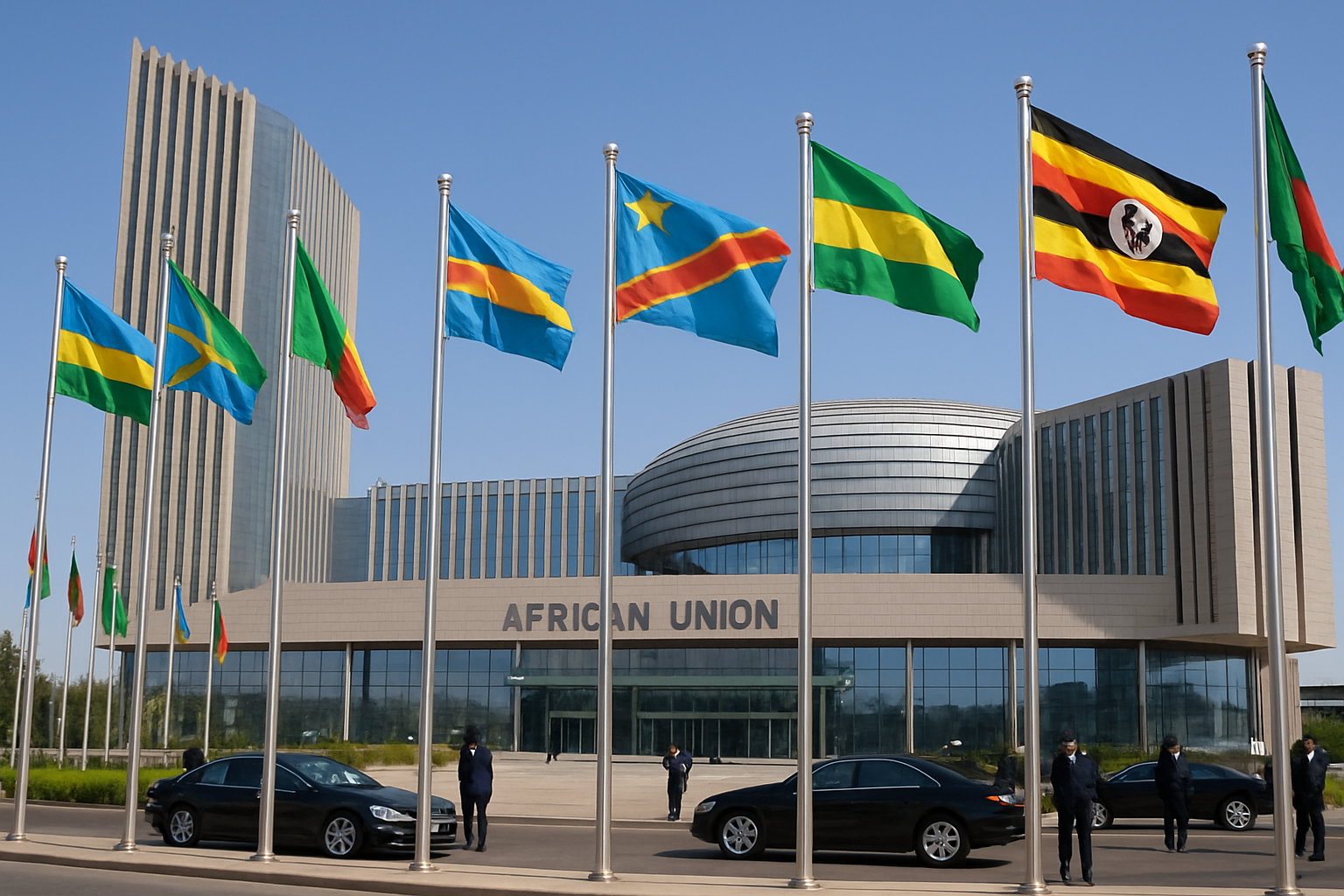
The United States has imposed sweeping sanctions on Rwanda's Defense Forces (RDF) and four senior military officials over alleged support for the M23 rebel movement in eastern Democratic Republic of Congo, marking an unprecedented diplomatic intervention that has sent shockwaves across the African continent and threatens to derail fragile peace negotiations.
The sanctions, announced Monday by the US Treasury Department's Office of Foreign Assets Control (OFAC), target the entire Rwandan military apparatus and include individual designations against top military commanders. The move represents the most significant US punitive action against Rwanda since the 1994 genocide era, fundamentally altering the strategic relationship between Washington and Kigali.
Kigali has responded with fierce denunciation, with officials describing the sanctions as "unjust" and targeting "only one party" in the complex regional conflict. The Rwandan government maintains that the sanctions ignore the broader context of security threats and fail to address what it views as provocative actions by other regional actors.
Regional Tensions Escalate Ahead of Critical Summit
The sanctions announcement comes just days before Presidents Paul Kagame of Rwanda and Félix Tshisekedi of the Democratic Republic of Congo are scheduled to meet at the 25th Ordinary Summit of the East African Community Heads of State in Arusha, Tanzania. The gathering, already anticipated to be tense, now faces the prospect of becoming a diplomatic minefield as the two leaders confront each other amid the most serious bilateral crisis in years.
The timing appears deliberately calculated to pressure Rwanda ahead of the summit, though it risks hardening positions rather than facilitating dialogue. Regional observers worry that the sanctions could push the conflict toward further escalation rather than resolution, particularly given Rwanda's strategic importance in East African security architecture.
The mineral-rich eastern provinces of the Democratic Republic of Congo have experienced decades of conflict, but violence flared dramatically in recent months when the M23 group, allegedly backed by Rwanda, made significant territorial gains. The region's vast reserves of cobalt, lithium, and other critical minerals essential for global technology and renewable energy supply chains have made the conflict a matter of international strategic concern.
Continental Response Reflects Deep Divisions
The continental response has exposed the complex dynamics of African diplomacy and regional solidarity. While Kinshasa has welcomed the US sanctions as validation of its longstanding complaints about Rwandan interference, other African capitals have expressed concern about the precedent of external powers intervening so directly in regional disputes.
The sanctions come at a particularly sensitive moment for continental integration efforts. The African Union has been working to strengthen its Peace and Security Council mechanisms, with recently reconstituted membership including Somalia, DRC, Morocco, and other nations facing their own security challenges. The US intervention threatens to undermine these African-led conflict resolution efforts.
Rwanda's role extends far beyond the DRC conflict. The country has been a significant contributor to African Union peacekeeping operations, including deployments to the Central African Republic and Somalia. It has also provided humanitarian assistance across regional boundaries, including recent aid to Mozambique following devastating floods that affected over 724,000 people.
Strategic Implications for US-Africa Relations
The sanctions represent a significant shift in US engagement with Africa, moving from the partnership rhetoric that has characterized recent diplomatic initiatives toward more confrontational approaches. This comes as African nations have been diversifying their international partnerships, with China announcing zero-tariff access for 53 African countries starting May 1, 2026, and seven African nations joining the US-EU-Japan Critical Minerals Partnership to challenge Chinese dominance in rare earth elements.
The action also reflects the Biden administration's broader emphasis on democracy and human rights in foreign policy, but it raises questions about consistency given ongoing US partnerships with other nations facing similar accusations of regional interference. Critics argue that the sanctions may drive Rwanda closer to alternative partners, particularly China and Russia, who have been expanding their influence across the continent.
For Rwanda, the sanctions pose significant economic challenges, particularly affecting military procurement and international financial transactions. However, the country's remarkable economic transformation since the 1994 genocide has created sufficient domestic capacity and alternative partnerships to weather immediate impacts.
The M23 Complication
The March 23 Movement (M23) emerged from previous rebellions in eastern DRC, claiming to represent Congolese Tutsi interests amid ethnic tensions that have plagued the region for decades. The group's resurgence in 2021 coincided with broader instability across the Sahel and Great Lakes regions, creating a complex web of local grievances, ethnic tensions, and external interventions.
Rwanda's alleged support for M23 reflects its deep security concerns about the presence of the Democratic Forces for the Liberation of Rwanda (FDLR) in eastern DRC. The FDLR includes elements responsible for the 1994 genocide who have operated from Congolese territory for nearly three decades. For Kigali, the M23 relationship represents a defensive measure against an existential threat, while for Kinshasa it constitutes unwanted interference in sovereign territory.
The complexity extends to resource extraction networks that fuel the conflict. Armed groups control mining sites producing cobalt, coltan, and gold that eventually reach global supply chains, creating economic incentives for continued instability. Recent tragic incidents, including a mine collapse in Rubaya that killed 300 people, highlight the human cost of these resource struggles.
Continental Security Architecture Under Strain
The sanctions highlight broader challenges facing African security governance. The African Union's Peace and Security Council has struggled to address multiple simultaneous conflicts, from the ongoing war in Sudan to instability across the Sahel region where the Alliance of Sahel States (Niger, Mali, and Burkina Faso) has distanced itself from traditional Western partnerships.
Recent continental efforts have shown both promise and limitations. The 39th African Union Summit in February 2026 demonstrated institutional maturity through peaceful leadership transitions and substantive policy discussions on water security and climate adaptation. However, criticism persists about the AU's capacity to address what some observers describe as "genocide, insurgencies, and coups" across the continent.
The newly reconstituted Peace and Security Council faces immediate tests. Beyond the DRC-Rwanda crisis, it must address the humanitarian catastrophe in Sudan, where civil war has displaced millions, and navigate complex relationships with military governments that have come to power through coups in several West African nations.
Economic Dimensions and Regional Integration
The sanctions threat comes as Africa pursues unprecedented economic integration through the African Continental Free Trade Area (AfCFTA), which requires enhanced infrastructure connectivity and regional cooperation. Major projects including the Angola Lobito Corridor, designed to provide alternative export routes for DRC minerals, and the Algeria Gara Djebilet railway could be affected by regional instability.
The African Finance Corporation estimates the continent holds $29.5 trillion in mineral reserves, representing 20% of the global total, with $8.6 trillion remaining untapped. Recent investments include Ivory Coast's $1.2 billion gold projects and South Africa's R325 million rare earth commitments, demonstrating the sector's potential for continental development.
However, the DRC-Rwanda tensions threaten these development trajectories. Eastern DRC contains significant portions of global cobalt and lithium reserves essential for electric vehicle batteries and renewable energy storage. Continued instability undermines both local development and global supply chain security at a time when diversification away from Chinese-controlled sources has become a strategic priority for Western nations.
Climate and Humanitarian Context
The crisis unfolds against a backdrop of unprecedented climate pressures. January 2026 was recorded as the hottest month in human history, marking the 18th consecutive month of temperatures exceeding 1.5°C above pre-industrial levels. These conditions have exacerbated food insecurity, water scarcity, and population displacement across the region.
Recent humanitarian responses have demonstrated both the potential for regional cooperation and its limitations. Rwanda's cross-regional assistance to Mozambique flood victims showed the capacity for African solidarity, while the SADC emergency response revealed growing continental crisis management capabilities. However, the DRC conflict has prevented similar coordinated responses to displacement in eastern provinces.
Climate adaptation requires stable governance and regional cooperation, making the DRC-Rwanda tensions particularly damaging to long-term continental resilience efforts. The upcoming EAC summit was intended to address climate adaptation strategies, but the sanctions crisis may overshadow these critical discussions.
Path Forward: Diplomacy or Further Escalation
The sanctions create a diplomatic crossroads for all parties involved. For the United States, the challenge lies in maintaining pressure for peace while avoiding actions that push Rwanda toward alternative partnerships or harden positions against compromise. The experience of previous sanctions regimes suggests that unilateral measures often produce unintended consequences that complicate rather than resolve conflicts.
For Rwanda, the sanctions test the country's diplomatic maturity and strategic patience. President Kagame's administration has built a reputation for pragmatic governance and regional leadership, but the sanctions challenge requires careful navigation to maintain both domestic legitimacy and international partnerships.
The Democratic Republic of Congo faces the complex task of leveraging international support while addressing internal governance challenges that contribute to regional instability. The country's vast territory and weak state capacity have historically made it vulnerable to external interference, but sustainable peace requires strengthening domestic institutions rather than relying solely on external pressure.
Regional organizations, particularly the East African Community and the African Union, must demonstrate their relevance by facilitating dialogue despite external pressures. The upcoming Arusha summit provides a crucial opportunity to show that African-led solutions can address continental challenges more effectively than external interventions.
Implications for Global Security Architecture
The sanctions reflect broader shifts in global security governance, where traditional Western dominance faces challenges from emerging powers and regional organizations seeking greater autonomy. Africa's position as a strategic resource supplier and demographic powerhouse makes it a critical arena for these competing approaches.
The timing coincides with China's expansion of economic partnerships across Africa and Russia's growing military cooperation with several African nations. The sanctions risk pushing Rwanda and other African countries toward these alternative partnerships, potentially undermining Western influence across the continent.
Success in resolving the DRC-Rwanda crisis will require recognition that African conflicts increasingly resist external solutions imposed without meaningful local ownership. The most effective interventions have combined international support with African-led initiatives that address root causes rather than merely symptoms.
As Presidents Kagame and Tshisekedi prepare for their crucial encounter in Arusha, the stakes extend far beyond bilateral relations. The outcome will influence Africa's role in global governance, the effectiveness of continental integration efforts, and the future of international conflict resolution in an increasingly multipolar world.
The sanctions represent both a crisis and an opportunity. While they threaten to escalate regional tensions, they also focus international attention on conflicts that have too long been ignored. Whether this attention translates into sustainable peace or deeper instability depends largely on the wisdom and restraint of all parties in the critical weeks ahead.