As April 2026 unfolds, African nations find themselves navigating a complex landscape where security crises intersect with ambitious development initiatives, testing the continent's capacity to address immediate threats while building sustainable futures for 1.4 billion people.
Deadly Violence Erupts Across Multiple Theaters
The most recent wave of violence has shattered relative calm in previously stable regions. On April 2, 2026, Allied Democratic Forces (ADF) militants launched a devastating attack on Bafwakoa village in the Democratic Republic of Congo's Mambasa territory, killing at least 11 civilians in what local authorities describe as systematic targeting of civilian infrastructure.
The attack represents a troubling expansion of ADF operations beyond traditional strongholds, mirroring broader patterns of militant expansion observed across the continent. In neighboring Burundi, a military arsenal explosion in Bujumbura on March 31 claimed 13 civilian lives and wounded 57 others, highlighting the intersection of security vulnerabilities and civilian safety.
"The systematic nature of these attacks demonstrates sophisticated coordination that requires urgent regional cooperation,"
— Regional Security Expert, African Union Commission
Nigeria's Expanding Security Crisis
Nigeria, Africa's most populous nation and largest economy, continues to grapple with an alarming expansion of terrorist activities beyond traditional northeastern strongholds. Fresh violence erupted near Plateau Polytechnic on April 2, where gunmen killed two people and wounded three others, forcing students to flee in panic.
This incident follows a pattern of escalating attacks including the devastating February 2026 Kwara State massacre that killed over 170 people, attributed to the Lakurawa group with Islamic State affiliations. The geographic spread of terrorism from the northeast to middle belt regions represents a fundamental challenge to Nigeria's security architecture.
Intelligence failures have become a recurring pattern, with communities repeatedly providing warnings about armed groups camping in local areas, only to have authorities ignore these critical alerts until attacks occur. The systematic targeting of police stations, government buildings, and civilian infrastructure demonstrates strategic intent to undermine state authority and create ungoverned spaces.
Chad Steps Up International Peacekeeping Role
In a significant development demonstrating African leadership in global security challenges, Chad deployed over 50 police officers to Haiti on April 1, 2026, marking the beginning of a new international Gang Suppression Force (GSF). This deployment represents a major shift in African engagement with global security challenges, positioning Chad as a willing international peacekeeping partner.
The mission comes as gangs control 60% of Port-au-Prince and key transportation routes, with recent attacks killing scores of civilians. Chad has committed 800 police officers with a 12-month mandate, demonstrating the country's capacity to balance domestic security needs with international responsibilities.
Human Rights Violations in Burkina Faso
Human Rights Watch has documented a disturbing escalation of civilian abuses in Burkina Faso, where more than 1,800 civilians have been killed by both army forces and armed groups since 2023. The report highlights systematic violations of international humanitarian law, including targeting of civilian populations and infrastructure.
Despite these challenges, Burkina Faso continues to pursue development initiatives, including agricultural modernization programs and infrastructure projects. The country achieved record gold production of 94 tons in 2025, generating over $6 billion in revenue, demonstrating how nations attempt to balance security challenges with economic development.
Regional Cooperation Frameworks Under Strain
The Alliance of Sahel States, comprising Niger, Mali, and Burkina Faso, maintains distance from traditional ECOWAS cooperation frameworks, complicating coordinated security responses across West Africa. This fragmentation occurs precisely when enhanced regional coordination is most needed to address transnational threats.
Traditional cooperation mechanisms face unprecedented tests as terrorist networks demonstrate enhanced capabilities for cross-border operations, sophisticated urban penetration, and systematic civilian targeting. The recent attacks in multiple countries suggest coordinated strategies that transcend national boundaries.
Economic Development Amid Security Challenges
Despite security pressures, African nations continue pursuing ambitious development goals. The African Finance Corporation reports $29.5 trillion in mineral reserves across the continent, with $8.6 trillion remaining untapped. Major infrastructure projects include Algeria's Gara Djebilet railway (accessing the world's third-largest iron ore reserves) and Angola's Lobito Corridor connecting Atlantic ports to Central African markets.
Seven African countries—Angola, DRC, Guinea, Kenya, Morocco, Sierra Leone, and Zambia—are participating in the US-EU-Japan Critical Minerals Partnership, challenging China's dominance in global supply chains while demonstrating sophisticated strategic autonomy.
Climate Pressures Compound Challenges
The security and development challenges unfold against a backdrop of unprecedented climate stress. April 2026 marks the 20th consecutive month with global temperatures exceeding 1.5°C above pre-industrial levels, fundamentally altering agricultural systems and potentially exacerbating resource competition that fuels conflicts.
Traditional farming cycles face disruption, potentially creating additional pressures on rural communities already affected by security challenges. Climate adaptation has become essential infrastructure, requiring integration with security planning and development strategies.
International Partnerships and African Agency
The current crisis demonstrates Africa's sophisticated approach to international partnerships. China announced zero-tariff access for 53 African countries beginning May 1, 2026—the most comprehensive China-Africa trade expansion in history. Simultaneously, African nations maintain strategic partnerships with Western allies, demonstrating mature diplomatic management that preserves autonomy while accessing beneficial cooperation.
This balanced approach reflects continental evolution from aid recipients to strategic partners capable of sophisticated relationship management across multiple international frameworks while maintaining sovereignty over development priorities.
Looking Forward: Critical Juncture for Continental Governance
April 2026 represents a potential inflection point for African governance and security architecture. The continent's response to current challenges will influence security frameworks, democratic governance patterns, and international partnership models for decades ahead.
Success requires addressing immediate security threats while building long-term resilience through economic development, democratic strengthening, and enhanced regional cooperation. The diversity of approaches—from Chad's international peacekeeping to Burkina Faso's resource sovereignty strategies—provides multiple pathways for addressing complex 21st-century challenges.
"Africa's capacity to manage these simultaneous crises while maintaining development momentum will determine not just continental stability, but also provide templates for global governance in an interconnected world,"
— African Development Expert
Strategic Requirements for Success
The current situation demands comprehensive approaches that go beyond military responses to address root causes including poverty, unemployment, climate adaptation needs, and governance deficits. Enhanced intelligence cooperation, rapid response capabilities, and economic opportunity creation require sustained political commitment and international support that respects African agency.
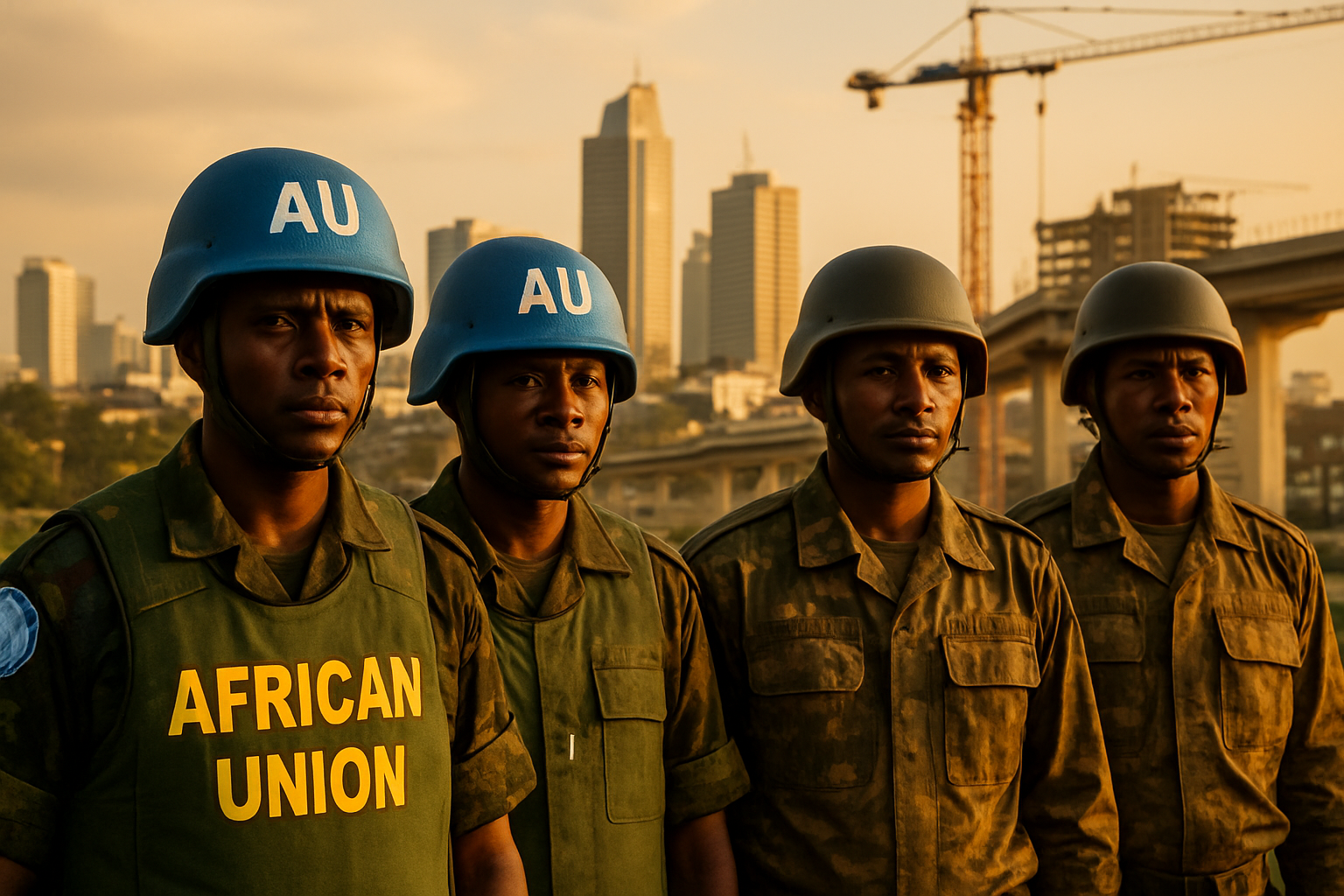
Regional organizations including the African Union, ECOWAS, and emerging frameworks must demonstrate capacity for effective conflict prevention and resolution while supporting member states' development ambitions. The success of initiatives like Chad's international peacekeeping mission and continued infrastructure development amid security challenges provides hope for continental resilience.
As Africa navigates this critical period, the world watches to see whether the continent can successfully balance immediate security needs with long-term development goals, potentially providing models for addressing similar challenges globally in an era of increasing complexity and interconnectedness.