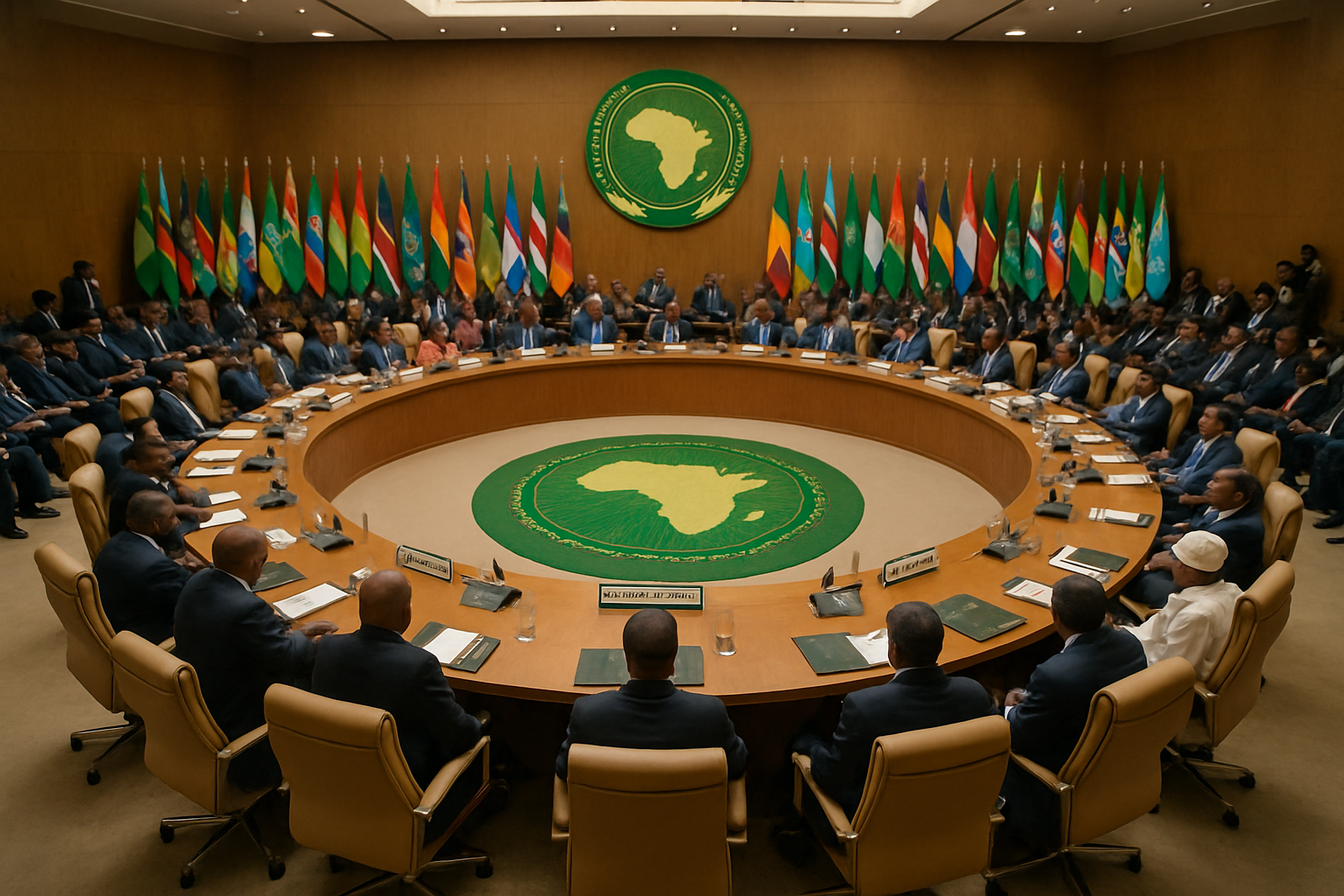
African leaders concluded their 39th Summit in Addis Ababa on Sunday with unprecedented resolutions classifying slavery, deportation, and colonialism as crimes against humanity while confronting Sudan's worsening civil war and a deepening malaria crisis affecting nearly 600,000 lives annually.
The three-day summit, which brought together heads of state and government from across the continent, delivered stark warnings about multiple crises threatening African stability and development. From Sudan's humanitarian catastrophe to stalled progress against malaria, the gathering highlighted the urgent need for coordinated continental responses to complex challenges.
Historic Resolution on Colonial Crimes
In a landmark decision on the summit's final day, the African Union adopted a resolution classifying slavery, deportation, and colonialism as crimes against humanity and genocide committed against African peoples. The resolution, which praised Algeria's efforts in advancing this framework, represents a significant step toward seeking international recognition of historical injustices.
The AU emphasized the importance of member states working together "in solidarity and collectively" to secure international recognition of these crimes. The continental body decided to keep this matter under continuous review, signaling sustained diplomatic pressure for global acknowledgment of Africa's historical grievances.
This resolution builds on ongoing reparations discussions, with Ghana's President John Dramani Mahama, serving as AU Champion on Reparations, previously calling for a transition from "ceremonial language" to "binding frameworks" with clear timelines for historical justice.
Sudan Crisis Dominates Security Discussions
Sudan's civil war emerged as the summit's most pressing security concern, with diplomatic sources describing it as overshadowing other continental issues. After nearly three years of fighting, the conflict has killed tens of thousands and displaced more than 11 million people, prompting the United Nations to classify it as the world's worst humanitarian crisis.
Despite the scale of the catastrophe, summit discussions revealed that a clear path to resolution remains elusive. Diplomats warned that regional rivalries, particularly between Saudi Arabia and the United Arab Emirates, continue to complicate peace efforts while fueling wider tensions across the Horn of Africa and Libya.
The crisis has strained the African Union's conflict resolution mechanisms, with the recently reconstituted Peace and Security Council facing immediate pressure to address not only Sudan but also ongoing violence in the Democratic Republic of Congo's eastern provinces and instability across the Sahel region.
Malaria Financing Crisis Threatens Continental Progress
President Advocate Duma Gideon Boko of Botswana, Chair of the African Leaders Malaria Alliance (ALMA), delivered alarming statistics that underscored another critical challenge facing the continent. The African Union Malaria Progress Report 2025 revealed that AU member states accounted for 270.8 million malaria cases—96% of the global total—and 594,119 deaths, representing 97% of worldwide malaria fatalities in 2024.
The report painted a dire picture of stagnating progress since 2015, with only five member states achieving the 2025 Catalytic Framework targets. Leaders issued a unified call for a "new era of malaria financing," warning that without urgent action, the continent risks losing decades of hard-won gains against the disease.
"Against a backdrop of stalled progress, declining international funding, and intensifying threats, we face a perfect storm that could reverse our achievements,"
— President Duma Gideon Boko, Chair of African Leaders Malaria Alliance
The malaria crisis reflects broader challenges in health financing across Africa, where many countries struggle with inadequate healthcare infrastructure and declining international support for health programs.
Continental Integration Amid Global Pressures
The summit occurred against the backdrop of intensifying global competition for African resources and partnerships. Recent developments include China's announcement of zero-tariff access for 53 African countries starting May 2026, while seven African nations participate in the US-EU-Japan Critical Minerals Partnership as alternatives to Chinese supply chains.
These competing initiatives highlight Africa's strategic importance in global supply chains, particularly for critical minerals essential to renewable energy transitions. The African Continental Free Trade Agreement (AfCFTA) continues its implementation phase, with infrastructure projects like Angola's Lobito Corridor railway and Algeria's Gara Djebilet mining railway supporting continental integration objectives.
Water Security and Climate Adaptation
The summit's official theme, "Ensuring Sustainable Water and Sanitation Access for All by 2030," reflected urgent climate adaptation needs. With over 400 million Africans lacking access to safe water, leaders emphasized the connection between water security and broader development goals.
Recent climate data showing January 2026 as the 18th consecutive month exceeding 1.5°C above pre-industrial levels has intensified discussions about climate adaptation financing. The devastating floods in Mozambique, which affected over 724,000 people, served as a stark reminder of climate vulnerability across the continent.
Institutional Challenges and Reform Calls
The summit faced criticism regarding the African Union's institutional effectiveness in addressing continental challenges. Critics pointed to limited capacity for concrete solutions amid "genocide, myriad insurgencies and coups" across the continent, with calls for sweeping reforms to enhance conflict prevention and decision enforcement capabilities.
The recently reconstituted Peace and Security Council, with new members including Somalia, the Democratic Republic of Congo, and Morocco, faces immediate pressure to demonstrate enhanced effectiveness in addressing regional conflicts and security challenges.
Looking Forward: Tests of Continental Unity
As the summit concluded, African leaders emphasized that success would be measured by concrete progress on water access, peace and security, and economic integration rather than symbolic commitments. The transition from Angola to Burundi in the AU's rotating chairmanship marks another phase in continental governance.
The summit's legacy will ultimately depend on whether member states can translate summit resolutions into binding frameworks that serve the continent's 1.4 billion people effectively. With multiple crises demanding urgent attention—from Sudan's humanitarian catastrophe to the malaria financing gap—the African Union faces a critical test of its capacity for effective continental governance.
The path forward requires balancing immediate crisis responses with long-term institutional development, while navigating complex international partnerships that respect African sovereignty and strategic autonomy. As global competition for African resources intensifies, the continent's ability to speak with one voice and act collectively will determine its influence in shaping a multipolar world order.