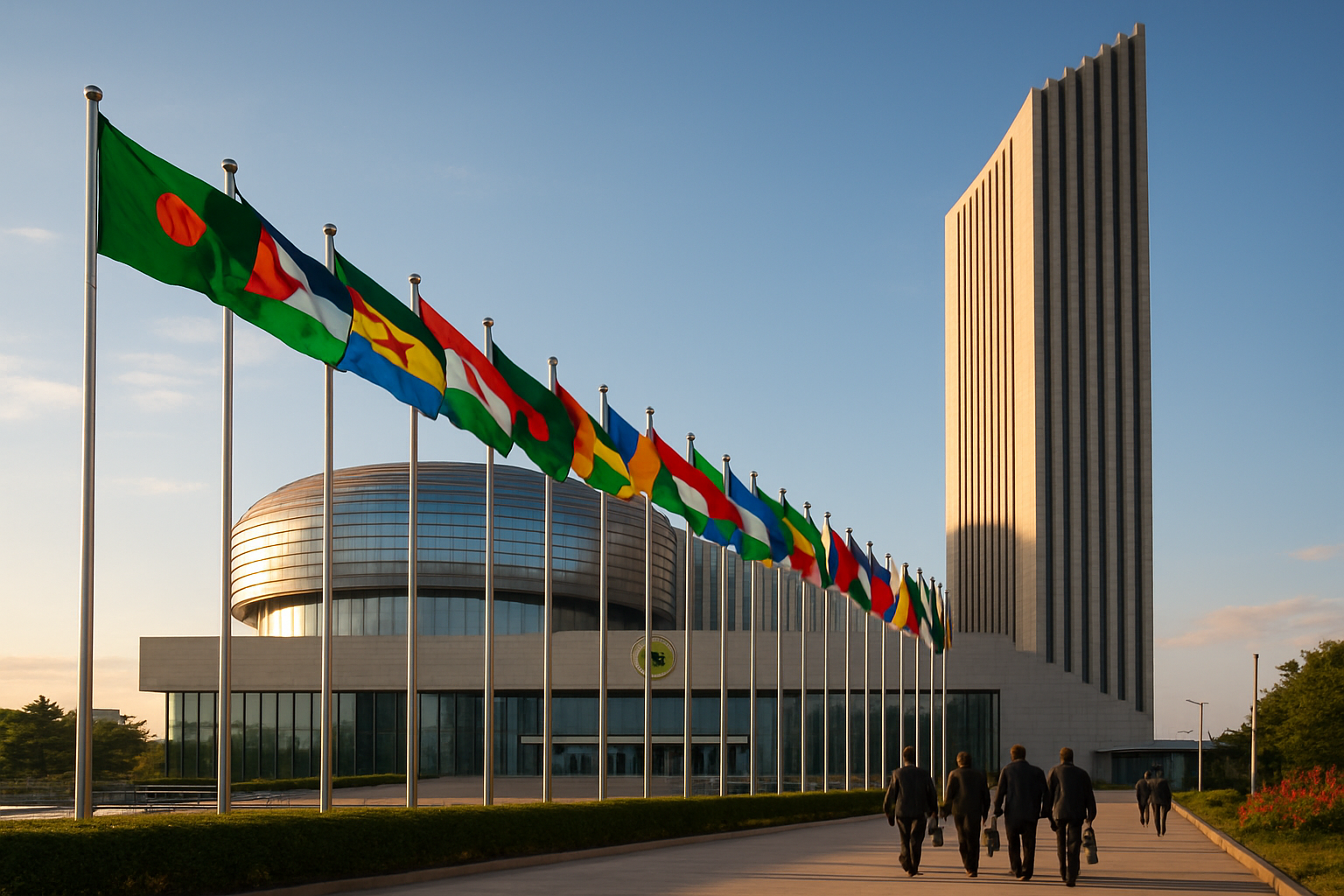
Africa's continental integration agenda has entered a decisive phase, with major trade facilitation initiatives and diplomatic outreach efforts demonstrating renewed commitment to the African Union's vision of economic unity and regional cooperation.
The momentum builds on the successful conclusion of the 39th African Union Summit in Addis Ababa, where continental leaders emphasized the urgent need to transform symbolic commitments into binding frameworks that serve Africa's 1.4 billion people. The summit marked a critical test of the AU's capacity for effective continental governance amid multiple simultaneous crises.
Presidential Diplomacy Advances Regional Cooperation
Mozambique President Daniel Francisco Chapo's working visit to Ethiopia from February 12-15, 2026, exemplified the high-level diplomatic engagement driving continental integration forward. During his participation in the 39th AU Summit, President Chapo held several strategic political and economic meetings with high dignitaries from friendly countries and representatives of the international business community.
These diplomatic initiatives reflect a broader pattern of African leaders prioritizing bilateral and multilateral cooperation to advance the African Continental Free Trade Area (AfCFTA) objectives. The summit's theme, "Ensuring Sustainable Water and Sanitation Access for All by 2030," highlighted how continental cooperation addresses fundamental development challenges affecting over 400 million Africans lacking safe water access.
Landmark Trade Facilitation Programs Launch
The unveiling of two landmark projects under Imani Development's Trade and Regional Integration portfolio, commissioned by TradeMark Africa, represents a significant step toward practical continental integration. The Mozambique Trade Facilitation Programme specifically targets the country's abundant natural resources and strategic position to boost intra-African trade.
Mozambique, with its population of 31 million, serves as a crucial gateway for regional commerce, making its trade facilitation capabilities essential for broader continental integration. The programme complements the Assessment and Review of EAC Vision 2050, demonstrating how regional economic communities align with continental objectives.
"These initiatives represent the practical implementation of our continental vision, moving beyond rhetoric to create tangible infrastructure for African economic integration."
— African Development Expert
Infrastructure Development Accelerates Integration
The AU Summit's conclusion coincided with major infrastructure developments supporting continental integration. Recent progress includes Algeria's Gara Djebilet railway accessing the world's third-largest iron ore reserves, Angola's Lobito Corridor revival connecting Atlantic coast to DRC mineral regions, and Tanzania's completion of Mtwara-Mbamba Bay railway feasibility studies covering 1,000 kilometers.
These projects exemplify the infrastructure renaissance required for AfCFTA implementation, enabling cross-border connectivity, regional value chains, and coordinated development strategies. The infrastructure approach balances African strategic autonomy with international partnerships, as demonstrated by seven African countries' participation in the US-EU-Japan Critical Minerals Partnership.
Mining Sector Drives Economic Integration
Africa's mining sector continues serving as a catalyst for continental integration, with the African Finance Corporation reporting $29.5 trillion in mineral reserves representing 20% of the global total. Recent developments include Ivory Coast's approval of 732.7 billion CFA francs ($1.2 billion) in gold projects and South Africa's R325 million commitment to the Zandkopsdrift rare earth project.
The 32nd African Mining Indaba in Cape Town (February 9-12, 2026) under the theme "Stronger Together" demonstrated unprecedented continental cooperation in the mining sector. Countries like Ghana and Botswana are pioneering new African mining models emphasizing sustainability, technological innovation, and local value addition over traditional extractive approaches.
Continental Governance Challenges and Opportunities
The AU Summit faced criticism regarding institutional effectiveness amid "genocide, myriad insurgencies and coups" across the continent. However, the reconstituted Peace and Security Council, with new members including Somalia, DRC, and Morocco, represents institutional maturation and the capacity for complex multilateral processes.
China's announcement of zero-tariff access for 53 African countries starting May 1, 2026, creates new opportunities for African exporters while raising questions about maintaining economic sovereignty. This development, representing the most comprehensive China-Africa trade expansion in history, supports AfCFTA objectives through external market opportunities complementing internal African trade.
Climate Adaptation and Water Security
The summit's water security theme reflected urgent adaptation needs following devastating Mozambique floods affecting over 724,000 people. Climate challenges underscore the importance of continental cooperation in addressing shared vulnerabilities, with initiatives like Ethiopia's shift toward long-term climate resilience through water infrastructure investment and Rwanda's identification of 417,000 hectares of irrigation potential.
Digital Integration and Financial Inclusion
Continental integration extends beyond physical infrastructure to digital platforms facilitating trade and financial inclusion. Nigeria's fintech revolution, with 43% of fuel sales now conducted through digital payments, demonstrates the potential for technology-driven integration. The development of cross-border digital payment systems could significantly enhance AfCFTA implementation.
Regional initiatives like Guinea's Toullel platform launch and Egypt's authorization of securities brokerage through electronic payment applications show how African nations are creating digital infrastructure for enhanced economic integration and financial inclusion.
Regional Economic Communities as Building Blocks
The Assessment and Review of EAC Vision 2050, alongside the Mozambique Trade Facilitation Programme, illustrates how Regional Economic Communities serve as building blocks for continental integration. The East African Community's experience provides valuable lessons for scaling successful integration models across Africa.
The success of these regional approaches depends on coordinated implementation, transparent governance frameworks, and sustained political commitment. The AU's evolution from a symbolic to an active policy development body requires member states' willingness to move beyond ceremonial language toward binding commitments with clear timelines.
International Partnerships and Strategic Autonomy
Africa's approach to continental integration balances international partnerships with strategic autonomy. While welcoming investments like China's zero-tariff policy and participating in partnerships like the Critical Minerals Alliance, African leaders maintain control over development priorities and resource sovereignty.
The ongoing infrastructure surge, including projects across multiple countries, demonstrates African capacity for sophisticated international investment management while preserving local ownership. This balance becomes increasingly important as global competition for African resources intensifies.
Future Prospects and Implementation Challenges
The success of African continental integration depends on translating political commitments into practical outcomes. Key challenges include funding sustainability, technical capacity building, climate adaptation requirements, and coordinated multi-country implementation. Success factors identified include sustained political commitment, international cooperation frameworks, community engagement, and transparent governance.
As the AU transitions from Angola to Burundi's rotating chairmanship, continental leaders face the critical task of maintaining momentum while addressing immediate crises including the Sudan humanitarian catastrophe, malaria financing gaps, and persistent regional security challenges.
The February 2026 developments represent a pivotal moment in Africa's integration journey, with concrete progress on trade facilitation, infrastructure development, and diplomatic cooperation providing foundation for accelerated continental unity. The coming months will test whether African leaders can sustain this momentum while addressing the complex challenges facing the continent.