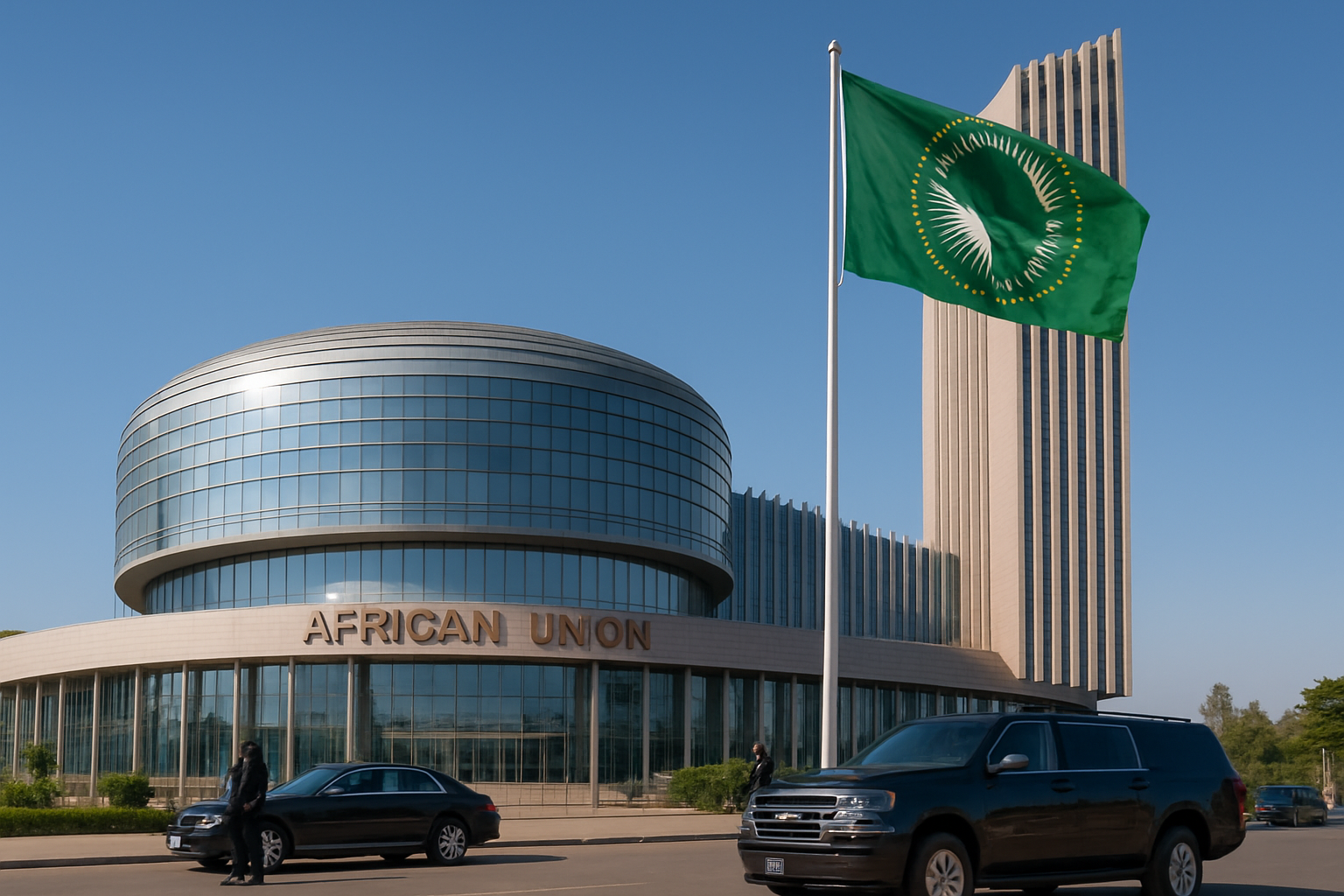
Somalia has secured a coveted seat on the African Union Peace and Security Council alongside nine other nations in elections that mark a pivotal moment for continental security governance, as African leaders convene in Addis Ababa for the 48th Ordinary Session of the AU Executive Council.
The AU Peace and Security Council elections, conducted on February 11, 2026, saw ten countries secure two-year terms on the continent's premier security body. Alongside Somalia, the successful nations include the Democratic Republic of Congo, Gabon, Uganda, Morocco, Lesotho, South Africa, Benin, Côte d'Ivoire, and Sierra Leone, representing a diverse geographical spread across the continent.
Somalia's Strategic Return to Continental Security
Somalia's election to the Peace and Security Council represents a significant diplomatic achievement for a nation that has been rebuilding its institutions and international standing after decades of conflict. The Horn of Africa country's successful bid demonstrates the African Union's commitment to inclusive representation, even as Somalia continues to face internal security challenges.
The election comes at a particularly crucial time for Somalia, which has been working to strengthen its federal system and address ongoing tensions between the central government and regional authorities. Recent months have seen Somali Federal Parliament MPs directly accusing the Federal Government of Somalia (FGS) of involvement in severe fighting in Baidoa, highlighting the deep fractures within the country's federal structure.
Gabon's Commitment to Conflict Prevention
Gabon's successful election to the Council has been met with strong declarations from the country's leadership about their commitment to peace and security across the continent. Speaking after the election results were announced, Gabon's leadership emphasized their intention to "work actively on conflict prevention," signaling a proactive approach to their new continental security responsibilities.
"We will work actively on conflict prevention," affirmed Gabonese leadership following their election to the Peace and Security Council.
— Gabon Government Statement
The Central African nation's election represents a strategic positioning as Gabon seeks to enhance its regional influence while contributing to broader continental security initiatives. This comes as the country continues to modernize its infrastructure and diversify its economy beyond petroleum dependency.
High-Level Diplomatic Engagement
The Peace and Security Council elections took place within the broader context of intensive diplomatic activity in Addis Ababa. Ethiopia's Minister of Foreign Affairs, Gedion Timothewos, held a series of bilateral meetings with his counterparts from Burundi, Rwanda, and Tunisia on the sidelines of the 48th Ordinary Session, demonstrating the multilateral nature of contemporary African diplomacy.
These bilateral consultations reflect the increasingly sophisticated nature of African Union proceedings, where formal sessions are complemented by extensive side meetings that often prove crucial for building consensus on continental issues. The presence of foreign ministers from across the continent's 55 member states has created opportunities for both regional and trans-regional cooperation.
Mozambique's Participation Amid Challenges
Mozambique's participation in the 39th Ordinary Conference of Heads of State and Government of the African Union, running parallel to the Executive Council sessions, occurs as the country continues to recover from devastating floods that have affected over 700,000 people across multiple provinces.
The Southern African nation's active engagement in AU proceedings, despite facing significant domestic challenges, underscores the importance African leaders place on continental institutions even during times of crisis. This participation demonstrates the African Union's evolution into a body where member states maintain their continental commitments regardless of domestic pressures.
Continental Security Architecture Evolution
The new composition of the Peace and Security Council reflects the African Union's ongoing efforts to balance regional representation with effectiveness in addressing the continent's diverse security challenges. The ten-nation body will be responsible for overseeing peace and security initiatives across a continent facing various challenges, from terrorism in the Sahel to maritime security concerns along Africa's extensive coastlines.
The Council's mandate includes conflict prevention, peacemaking, peacekeeping, post-conflict reconstruction, and humanitarian action. With the changing geopolitical landscape and emerging security threats, the new composition brings together nations with varied experiences in conflict resolution and peace-building.
Regional Balance and Representation
The successful candidates represent all five African regions, ensuring geographical balance in continental security decision-making. North Africa is represented by Morocco, West Africa by Benin, Côte d'Ivoire, and Sierra Leone, East Africa by Somalia and Uganda, Central Africa by the Democratic Republic of Congo and Gabon, and Southern Africa by Lesotho and South Africa.
This distribution reflects the African Union's commitment to inclusive governance while ensuring that the continent's diverse security challenges are understood and addressed by representatives with regional expertise and experience.
Context of Continental Cooperation
The Peace and Security Council elections occur within a broader context of enhanced African cooperation and institutional development. Recent months have seen significant advances in continental integration, from infrastructure development projects to improved disaster response mechanisms.
The African Union's response to recent crises, including the coordinated response to Mozambique's flooding through SADC mechanisms and Rwanda's cross-regional humanitarian assistance, demonstrates the maturation of African institutions and their growing capacity for self-reliant crisis response.
Security Challenges Ahead
The newly constituted Peace and Security Council will face immediate challenges across multiple fronts. In West Africa, the security situation remains volatile with ongoing conflicts and the formation of new alliances such as the Alliance of Sahel States, which maintains distance from traditional cooperation frameworks.
In Central Africa, the Democratic Republic of Congo continues to face security challenges in its eastern provinces, while the new Council will need to address emerging maritime security concerns and transnational criminal activities affecting multiple regions.
Institutional Maturation and Future Prospects
The smooth conduct of the Peace and Security Council elections demonstrates the African Union's institutional maturation and its capacity to manage complex multilateral processes. The 48th Ordinary Session of the Executive Council has showcased the AU's ability to coordinate policy development, facilitate high-level diplomatic engagement, and maintain focus on continental priorities despite individual member state challenges.
As the newly elected Council members prepare to assume their responsibilities, the African Union continues to position itself as a crucial bridge between national governments and global institutions. The organization's hosting capabilities, demonstrated through the coordination of security, accommodation, and transportation for hundreds of high-level delegates, reflects its evolution from a symbolic body to an active policy development institution.
Looking Forward
The new Peace and Security Council composition will serve during a critical period for continental security, with ongoing conflicts requiring sustained attention and emerging challenges demanding innovative approaches. The diverse experience and regional representation of the elected members provides the Council with the expertise needed to address Africa's complex security landscape.
As these ten nations assume their two-year terms, the African Union's commitment to enhanced continental cooperation, policy coordination, and unified responses to shared challenges will be tested. The success of this new Council composition will significantly influence the trajectory of African security governance and the continent's ability to address 21st-century challenges through African-led solutions.
The February 2026 elections mark not just a routine institutional rotation, but a strategic repositioning of African security governance that reflects the continent's growing confidence in its institutional capacity and commitment to collective security approaches.