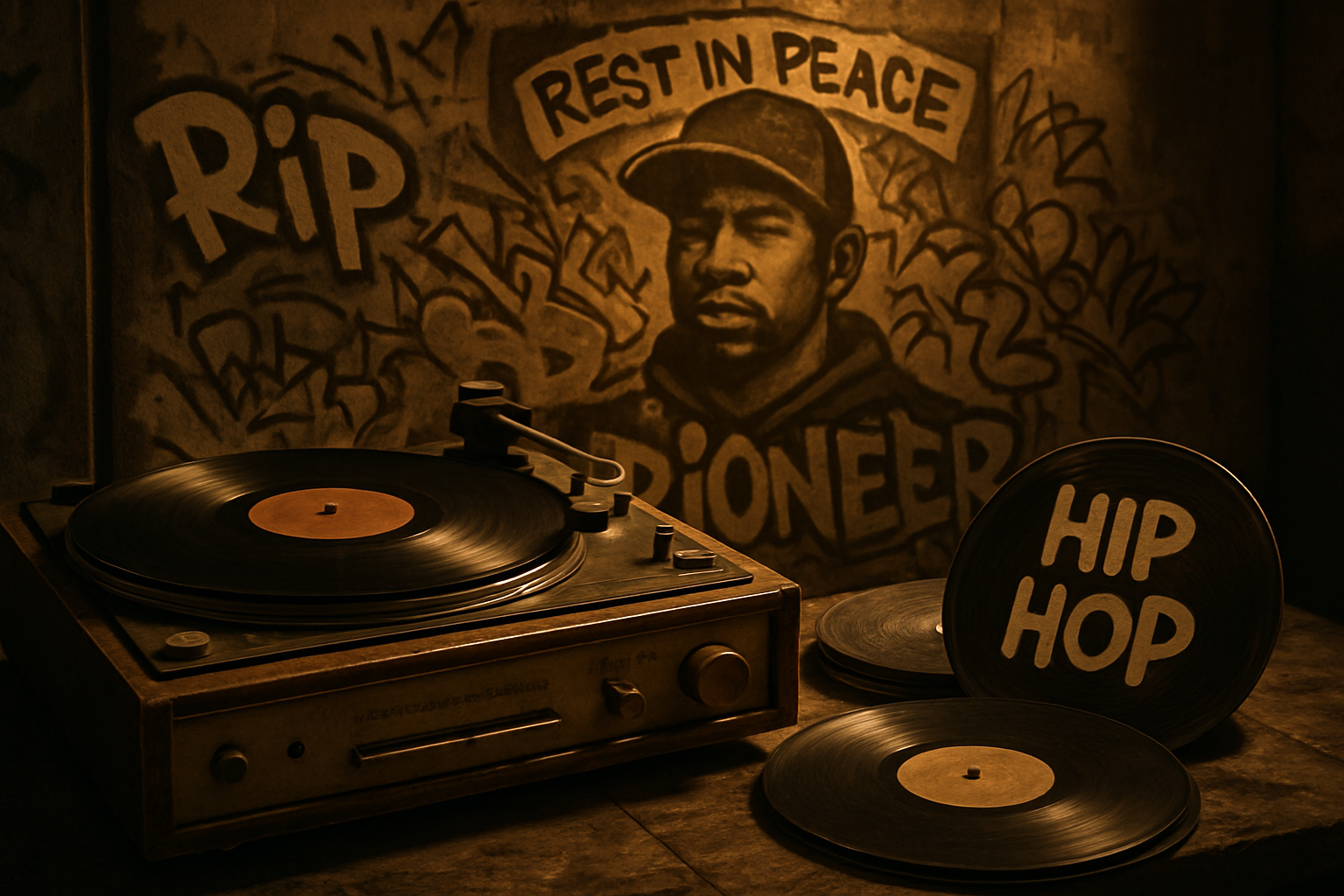
Afrika Bambaataa, one of hip-hop's founding fathers and the visionary behind the Zulu Nation movement, died Thursday at age 68 from complications related to prostate cancer, according to his legal representatives.
The legendary DJ, born Lance Taylor in the South Bronx in 1957, passed away surrounded by family members, marking the end of an era for hip-hop culture that he helped create from the streets of New York City in the 1970s. His death was confirmed by his longtime lawyer, who stated that Bambaataa had been battling prostate cancer for several years.
The Birth of Hip-Hop Culture
Afrika Bambaataa's influence on modern music cannot be overstated. Emerging from the gang-ridden neighborhoods of the South Bronx in the early 1970s, he transformed his experience as a former member of the Black Spades gang into a positive cultural movement that would eventually reach every corner of the globe.
In 1973, Bambaataa founded the Zulu Nation, originally conceived as an alternative to gang life for young people in the Bronx. The organization promoted what became known as the four elements of hip-hop culture: DJing, MCing (rapping), breaking (breakdancing), and graffiti art. This framework provided a creative outlet for urban youth and established the philosophical foundation upon which hip-hop would grow.
Tommy Boy Records, his historic label home, paid tribute to the pioneer in a statement: "Upon the announcement of his death, we think of his contributions to hip-hop and culture in the broader sense, which continue to this day."
Musical Innovation and Electro-Funk Legacy
While Bambaataa is revered as a cultural organizer, his musical contributions were equally groundbreaking. He gained international recognition with his 1982 single "Planet Rock," a revolutionary fusion of hip-hop beats with electronic music elements borrowed from German group Kraftwerk. The track, recorded with his group the Soul Sonic Force, essentially created the electro-funk genre and demonstrated hip-hop's capacity for global musical fusion.
"Planet Rock" reached the top 50 in multiple countries and became one of the most influential hip-hop recordings ever made, inspiring countless electronic and hip-hop artists who followed. The song's innovative use of sampling and electronic production techniques established templates that continue to influence music production today.
The Zulu Nation Philosophy
Beyond music, Bambaataa's Zulu Nation promoted a philosophy of knowledge, wisdom, understanding, and respect for all people regardless of race, religion, or nationality. The organization grew from a local Bronx youth movement into an international network with chapters worldwide, spreading hip-hop culture and its positive messages across continents.
The Zulu Nation's influence extended far beyond entertainment, promoting education, cultural awareness, and social activism. Bambaataa often spoke about hip-hop as a tool for social change and cross-cultural understanding, positioning the movement as more than music but as a vehicle for community building and youth empowerment.
A Complex Legacy
Bambaataa's legacy, while foundational to hip-hop, became complicated in later years due to longstanding allegations of sexual abuse that emerged in 2016. Multiple individuals came forward with accusations dating back decades, leading to significant controversy within the hip-hop community and his removal from various events and honors.
These allegations, which Bambaataa denied, created a complex situation for the hip-hop community in evaluating his contributions to the culture while addressing serious accusations about his personal conduct. The controversy highlighted broader conversations about accountability and legacy within the entertainment industry.
Influence on Modern Hip-Hop
Despite controversies, Bambaataa's role in creating hip-hop culture remains historically significant. Artists from Grandmaster Flash to Kanye West have acknowledged his influence on their work and the broader hip-hop movement. His emphasis on global musical fusion presaged hip-hop's evolution into a truly international art form.
The techniques he pioneered in DJ mixing, his innovative use of electronic elements, and his vision of hip-hop as a unifying cultural force established foundations that contemporary artists continue to build upon. His work bridged musical genres and cultural boundaries in ways that seemed impossible in the racially divided America of the 1970s.
The End of an Era
With Bambaataa's death, hip-hop has lost one of its last surviving founding figures from the culture's earliest days in the South Bronx. His passing comes as hip-hop approaches its sixth decade as a dominant global cultural force, with the music and lifestyle he helped create now influencing everything from fashion to politics worldwide.
The hip-hop community now faces the complex task of preserving Bambaataa's cultural contributions while acknowledging the controversies that marked his later years. His role in transforming hip-hop from local street culture to global phenomenon ensures his place in music history, even as debates about his personal legacy continue.
Afrika Bambaataa's death marks not just the loss of a individual, but the end of direct connection to hip-hop's mythical origins in 1970s New York City. The culture he helped birth has grown far beyond anything he could have imagined in those early days in the Bronx, touching billions of lives and fundamentally changing popular music forever.