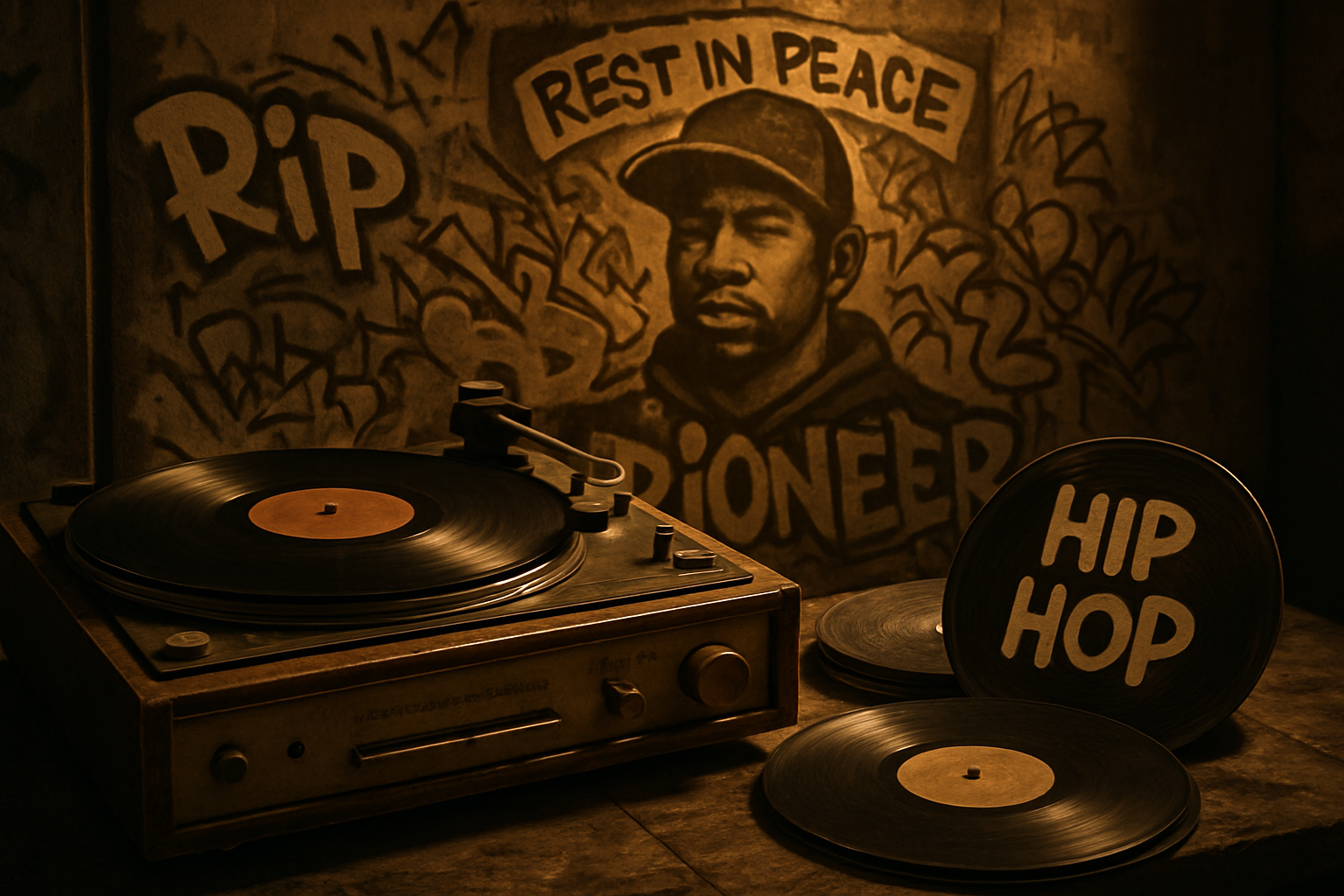
Afrika Bambaataa, the pioneering DJ and producer widely regarded as one of hip-hop's founding fathers, has died at age 68, according to multiple international reports confirming his passing on April 10, 2026.
Born Lance Taylor in the South Bronx, Bambaataa passed away in Pennsylvania from complications related to prostate cancer, according to Russian media outlet Meduza citing TMZ sources. The news has sent shockwaves through the global music community, with tributes pouring in from artists, industry figures, and cultural institutions worldwide.
Bambaataa's death marks the end of an era for hip-hop culture, severing one of the last direct connections to the movement's origins in the 1970s South Bronx. His influence extended far beyond music, transforming a local street culture phenomenon into a global force that continues to shape art, politics, and social consciousness across continents.
The Architect of Hip-Hop Culture
In 1973, Bambaataa founded the Universal Zulu Nation, a cultural organization that provided an alternative to gang life for young people in the Bronx. Through the Zulu Nation, he established hip-hop's four foundational elements: DJing, MCing (rapping), breaking (breakdancing), and graffiti art. This framework became the blueprint for a cultural movement that would eventually reach every corner of the globe.
"Afrika Bambaataa didn't just create music; he created a movement that gave voice to the voiceless and hope to the hopeless," said one tribute from Tommy Boy Records, highlighting his continuing cultural impact decades after his initial breakthrough.
The German public broadcaster ARD emphasized Bambaataa's role as "one of the pioneers of hip-hop," noting his global fame through tracks like "Planet Rock." The 1982 single, a groundbreaking fusion of electro-funk and hip-hop, demonstrated his visionary approach to musical innovation and cross-cultural collaboration.
Revolutionary Musical Innovation
Bambaataa's 1982 release "Planet Rock" stands as perhaps his most influential contribution to popular music. The track's innovative blend of electronic elements with traditional hip-hop beats created the electro-funk subgenre, influencing countless artists and producers in the decades that followed. The song's success proved that hip-hop could transcend cultural and geographical boundaries, reaching mainstream audiences while maintaining its authentic street origins.
His approach to music was characterized by an openness to global influences, incorporating elements from African, Caribbean, Latin, and European musical traditions. This fusion philosophy reflected his broader vision of hip-hop as a unifying cultural force capable of bringing together diverse communities through shared artistic expression.
Cultural Ambassador and Global Vision
Beyond his musical contributions, Bambaataa served as hip-hop's first international cultural ambassador. Through worldwide tours and cultural exchanges, he demonstrated how the movement could serve as a bridge between different societies and ethnic groups. His work promoted understanding and unity through music, establishing hip-hop as both an art form and a tool for social change.
The Luxembourg publication Le Quotidien noted that Bambaataa "was among those who laid the foundations of hip-hop in the late 1970s," emphasizing his role as the founder of the Zulu Nation and his lasting impact on global culture. His Caribbean roots, highlighted in Dominican Republic coverage, connected hip-hop to broader African diaspora traditions, enriching the movement's cultural depth.
Complex Legacy and Controversies
Bambaataa's later years were overshadowed by serious allegations that emerged in 2016, when several men accused him of sexual abuse during their youth. The accusations, which Bambaataa consistently denied, led to his removal from various positions within the hip-hop community and significantly impacted his public standing.
Multiple international news sources, including German ARD and French Le Quotidien, referenced these "abuse allegations" and "sexual assault accusations" when reporting his death, indicating the complex nature of his legacy. The New Zealand publication Stuff specifically mentioned the sexual assault accusations that had "tarnished his reputation in recent years."
These controversies created a challenging dynamic for the hip-hop community, forcing a reckoning between Bambaataa's undeniable contributions to the culture and the serious nature of the allegations against him. Many in the community struggled to separate the artist's foundational work from the personal accusations that emerged decades later.
Global Impact and Cultural Transformation
Despite the controversies, Bambaataa's role in creating and nurturing hip-hop culture remains historically significant. His vision transformed what began as local block parties in the South Bronx into a global phenomenon influencing music, fashion, politics, and social activism worldwide.
The movement he helped establish has produced countless artists, entrepreneurs, and cultural figures who continue to shape contemporary society. From the streets of New York to venues in Europe, Asia, Africa, and beyond, hip-hop's influence on global youth culture can be traced directly back to the foundational work of pioneers like Bambaataa.
His emphasis on knowledge, understanding, and cultural unity through the Zulu Nation created a framework that extended hip-hop's influence beyond entertainment into education and social activism. This holistic approach to culture-building established precedents that continue to guide hip-hop's evolution as both an artistic movement and a force for social change.
Industry Tributes and Remembrances
As news of Bambaataa's death spread across international media outlets, the global hip-hop community began sharing memories and acknowledging his foundational contributions. Industry figures emphasized his role in establishing the cultural and artistic principles that continue to guide hip-hop's development.
The timing of his death comes during a period of significant reflection within the music industry about legacy, accountability, and the complex relationships between personal conduct and artistic contribution. His passing forces the hip-hop community to grapple with how to honor foundational contributions while acknowledging the full complexity of influential figures' lives.
The Enduring Zulu Nation
The Universal Zulu Nation, Bambaataa's most lasting institutional contribution, continues to operate worldwide, promoting hip-hop culture and education. The organization's survival and continued influence demonstrate the institutional strength of the movement he helped create, extending his impact beyond his personal career.
Through the Zulu Nation's ongoing work in education, cultural preservation, and community organizing, Bambaataa's vision of hip-hop as a positive force for youth development and cultural understanding continues to influence new generations of artists and activists.
Historical Significance and Future Impact
Afrika Bambaataa's death represents more than the loss of an individual artist; it marks the end of hip-hop's foundational era. As one of the last surviving pioneers from the movement's 1970s origins, his passing closes a direct historical connection to hip-hop's birth in the South Bronx.
For future scholars and enthusiasts studying hip-hop's development, Bambaataa's contributions will remain essential to understanding how a local cultural movement became a global phenomenon. His innovative approach to musical fusion, community organizing, and cultural promotion established templates that continue to influence artists and cultural workers worldwide.
The challenge moving forward will be preserving and teaching the valuable aspects of his contributions while honestly addressing the controversies that marked his later years. This balance reflects broader questions about how societies remember and learn from complex historical figures whose positive contributions coexist with serious personal failures.
As the global hip-hop community processes this loss, Afrika Bambaataa's death serves as both an end and a beginning—the conclusion of the founding generation's direct influence and an opportunity for new voices to carry forward the culture's essential values of creativity, community, and resistance to oppression.