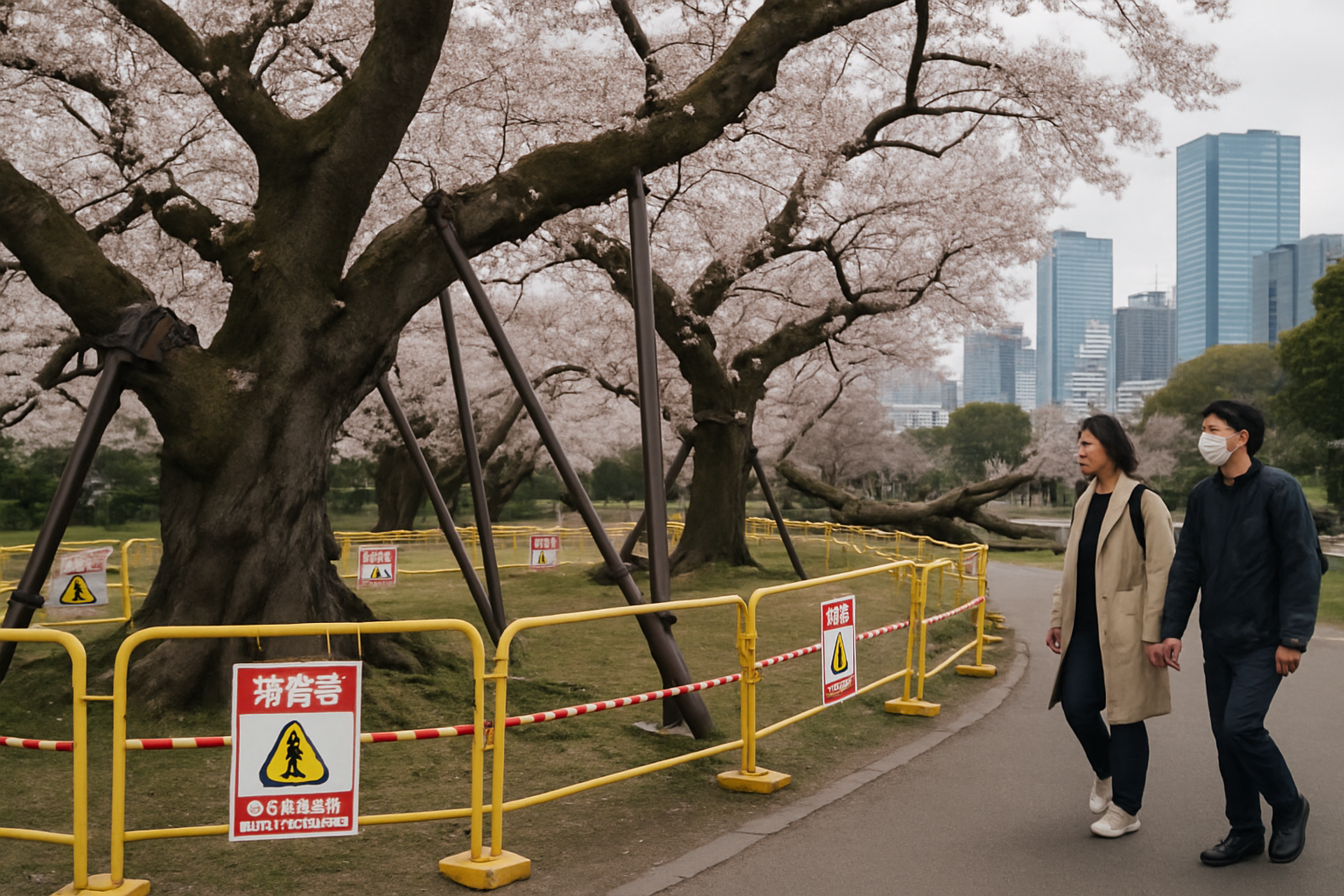
Japan's beloved cherry blossom season faces an unprecedented safety crisis as aging Somei Yoshino trees collapse in Tokyo's most popular parks, threatening visitors and raising urgent questions about infrastructure management during the nation's most celebrated cultural tradition.
Two cherry blossom trees collapsed on Thursday at prominent Tokyo locations, marking a dangerous escalation in what experts describe as a ticking time bomb of aging infrastructure. One tree fell at Kinuta Park in downtown Tokyo, damaging a protective fence, while another collapsed at the scenic Chidorigafuchi greenway, a premier hanami viewing destination that attracts hundreds of thousands of visitors annually during peak blossom season.
A Legacy of Post-War Optimism Reaches Breaking Point
The current crisis stems from Japan's ambitious post-war reconstruction era when many of Tokyo's iconic Somei Yoshino cherry trees were planted during the 1960s as symbols of national renewal and progress. Now, more than six decades later, these trees are reaching the end of their natural 60-80 year lifespan, creating a cascade of safety hazards across the capital's park system.
The timing could not be more concerning. Japan's cherry blossom season represents far more than a natural phenomenon—it is a cornerstone of Japanese cultural identity, generating billions in tourism revenue and providing emotional sustenance to millions of citizens who participate in the traditional hanami flower viewing celebrations. The prospect of closing beloved parks during peak season creates both economic and cultural dilemmas for authorities.
"These trees were planted with such hope for Japan's future. Now we're watching them become dangerous reminders of our aging infrastructure challenges."
— Tokyo Parks Authority spokesperson
Widespread Infrastructure Concerns
The Thursday collapses represent only the most visible manifestation of a broader crisis affecting Tokyo's urban forest. Parks officials report that many cherry trees across the city now require extensive support structures, including metal braces, cable systems, and protective barriers to prevent catastrophic failures during heavy winds or storms.
Kinuta Park, where one of Thursday's incidents occurred, exemplifies the challenges facing park management. The sprawling green space in Setagaya ward has long been a favorite destination for families seeking respite from urban density. However, decades of deferred maintenance and the natural aging process have created a patchwork of safety concerns that officials struggle to address with limited budgets.
The Chidorigafuchi area presents even more complex challenges. As one of Tokyo's premier cherry blossom viewing locations, positioned along the Imperial Palace moat, it attracts massive crowds during peak season. The collapse of a tree in this highly trafficked area underscores the potential for mass casualty incidents if aging infrastructure fails during crowded hanami celebrations.
Climate Change Accelerates Tree Stress
Environmental scientists point to climate change as an accelerating factor in the deterioration of Tokyo's urban forest. Rising temperatures, altered precipitation patterns, and increased frequency of extreme weather events place additional stress on aging tree populations already vulnerable due to their advanced age.
Recent data shows that cherry blossom blooming patterns have shifted significantly over recent decades, with earlier bloom times and shortened peak periods. These changes disrupt the natural cycles that have sustained these trees for generations, potentially weakening their structural integrity and making catastrophic failures more likely.
Urban heat island effects in Tokyo further compound these challenges. Concrete and asphalt surfaces create localized temperature increases that stress tree root systems and alter soil conditions, accelerating the aging process and reducing the trees' natural resilience.
Economic and Cultural Implications
The safety crisis threatens Japan's lucrative cherry blossom tourism industry, which generates an estimated ¥616 billion ($4.1 billion) annually according to recent economic impact studies. International visitors specifically plan trips around sakura season, with many considering it a once-in-a-lifetime cultural experience.
Beyond tourism revenue, the cultural significance cannot be overstated. Cherry blossoms represent the Japanese concept of mono no aware—the bittersweet awareness of the impermanence of things. The irony that these symbols of transience are themselves facing premature endings due to safety concerns adds layers of complexity to the national conversation.
Local businesses surrounding major parks report anxiety about potential closures during peak season. Restaurant owners, souvenir vendors, and photographers who depend on hanami crowds face uncertain futures if safety concerns force extended park restrictions.
Safety Measures and Emergency Response
Tokyo authorities have implemented emergency safety protocols following the Thursday incidents. These measures include immediate tree health assessments using advanced imaging technology to detect internal decay and structural weaknesses not visible to the naked eye.
Arborists and structural engineers are conducting comprehensive evaluations of high-risk trees in major parks, prioritizing areas with heavy foot traffic and critical infrastructure. This scientific approach represents a departure from traditional visual inspections, employing sonic tomography and resistograph testing to assess internal tree conditions.
Emergency response teams have established rapid deployment protocols for tree-related incidents, recognizing that spring weather patterns can quickly escalate isolated problems into widespread emergencies. These teams coordinate with local fire departments and medical services to ensure quick response times in densely populated park areas.
Long-term Solutions and Replacement Strategies
City planners are developing comprehensive replacement strategies that balance cultural preservation with public safety requirements. These plans involve gradually replacing aging Somei Yoshino trees with younger specimens while maintaining the aesthetic and cultural character that makes Tokyo's parks internationally famous.
However, replacement efforts face significant challenges. Mature cherry trees cannot be quickly substituted—newly planted specimens require 15-20 years to reach full flowering potential. This timeline means that current safety interventions must sustain existing trees while long-term replacement programs develop.
Advanced horticultural techniques, including root system rehabilitation and canopy management, offer possibilities for extending the productive life of aging trees. These interventions, while costly, may provide bridge solutions while replacement plantings mature.
International Best Practices
Tokyo's experience reflects broader challenges facing urban forest management worldwide as post-war tree populations age simultaneously. Cities including Washington D.C., with its famous Tidal Basin cherry trees gifted by Japan in 1912, face similar infrastructure decisions as their historic plantings reach critical age thresholds.
Best practices emerging from international urban forestry include proactive replacement schedules, diversified species planning to avoid simultaneous aging, and enhanced monitoring technologies that can predict failures before they become safety hazards.
"Urban forests require the same long-term thinking as any critical infrastructure. We cannot wait for failures to force our hand."
— International Society of Arboriculture spokesman
Community Engagement and Cultural Continuity
Public response to the safety concerns reflects deep emotional connections to Tokyo's cherry trees that transcend simple aesthetic appreciation. Many families have generations of memories associated with specific parks and trees, making replacement decisions particularly sensitive cultural undertakings.
Community groups are organizing volunteer monitoring programs to assist professional arborists in identifying at-risk trees. These citizen science initiatives leverage the intimate knowledge that regular park visitors possess about changes in tree health and behavior over time.
Educational programs help visitors understand the natural lifecycle of cherry trees while emphasizing safety awareness. These initiatives aim to maintain cultural traditions while adapting to new realities of aging urban infrastructure.
Future of Hanami Traditions
The current crisis may fundamentally reshape how Japan approaches hanami celebrations in urban environments. Safety considerations are forcing innovations in crowd management, site selection, and cultural practice adaptation that could influence cherry blossom viewing for generations.
Technology integration offers possibilities for enhanced safety monitoring during peak season. Real-time weather tracking, crowd density management, and predictive analytics could help authorities make informed decisions about park access and safety protocols.
Cultural adaptation may include shifting emphasis to younger tree plantings in suburban areas and developing new traditions that accommodate the realities of urban infrastructure aging. These changes require delicate balance between preserving cultural authenticity and ensuring public safety.
The Path Forward
Tokyo's cherry blossom safety crisis represents a microcosm of broader infrastructure aging challenges facing developed nations worldwide. The solutions developed in response to this crisis could provide templates for other cities managing aging urban forests and balancing cultural preservation with public safety.
Immediate priorities focus on completing comprehensive tree health assessments before the next major weather event. Long-term success depends on sustained investment in replacement programs, advanced monitoring technologies, and community engagement initiatives that preserve cultural traditions while adapting to new safety realities.
The stakes extend far beyond park management. Japan's ability to navigate this crisis while maintaining the cultural significance of hanami will demonstrate whether modern societies can successfully balance heritage preservation with infrastructure modernization—a challenge that defines our urban future.