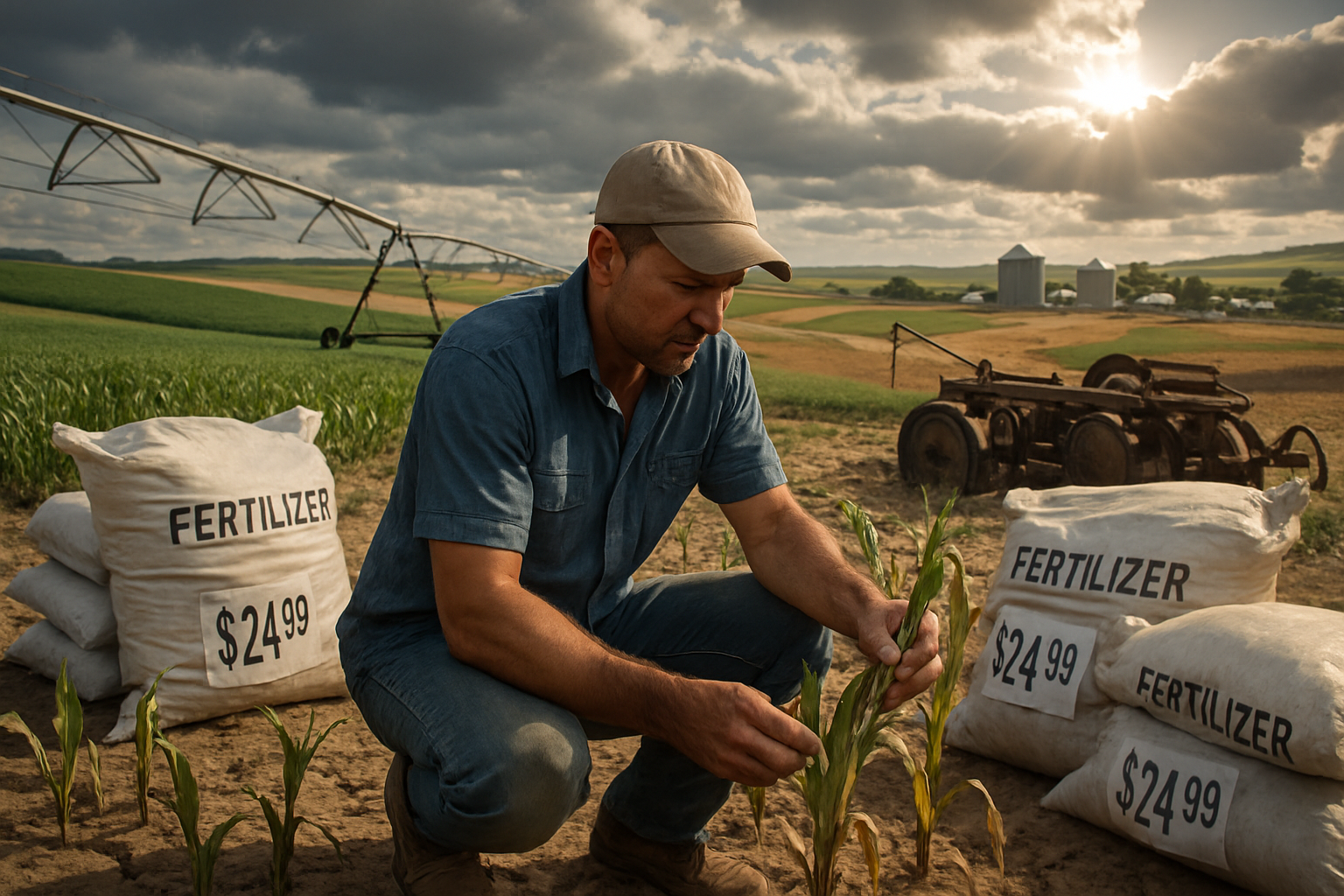
A perfect storm of agricultural challenges is engulfing global food systems as Swedish farmers face unprecedented fertilizer and diesel price shocks while Brazil dramatically increases peanut exports to China, fundamentally reshaping international agricultural trade patterns and threatening food security worldwide.
New evidence emerging from agricultural zones across continents reveals a deepening crisis that extends far beyond individual farm operations to encompass entire food supply chains, trade relationships, and rural communities. As the world enters its 20th consecutive month with temperatures exceeding 1.5°C above pre-industrial levels, the convergence of climate pressures, supply chain disruptions, and geopolitical tensions is creating unprecedented challenges for agricultural producers and consumers alike.
Swedish Agriculture Under Siege
Swedish farmers are confronting what agricultural experts describe as their most severe crisis in decades. Johannes Åkerblom, head of crop production at Lantmännen, warns that farmers face a devastating combination of pressured grain prices, the worst winter damage to autumn sowing in perhaps 15 years, and now a price shock on fertilizer and diesel that threatens to make farming economically unviable.
"Farmers are being hit from multiple directions," Åkerblom explains, describing conditions that have left many agricultural operations questioning their viability. The winter damage has been particularly severe, with some regions reporting crop losses not seen since the early 2000s, while fertilizer costs have surged to levels that eliminate profit margins for many grain producers.
The crisis in Sweden reflects broader challenges facing European agriculture, where farmers across the continent are grappling with volatile input costs, climate-related production disruptions, and increasingly unpredictable market conditions. Industry analysts suggest that without intervention, significant numbers of farms could become financially unsustainable, potentially leading to consolidation and reduced domestic food production capacity.
Brazil-China Agricultural Alliance Reshapes Global Trade
Meanwhile, halfway around the world, Brazilian peanut producers are experiencing a remarkable transformation. As geopolitical tensions between China and the United States create new trade dynamics, Brazilian producers have stepped into supply gaps, with peanut exports to China experiencing explosive growth.
According to CGTN correspondent Paulo Cabral's reporting from Brazil, the shift represents more than simple trade substitution—it demonstrates how global trade tensions and tariff policies can rapidly redirect agricultural commodity flows, creating new opportunities for some producers while potentially disadvantaging others.
The Brazil-China peanut trade expansion illustrates the fluid nature of international agricultural markets, where political relationships and trade policies can override traditional geographical and economic advantages. For Brazilian producers, the Chinese market represents a significant opportunity for expansion and increased revenues. However, the rapid shift also highlights the vulnerability of agricultural systems to geopolitical disruptions and the potential for trade dependencies to shift suddenly.
Climate Change as Agricultural Threat Multiplier
The agricultural challenges documented across multiple continents cannot be separated from the broader climate context. January 2026 marked the hottest month in recorded history, extending a streak of 20 consecutive months where global temperatures exceeded the critical 1.5°C threshold above pre-industrial levels.
"Traditional farming cycles that guided agricultural planning for centuries are becoming increasingly unreliable."
— Agricultural Climate Adaptation Expert
This sustained warming is fundamentally altering agricultural systems worldwide. Traditional seasonal patterns that farmers have relied upon for generations are becoming increasingly unpredictable, forcing rapid adaptation in crop selection, irrigation methods, and harvest timing. The climate pressures are not only affecting productivity but also creating optimal conditions for pest and disease outbreaks while disrupting traditional food preservation and storage methods.
Technology-Tradition Integration Emerges as Key Solution
Despite the mounting challenges, successful agricultural adaptations are emerging across multiple continents, consistently demonstrating a sophisticated synthesis of cutting-edge technology with traditional farming knowledge and community-based management systems. This technology-tradition integration is proving more effective than purely technological solutions that ignore local expertise and community structures.
Examples of successful adaptation include precision agriculture systems that incorporate indigenous knowledge of local growing conditions, water-efficient irrigation technologies that build upon traditional water management practices, and climate-adaptive crop varieties developed through combinations of modern plant breeding and traditional seed selection methods.
South-South Cooperation Replacing Traditional Aid Models
A significant pattern emerging from global agricultural developments is the rise of South-South cooperation, where developing nations increasingly share expertise through peer-to-peer partnerships rather than traditional North-South aid dependencies. This approach is proving more culturally appropriate and economically sustainable than conventional development assistance.
Countries facing similar agricultural challenges are collaborating directly to share technologies, crop varieties, and adaptation strategies. The Brazil-China trade relationship, while driven by geopolitical factors, also represents this broader trend toward cooperation between developing economies that bypasses traditional Western-dominated aid and trade relationships.
Economic Multiplier Effects Extend Beyond Farms
The agricultural challenges and adaptations documented worldwide create comprehensive economic impacts extending far beyond individual farm operations. Successful agricultural innovation generates sustainable rural employment, enhances food security, and creates economic benefits throughout regions through improved transportation networks, processing capabilities, and international trade opportunities.
Conversely, agricultural failures create economic devastation that extends through both rural and urban communities dependent on stable food systems. The Swedish agricultural crisis, for example, affects not only farmers but also agricultural suppliers, food processors, transportation companies, and ultimately consumers who may face higher food prices or reduced domestic food security.
Supply Chain Vulnerabilities Exposed
The current agricultural challenges reveal critical vulnerabilities in global food supply chains. Single-point failures—whether from climate events, trade disputes, or input shortages—can rapidly cascade through interconnected agricultural and food systems, affecting populations thousands of miles from the original disruption.
The fertilizer price shocks affecting European farmers, for instance, stem from complex interactions between energy markets, geopolitical tensions, and climate pressures that create supply bottlenecks far from Swedish farmland. Similarly, the Brazil-China peanut trade expansion affects global peanut markets and potentially impacts producers and consumers worldwide.
Implementation Challenges and Success Factors
Despite the availability of technological solutions and successful adaptation examples, significant challenges remain in implementing effective responses to agricultural crises. Funding sustainability is particularly critical for developing nations, where immediate economic pressures often override long-term environmental and agricultural considerations.
Technical capacity building requires sustained investment in education, training, and institutional development that extends beyond initial technology deployment. Climate change is also disrupting project timelines, requiring adaptive management approaches that can respond quickly to changing conditions.
However, consistent success factors have emerged from effective agricultural adaptation programs: community ownership of development processes, transparent governance structures, sustained political commitment that transcends electoral cycles, and international cooperation that respects local autonomy while providing technical and financial support.
Strategic Global Implications
The agricultural developments of 2026 are providing templates that could be scaled globally to address food security challenges, but the window for building resilient and equitable food systems is narrowing rapidly as environmental pressures intensify and population growth increases agricultural resource demands.
The coordination of immediate crisis response with long-term resilience building has become crucial for global food systems serving growing populations amid accelerating environmental change. Agricultural innovation must keep pace with climate change while maintaining effectiveness principles that ensure community benefit and environmental sustainability.
"The choices made during this critical period may determine food security trajectories for decades ahead, making coordinated international action more urgent than ever before."
— Global Food Security Analyst
Tools and knowledge exist for comprehensive responses to current agricultural challenges, but success depends on sustained international cooperation, enhanced coordination across multiple sectors and scales, and increased financial commitments that recognize food security as essential infrastructure for human prosperity and planetary sustainability.
Future Implications for Global Food Security
The convergence of agricultural innovations and challenges documented in 2026 may prove decisive for global food security trajectories in the coming decades. The human dimension remains central to these developments—millions of farmers, food workers, and vulnerable communities depend on stable and fair global food systems.
Success in addressing current challenges requires balancing immediate humanitarian needs with long-term sustainability, ensuring that short-term solutions contribute to rather than undermine lasting food security. The agricultural sector has demonstrated remarkable adaptive capacity, but continued success depends on sustained political commitment, community engagement, and international cooperation aligned around global food security objectives.
As climate change continues to accelerate and global food demands increase, the agricultural innovations and cooperation frameworks emerging in 2026 provide both hope and urgency for building food systems capable of serving humanity's needs while protecting the planetary resources upon which all agriculture ultimately depends.