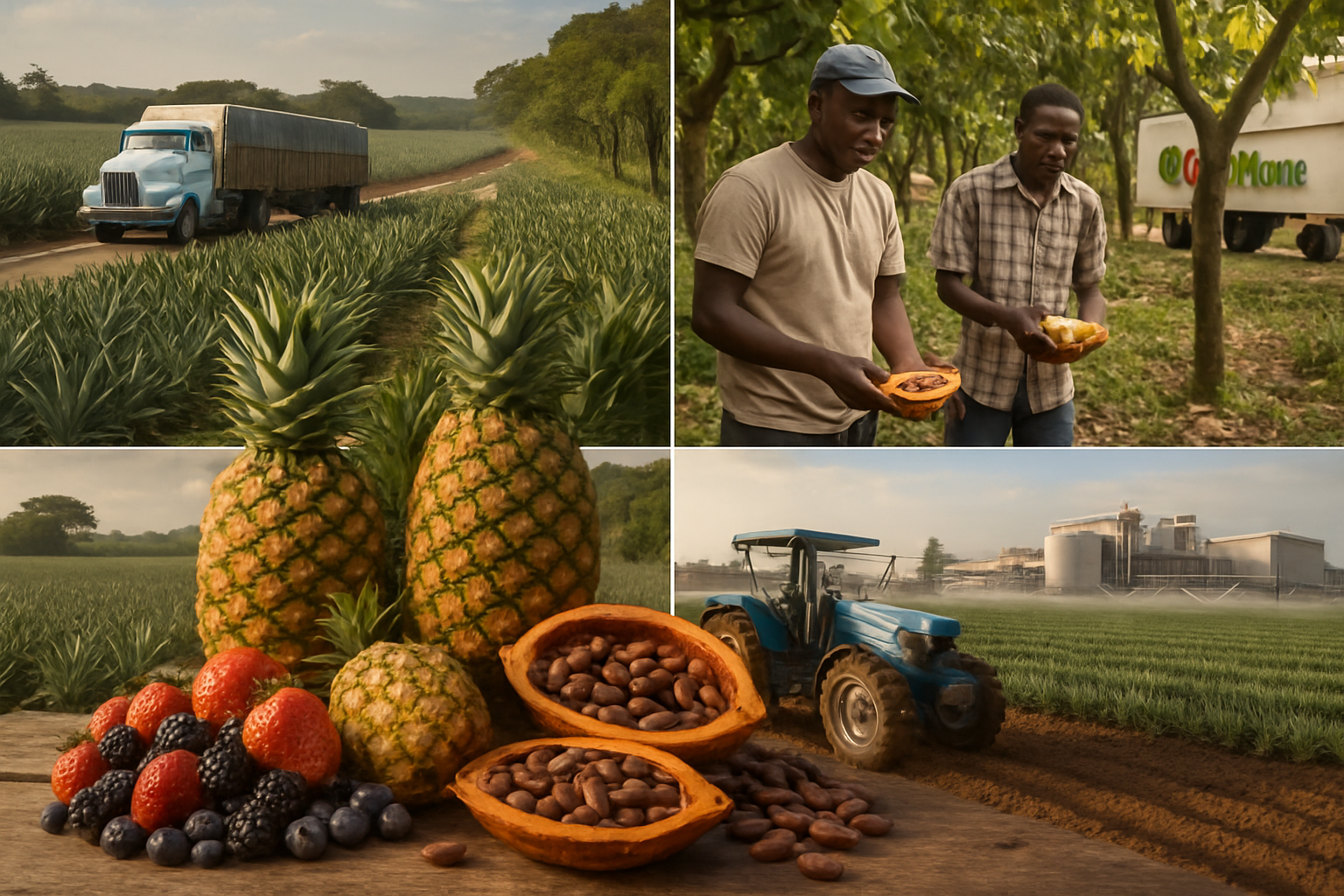
Agricultural developments across three continents in February 2026 expose the complex realities of global food security, where booming export success stories exist alongside mounting economic pressures and transformative international investments reshaping regional farming landscapes.
Argentina's Agricultural Export Renaissance
Argentina demonstrates remarkable agricultural innovation and export success despite broader economic challenges. A Patagonian family enterprise has evolved from a hobby operation into a major premium fruit exporter, now shipping 800,000 kilograms annually of highly sought-after berries to international markets.
Born in Chubut province, this company exemplifies Argentina's agricultural transformation. Operating across 79 hectares in Patagonia with four farms and employing up to 240 seasonal workers, the enterprise focuses intensively on quality, technology integration, and export market development. The operation faces the significant challenge of expanding packaging facilities to maintain growth momentum in a market traditionally dominated by Chilean producers.
This success story occurs within Argentina's broader agricultural resurgence, building on recent achievements including the resumption of wheat exports to China after a 30-year hiatus and record agricultural export earnings. The emphasis on premium quality and technological advancement positions Argentina's agricultural sector for sustained international competitiveness.
"With focus on quality, technology and exportation, [we face] the challenge of amplifying packaging to continue growing in a market dominated by Chile."
— Industry Representative, Argentine Berry Producer
Global Protein Demand Transformation
Simultaneously, Argentina benefits from unprecedented global protein demand shifts. Driven by the surge in weight-loss treatments and cultural changes toward healthier diets, protein-rich food consumption is accelerating rapidly in the United States and anticipating structural reorganization of worldwide food markets.
This protein boom presents significant opportunities for Argentine producers, particularly in beef and agricultural products, as international consumers increasingly prioritize high-quality protein sources. The trend supports Argentina's strategic position as a major agricultural exporter while creating new market dynamics that could reshape global food trade relationships.
Agricultural efficiency innovations focus on integrating nutrition and health management to produce more meat without expanding livestock herds. This productivity-focused approach aligns with sustainable agricultural practices while meeting growing international protein demand.
Political Support for Agricultural Trade
The Argentine agricultural sector received substantial political backing with 203 positive votes expressing multipartisan support for foreign trade possibilities for Argentine agribusiness. This overwhelming majority demonstrates broad consensus around expanding international agricultural partnerships and trade relationships.
The strong political alignment creates favorable conditions for agricultural trade expansion, particularly regarding the EU-Mercosur agreement, which could significantly enhance market access for Argentine agricultural products in European markets.
Ghana's Cocoa Sector Crisis and Recovery
Ghana's experience reveals the complex challenges facing traditional agricultural exporters in volatile global markets. The country has achieved a remarkable turnaround in addressing cocoa smuggling through strategic pricing policies, according to Ghana Cocoa Board (COCOBOD) Chief Executive Dr. Randy Abbey.
Ghana virtually eliminated cocoa smuggling this season by maintaining prices closer to international rates, contrasting sharply with the previous year when a $3,000 price gap triggered daily smuggling incidents. Research demonstrates that price differentials exceeding $400 significantly increase smuggling activity, as border communities typically operate in multiple markets and choose the most favorable pricing.
During the 2023/24 season, Ghana paid farmers $3,100 per tonne while spot prices in neighboring countries exceeded $6,000 to $7,000, creating massive incentives for illegal cross-border trade. The current pricing strategy has successfully addressed this challenge through more competitive farmer compensation.
"Research shows that anytime there is a gap of more than $400, the incidence of smuggling is very high. Every single day, we had an issue with smuggling."
— Dr. Randy Abbey, Chief Executive, Ghana Cocoa Board
New Challenges in Cocoa Marketing
However, Ghana now faces the opposite challenge: unsold cocoa beans due to uncompetitive pricing rather than smuggling concerns. This represents a sharp reversal from last year's situation, illustrating the delicate balance required in global commodity markets.
Ghana's cocoa beans have become significantly more expensive compared to other producing countries, creating a pricing gap that has left the country with stockpiles of unsold produce. This season has seen licensed buying companies supplying beans to the board, but these products remain unsold due to pricing challenges in international markets.
The situation demonstrates how rapidly global agricultural markets can shift, requiring constant adaptation and strategic flexibility from producing countries. Success in eliminating smuggling has created new challenges in maintaining market competitiveness for legitimate sales channels.
Guyana's Pineapple Investment Opportunity
Guyana represents the transformative potential of large-scale international agricultural investment. Negotiations are ongoing to secure a substantial pineapple venture with global food giant Del Monte, which could see thousands of acres under pineapple cultivation.
Chief Investment Officer of the Government of Guyana and Head of Guyana Office for Investment (Go-Invest) Dr. Peter Ramsaroop revealed these discussions during a press conference, highlighting the potential for significant agricultural development through international partnerships.
This proposed Del Monte investment could fundamentally transform Guyana's agricultural landscape, creating substantial employment opportunities, developing agricultural infrastructure, and establishing the country as a major pineapple producer for international markets. The scale of the proposed venture suggests thousands of acres under cultivation, representing one of the most ambitious agricultural development projects in the Caribbean region.
The timing of this investment opportunity aligns with growing international demand for tropical fruits and Guyana's strategic positioning for agricultural development following recent economic growth from oil discoveries.
Global Context and Climate Challenges
These agricultural developments occur within the broader context of unprecedented climate challenges. January 2026 marked the 18th consecutive month of global temperatures exceeding 1.5°C above pre-industrial levels, creating additional stress on agricultural systems worldwide.
The sustained warming trend affects traditional growing seasons, water availability, and pest management across all agricultural regions. Successful agricultural operations increasingly require adaptation strategies that combine traditional farming knowledge with modern climate-responsive technologies.
Despite these challenges, the agricultural developments in Argentina, Ghana, and Guyana demonstrate diverse approaches to maintaining agricultural productivity and market competitiveness. Success factors include technological innovation, strategic pricing policies, international partnerships, and adaptive management approaches that respond to changing market and environmental conditions.
Economic Development and Food Security Implications
The contrasting experiences across these three countries illustrate the complex relationship between agricultural development and food security. Argentina's export success demonstrates how quality-focused production can capture premium international markets, while Ghana's pricing challenges show the difficulties of balancing farmer incomes with global competitiveness.
Guyana's potential partnership with Del Monte represents a different model: large-scale international investment creating new agricultural capacity. Each approach offers distinct advantages and challenges for rural economic development and food security enhancement.
The global protein demand surge benefits countries like Argentina with established livestock and agricultural sectors, while creating new market opportunities for innovative producers worldwide. This trend may accelerate agricultural modernization and quality improvement initiatives across developing agricultural regions.
Technology Integration and Modernization
Successful agricultural operations increasingly rely on sophisticated technology integration. Argentina's berry operation emphasizes technological advancement alongside traditional farming expertise, while Ghana's pricing strategies require real-time market monitoring and adaptive policy implementation.
The proposed Guyana investment would likely incorporate modern agricultural technologies, including precision farming techniques, advanced irrigation systems, and integrated pest management approaches. These technological investments are essential for maintaining competitiveness in global markets while adapting to climate change impacts.
Regional cooperation and knowledge sharing become increasingly important as agricultural challenges transcend national boundaries. The experiences of Argentina, Ghana, and Guyana provide valuable lessons for other countries navigating similar agricultural development and market access challenges.
Future Implications and Strategic Outlook
The February 2026 agricultural developments across these three countries suggest several key trends shaping global food systems. Quality-focused production, strategic international partnerships, adaptive pricing policies, and climate-responsive farming techniques are becoming essential for agricultural success.
The stark contrasts between Argentina's export success, Ghana's market challenges, and Guyana's investment opportunities demonstrate the diverse pathways available for agricultural development. No single approach guarantees success, but flexibility, innovation, and strategic thinking appear crucial for navigating increasingly complex global agricultural markets.
These developments provide templates for other agricultural regions seeking to enhance productivity, improve market access, and build resilience against climate and economic volatility. The ongoing evolution of global food systems requires sustained attention to both local agricultural capacity and international market dynamics.