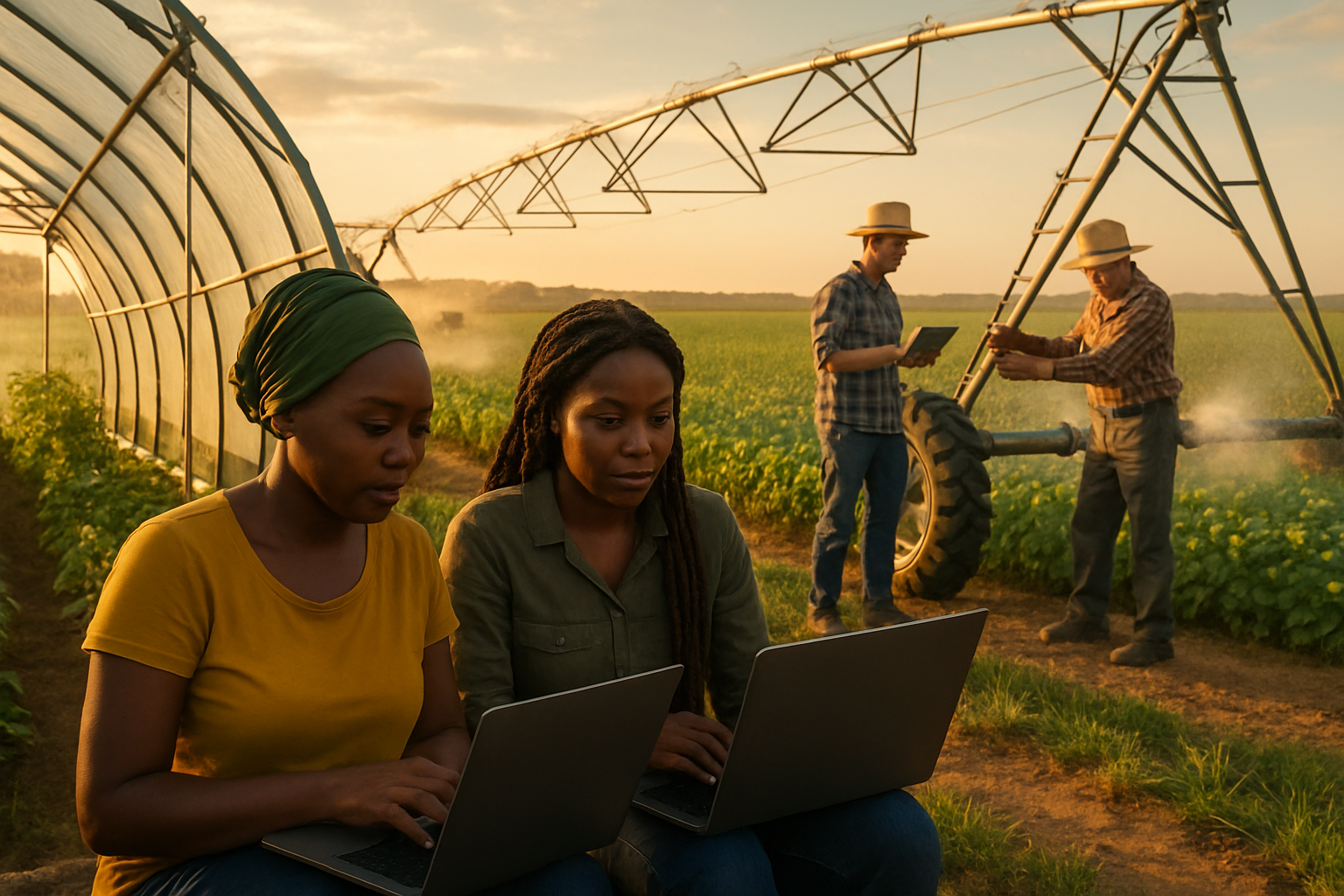
Agricultural sectors worldwide are experiencing a transformation renaissance as climate pressures and supply chain vulnerabilities force rapid innovation in food security approaches, with Bolivia's critical harvest season facing fuel supply challenges while Gabon leads pioneering women-focused agricultural entrepreneurship initiatives.
Bolivia's Critical Harvest Season Under Pressure
Klaus Frerking, president of the Chamber of Agriculture of the East (CAO), reported that while diesel coverage in provinces remains normal currently, ensuring fuel supply during the upcoming harvest campaign is crucial for what represents the country's largest agricultural season in history. Bolivia faces the monumental task of harvesting approximately 3 million hectares this season, with Santa Cruz concentrating around 2.2 million hectares of this total agricultural area.
Within this massive agricultural undertaking, approximately 1.6 million hectares are dedicated to soybean cultivation alone, highlighting Bolivia's significant role in global food production. However, climatic factors have created delays in the soybean harvest, forcing the agricultural sector to await improved weather conditions to proceed normally with production processes.
This challenge occurs during unprecedented environmental stress, with January 2026 marking the hottest recorded month in human history—the 19th consecutive month exceeding 1.5°C above pre-industrial levels. The sustained warming has fundamentally altered traditional farming cycles, water availability, and pest management strategies across all agricultural regions.
Gabon Champions Women-Led Agricultural Innovation
In Libreville, a groundbreaking regional workshop titled "Women & Future Fields in the Congo Basin" brings together 30 young women agripreneurs from six countries in the region. This International Organization of Francophonie (OIF) initiative, co-organized by the Ma Bannière Foundation, represents a strategic shift toward recognizing women as agricultural innovation leaders in Central Africa.
The program specifically targets women aged 21-45, focusing on strengthening their agricultural entrepreneurship capacities through knowledge sharing, technical training, and network building. This initiative reflects broader global patterns where women farmers and entrepreneurs are driving agricultural transformation through sustainable practices, community-based approaches, and innovative technology adoption.
The Congo Basin workshop demonstrates the evolution of agricultural development from traditional aid models to peer-to-peer cooperation, where developing nations share expertise and innovations horizontally rather than depending on top-down assistance approaches.
Technology-Traditional Knowledge Integration
Modern agricultural success increasingly depends on sophisticated synthesis of cutting-edge technology with traditional farming knowledge and community-based management systems. Bolivia's harvest challenges require precision agriculture, advanced irrigation, and digital monitoring combined with generations of agricultural wisdom adapted to local conditions.
"The successful integration of modern technology with traditional knowledge represents the future of sustainable agriculture. Communities that preserve their agricultural heritage while embracing beneficial innovations show the greatest resilience to climate pressures."
— Agricultural Development Expert, Recent Memory Analysis
Similarly, Gabon's women agricultural entrepreneurs are combining international best practices with indigenous farming techniques, creating hybrid approaches that respect cultural contexts while incorporating beneficial technological advances. This represents a fundamental departure from either purely technological or traditional approaches toward comprehensive frameworks that are both scientifically rigorous and culturally sensitive.
Economic Development Through Agricultural Innovation
Agricultural innovation functions as an economic development engine extending far beyond farm-level improvements. Bolivia's massive harvest creates employment opportunities across transportation, processing, and packaging sectors while generating crucial foreign currency through agricultural exports. The economic multiplier effects include strengthening rural economies, improving urban food security, and building national economic resilience.
In Gabon, the women-focused agricultural program creates sustainable employment opportunities that support food security while building domestic capacity for agricultural technology development. These initiatives demonstrate how agricultural modernization can simultaneously address rural poverty, gender equality, and food security challenges through integrated approaches.
The economic implications extend to global markets, where agricultural innovations affect commodity prices, supply chain stability, and international trade relationships. Countries implementing comprehensive agricultural modernization programs show greater economic resilience and attract more sustainable investment compared to those relying solely on traditional agricultural methods.
South-South Cooperation Emergence
Both Bolivia and Gabon's initiatives reflect the emergence of South-South cooperation in agricultural development, where developing nations share expertise and resources through peer partnerships rather than traditional North-South aid relationships. This approach has proven more culturally appropriate and economically sustainable than conventional development assistance models.
The African Continental Free Trade Agreement (AfCFTA) enables agricultural partnerships across national boundaries, creating shared value chains and collective responses to food security challenges that individual nations cannot address independently. Regional integration through agricultural cooperation provides templates for scaling successful innovations across similar contexts while maintaining local autonomy and cultural sensitivity.
Climate Adaptation Strategies
Current agricultural developments occur during unprecedented climate conditions requiring immediate adaptation strategies. The sustained global warming affects traditional growing seasons, water availability, and pest management, forcing agricultural systems to evolve rapidly from historical patterns to climate-responsive approaches.
Bolivia's harvest delays due to climatic factors illustrate how even well-planned agricultural operations must adapt to increasingly unpredictable weather patterns. Success requires flexible management systems that can respond quickly to changing conditions while maintaining productivity levels necessary for food security.
Gabon's focus on women agricultural entrepreneurs recognizes that diverse perspectives and approaches provide greater resilience against climate variability. Women farmers often demonstrate superior adaptation strategies, community engagement, and sustainable resource management compared to conventional large-scale operations.
Implementation Challenges and Success Factors
Despite promising innovations, significant implementation challenges remain. Funding sustainability presents critical concerns for developing nations where immediate economic pressures often override long-term agricultural investment considerations. Technical capacity building requires sustained investment in education, training, and institutional development that extends beyond initial technology deployment.
Climate change continues disrupting agricultural project timelines, requiring adaptive management systems capable of responding to rapidly changing environmental conditions. The diversity of approaches provides resilience against single-solution dependencies, offering multiple adaptation pathways for different national circumstances and agricultural contexts.
Success factors consistently identified across agricultural innovations include community ownership, international cooperation that respects local autonomy, economic viability that provides tangible benefits, transparent governance frameworks, and sustained political commitment extending beyond electoral cycles.
Strategic Significance for Global Food Security
The agricultural developments in Bolivia and Gabon provide templates for addressing global food security challenges through production optimization, gender inclusion, climate adaptation, and international cooperation. These initiatives demonstrate that agricultural communities possess remarkable adaptive capacity when supported by appropriate policies, infrastructure, and market access.
The window for building resilient, equitable food systems continues narrowing as climate change accelerates and global population grows. However, agricultural innovations demonstrated in 2026 suggest that coordinated international responses can effectively address food security challenges when they integrate immediate crisis response with long-term resilience building.
Success depends on sustained international cooperation, enhanced coordination across multiple sectors and scales, and increased financial commitments that recognize food security as global public good requiring unprecedented collaboration during this critical climate action decade.