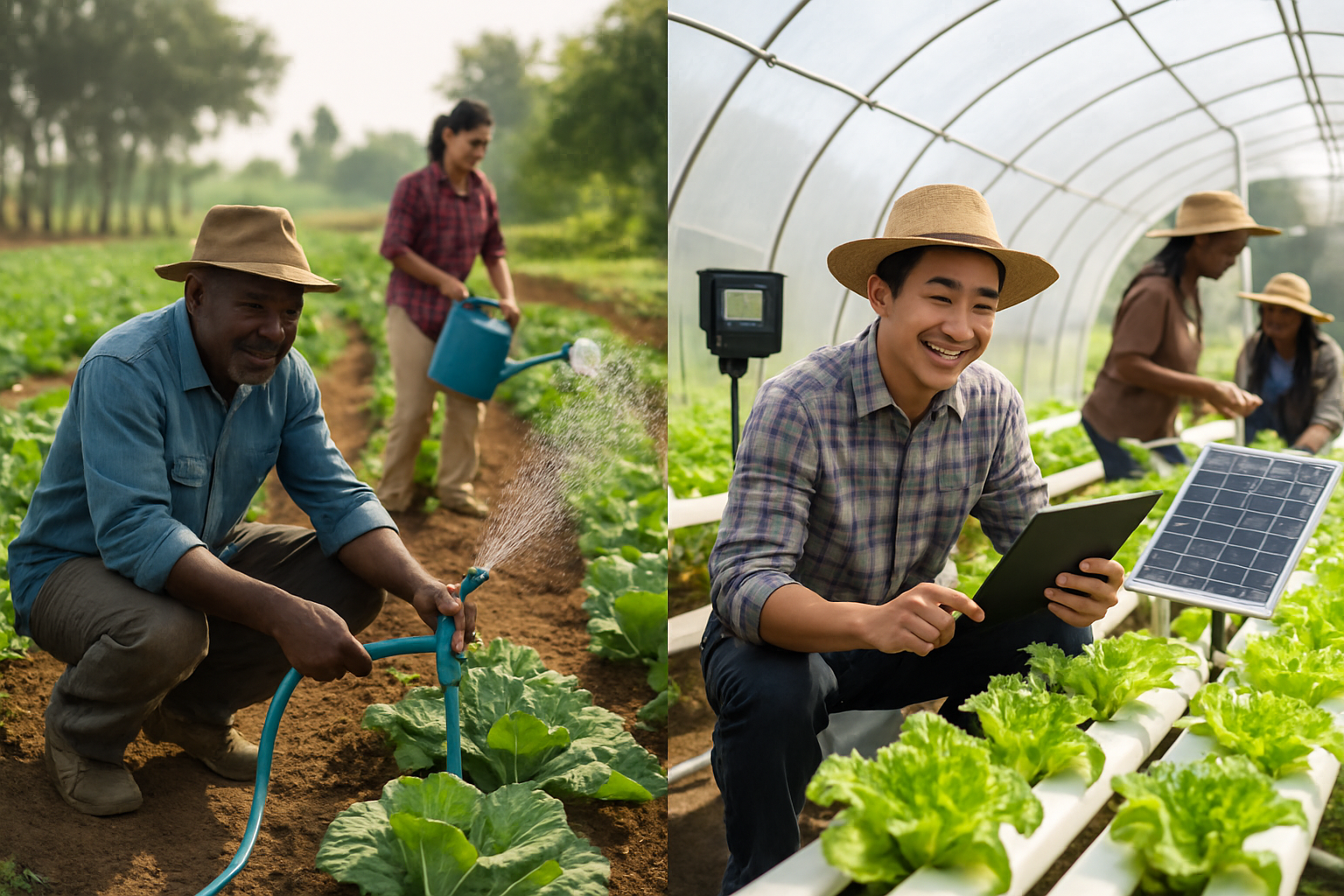
A revolutionary wave of agricultural innovation is sweeping across the developing world, with Burkina Faso's industrial aquaculture breakthrough and Pakistan's comprehensive agricultural transformation leading a global renaissance that could redefine food security for millions amid accelerating climate change.
Prime Minister Rimtalba Jean Emmanuel Ouédraogo's inauguration of industrial fish feed production units in Bobo-Dioulasso on March 13, 2026, marks a pivotal moment in West Africa's agricultural modernization. This sophisticated aquaculture infrastructure represents more than technological advancement—it embodies a fundamental shift toward integrated food systems that combine traditional knowledge with cutting-edge innovation.
Burkina Faso's Aquaculture Revolution
The fish feed production facilities inaugurated in Burkina Faso's second-largest city represent the culmination of the government's ambitious "Offensive agropastorale et halieutique" (Agropastoral and Fisheries Offensive). This comprehensive program demonstrates how developing nations are becoming agricultural innovation centers rather than technology recipients.
The timing proves critical as global food systems face unprecedented stress from the 20th consecutive month of temperatures exceeding 1.5°C above pre-industrial levels. Traditional farming cycles have been fundamentally altered, making aquaculture an essential component of climate-resilient food production.
"This achievement inscribes itself in the dynamic of structural transformation of the national fisheries sector and in the implementation of the Agropastoral and Fisheries Offensive engaged by the Government."
— Prime Minister Rimtalba Jean Emmanuel Ouédraogo
The industrial fish feed units address a critical bottleneck in African aquaculture development. Previously, fish farmers relied on expensive imported feeds or inadequate local alternatives. The domestic production capability creates economic multiplier effects throughout the value chain—from local grain producers supplying raw materials to transportation networks distributing finished products.
Pakistan's Comprehensive Agricultural Transformation
Simultaneously, Pakistan's agricultural sector demonstrates remarkable adaptation capacity despite facing some of the world's most severe climate challenges. As one of the globe's most climate-vulnerable nations, Pakistan experiences annual disaster losses averaging $2 billion, with 83% attributed to floods that devastate farming communities.
Agricultural analyst Ali Sufian Hamayon's assessment captures the sector's potential: "Under the vast stretches of fertile land and the tireless efforts of millions of farmers, there is an untapped reservoir of economic potential. Despite being the foundation of our economy, agriculture is constrained by outdated systems, inefficiencies and limited access to modern tools."
The emergence of agricultural technology platforms and cooperative marketing systems represents Pakistan's evolution from subsistence agriculture toward commercial farming. Hamayon notes the remarkable transformation in farmer attitudes: "I've seen something remarkable in rural Pakistan: an undeniable desire for growth, innovation, and progress among our farmers. They are prepared. The question is whether we are ready to create the ecosystem that will allow them to thrive."
Technology-Traditional Knowledge Integration
Both nations exemplify the most successful approach to agricultural modernization: sophisticated synthesis of cutting-edge technology with traditional ecological knowledge and community-based management systems. This integration proves superior to purely technological solutions that ignore local farming traditions and community needs.
Burkina Faso's aquaculture development respects community structures while introducing beneficial innovations. Local fish farmers participate in technology transfer programs, ensuring traditional fishing knowledge enhances rather than conflicts with industrial methods. The result: sustainable intensification that maintains cultural practices while dramatically improving productivity.
Pakistan's agricultural transformation leverages generations of farming wisdom while incorporating precision agriculture, advanced irrigation systems, and digital monitoring capabilities. This balanced approach addresses the complex challenges of market volatility, climate change, and shrinking farm sizes through community-driven solutions.
Climate Adaptation at Scale
These developments occur during Earth's most challenging environmental period. The sustained warming of 20 consecutive months above climate thresholds creates optimal conditions for agricultural pests while disrupting traditional growing seasons. Both nations demonstrate how agricultural innovation provides critical adaptation tools.
Burkina Faso's aquaculture infrastructure offers protection against climate volatility. Fish farming provides protein production less vulnerable to weather extremes than traditional livestock. The controlled environment systems enable year-round production despite irregular rainfall patterns increasingly affecting the Sahel region.
Pakistan's agricultural modernization addresses multiple climate pressures simultaneously. Drought-resistant crop varieties, water-efficient irrigation, and crop diversification strategies reduce vulnerability to extreme weather. The cooperative marketing systems provide economic stability when individual farmers face crop losses.
South-South Cooperation Leadership
Both initiatives reflect a broader transformation in international development cooperation. Developing nations increasingly share expertise through peer partnerships rather than depending on traditional North-South aid relationships. This South-South cooperation proves more culturally appropriate and economically sustainable.
The African Continental Free Trade Agreement enables countries like Burkina Faso to access regional markets for their agricultural innovations. Pakistan's position within South Asian and Islamic economic cooperation frameworks creates similar opportunities for knowledge transfer and market development.
Regional integration offers advantages beyond trade. Countries facing similar climate challenges can share adaptation strategies, coordinate research priorities, and develop joint responses to food security threats. This collaborative approach leverages collective expertise for innovations individual nations cannot achieve independently.
Economic Development Beyond Agriculture
Agricultural innovation functions as a comprehensive economic development engine extending far beyond farm-level improvements. Burkina Faso's fish feed production creates employment in transportation, processing, packaging, and equipment maintenance. The multiplier effects support entire rural economic ecosystems.
Pakistan's agricultural transformation generates sustainable rural employment while reducing migration pressures on urban areas. Improved agricultural productivity supports domestic food security while creating export opportunities that strengthen the balance of payments. The technology integration attracts international investment in agricultural equipment and digital infrastructure.
Both nations demonstrate how agricultural development serves as essential national infrastructure. Food security enables political stability, economic growth, and social cohesion. Investment in agricultural innovation provides returns across multiple sectors while building resilience against future crises.
Implementation Success Factors
Analysis of successful agricultural innovations across both nations reveals consistent success factors essential for scaling globally:
- Community Ownership: Programs succeeding when local communities participate in design and implementation rather than receiving top-down technology transfers
- Technology-Traditional Integration: Combining modern innovations with traditional ecological knowledge creates more robust and culturally appropriate solutions
- Economic Viability: Sustainable programs provide tangible economic benefits to participating farmers and communities
- Transparent Governance: Clear policies, reliable institutions, and accountable leadership create environments for agricultural investment and innovation
- International Cooperation: Strategic partnerships provide technical expertise and market access while respecting local autonomy
Global Implications and Scaling Potential
The success of agricultural innovations in Burkina Faso and Pakistan provides templates for addressing global food security challenges. As climate change accelerates and population growth increases demands on agricultural systems, these models offer hope for sustainable intensification.
The window for building resilient, equitable food systems narrows rapidly as environmental pressures intensify. However, the demonstrated capacity for innovation, adaptation, and cooperation across diverse contexts suggests humanity possesses the tools necessary for meeting unprecedented challenges.
Success scaling these innovations globally depends on sustained political commitment transcending electoral cycles, adequate funding for long-term agricultural development, and coordination between immediate crisis response and resilience building. The human dimension remains central—millions of farmers, food workers, and vulnerable communities depend on stable, fair global food systems.
The agricultural renaissance emerging across developing nations in 2026 may prove decisive for global food security in the coming decades. The combination of technological innovation, traditional wisdom, and international cooperation demonstrated in Burkina Faso and Pakistan offers a path forward during Earth's most critical climate action decade.
As these nations show, the future of food security lies not in choosing between tradition and innovation, but in their thoughtful synthesis. The success of this approach will determine whether agricultural systems can keep pace with environmental change while serving growing populations and preserving the ecological foundations upon which all farming depends.