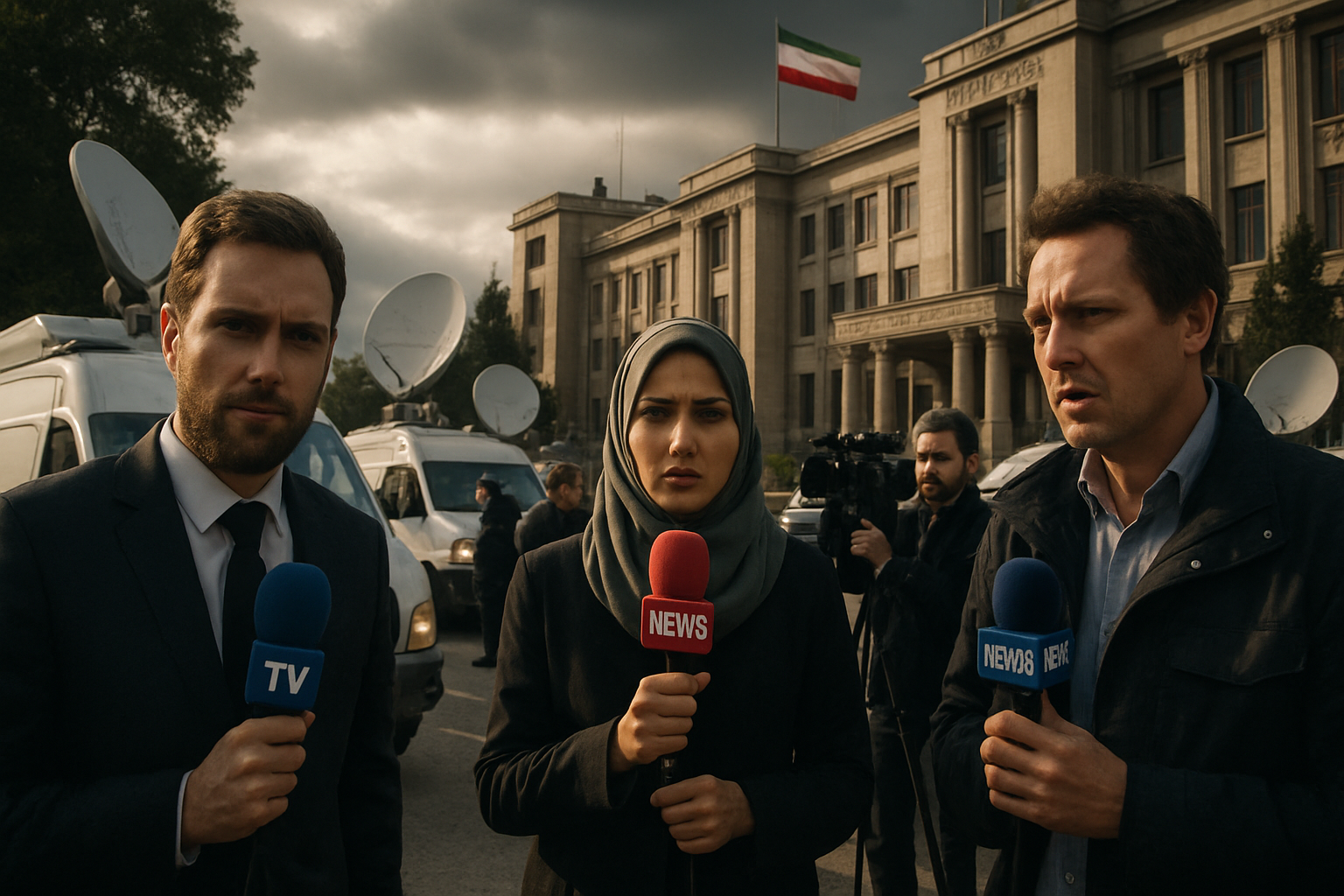
Reports claiming the death of former Iranian President Mahmoud Ahmadinejad during recent airstrikes on Tehran remain unverified and disputed, as international news outlets struggle to confirm details amid the ongoing military operations and communications blackout affecting the Iranian capital.
Multiple international news sources, including German publication FAZ, Norwegian broadcaster NRK, Romanian outlet Digi24, and several other European media organizations, have published reports claiming that Ahmadinejad was killed during airstrikes that targeted Tehran. However, the information has not been independently verified, and conflicting accounts have emerged from different sources.
Conflicting Reports Emerge
According to reports published on March 1, 2026, the former Iranian president allegedly became a victim of air attacks in Tehran. German media outlet FAZ reported that three American soldiers were also killed in the broader military operations, while indicating that a three-member council would temporarily govern Iran. The reports suggested that Iran's Supreme Leader Ali Khamenei was also killed and described as a "martyr."
Norwegian broadcaster NRK cited the Iranian state news agency ILNA, claiming that the attack struck Ahmadinejad's residence in the Narmak area of northeast Tehran late Saturday evening local time. According to these reports, both Ahmadinejad and several bodyguards were allegedly killed in the strike.
"The reports concerning these developments have not been independently verified by our editorial team, and we continue to seek confirmation from multiple sources."
— International News Verification Protocol
Historical Context of Ahmadinejad's Role
Mahmoud Ahmadinejad served as Iran's president from 2005 to 2013, during a period of significant international tension over Iran's nuclear program. After his presidency, he was appointed by Supreme Leader Ayatollah Ali Khamenei to the Expediency Discernment Council, an advisory body associated with the leadership office.
During his time in office, Ahmadinejad was known for his controversial statements and confrontational approach to international relations, particularly with Western nations. His presidency coincided with increased international sanctions against Iran and heightened tensions over the country's nuclear program.
Information Warfare Concerns
The conflicting nature of these reports highlights the challenges facing journalists and news organizations in verifying information during active military operations. Russian news outlet Meduza notably reported that the Iranian news agency ILNA initially published the story about Ahmadinejad's death but later removed it, noting that there were no independent reports confirming the information.
This pattern of information being published and then retracted suggests the complex information environment surrounding the ongoing military operations in Iran. The inability to independently verify such significant claims raises questions about the reliability of information emerging from the region.
Communication Blackouts Complicate Verification
Reports indicate that mobile services in Tehran have been disrupted, and communications have been severely limited, making it extremely difficult for journalists and international observers to verify claims about casualties and specific incidents. This communications blackout is typical during military operations but significantly hampers efforts to confirm or deny reports about high-profile figures.
The situation is further complicated by the fact that various international media outlets have reported different casualty figures and conflicting details about the alleged airstrikes, suggesting that reliable information from the ground remains scarce.
International Response and Verification Challenges
International news organizations have adopted cautious approaches to reporting on these claims, with many emphasizing that the reports remain unconfirmed. The challenges of verification are compounded by the ongoing military situation and the restricted access to information from Iranian sources.
The alleged death of a former president would typically prompt immediate official confirmation from government sources, diplomatic channels, or international organizations. The absence of such confirmation, coupled with the removal of initial reports by some sources, suggests that the claims require further investigation.
Broader Regional Implications
If confirmed, the death of Ahmadinejad would mark a significant moment in Iran's political landscape, as he remained an influential figure in Iranian politics even after leaving the presidency. However, given the current unverified status of these reports, it is premature to assess any potential political implications.
The conflicting reports also underscore the broader challenges facing international media in covering military operations and political developments in Iran, where access to reliable information is often limited and verification can be extremely difficult.
Ongoing Investigation
News organizations continue to work to verify these reports through diplomatic channels, intelligence sources, and other means of confirmation. Until such verification can be obtained, the reports regarding Ahmadinejad's alleged death must be treated as unconfirmed claims rather than established fact.
The situation highlights the importance of careful fact-checking and verification in reporting on sensitive international developments, particularly during periods of military conflict when information can be scarce, contradictory, or deliberately manipulated.