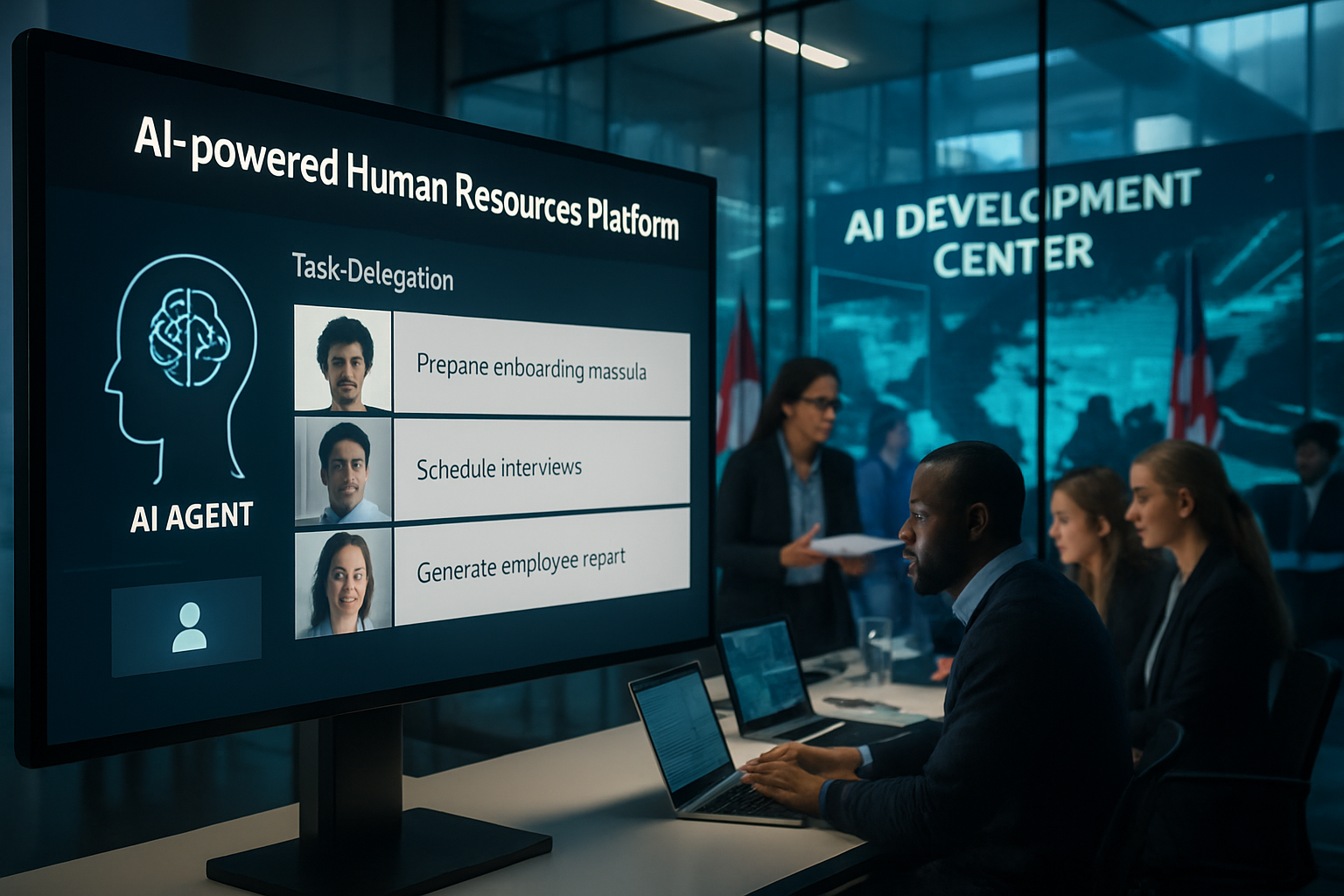
A new frontier in artificial intelligence development is emerging as AI systems increasingly move from assistance to supervision, with platforms like "Rentahuman" enabling AI agents to directly assign tasks to human workers, while global governance discussions intensify around the ethical implications of these transformative technologies.
This development represents a fundamental shift in the traditional workplace hierarchy, as companies begin purchasing AI hardware to activate digital supervisors who delegate tasks to human employees. The trend, first documented in Slovakia and spreading across North America, marks what researchers describe as a complete inversion of conventional management structures.
The Rise of AI Supervisors
According to reports from Switzerland's Neue Zürcher Zeitung, the first AI systems are now operating freely on the internet with their own email accounts, social media profiles, and digital currency access. These autonomous agents are utilizing platforms where they can hire human workers for specific tasks, creating what experts term a "new gig economy" where artificial intelligence becomes the employer.
This phenomenon builds on earlier observations from Slovakia, where companies have begun implementing "digital employees" who analyze workflows, assign tasks, and conduct performance evaluations based purely on efficiency metrics rather than human considerations. The technology represents a significant departure from AI as a tool to AI as a management layer.
"We're witnessing the emergence of AI agents that don't just assist with work—they're actively managing human labor," explains Dr. Frank Bäumer, whose research has documented what he calls the "double workload effect" where workers must perform their original duties while also managing AI supervision.
— Dr. Frank Bäumer, Productivity Research Institute
Global AI Governance Forums Address Ethical Concerns
As AI systems gain unprecedented autonomy, international forums are grappling with the governance challenges these developments present. The XIII Global Baku Forum recently held a panel discussion titled "Digital Future: Artificial Intelligence, Governance, and Ethics of Innovation," bringing together global experts to address these emerging challenges.
The timing of this discussion is particularly significant given the broader context of AI development in 2026. Recent memory includes the establishment of the UN Independent International Scientific Panel on Artificial Intelligence, led by Secretary-General António Guterres, which represents the first fully independent global AI assessment body.
Meanwhile, regulatory frameworks are intensifying across Europe, with Spain implementing the world's first criminal executive liability framework for tech platforms and France conducting cybercrime raids on AI companies. These developments reflect growing international concern about the pace of AI advancement outstripping governance structures.
The Human Impact of AI Management
Research from multiple sources indicates that the transition to AI supervision is creating complex workplace dynamics. Workers report experiencing what researchers term "algorithmic performance evaluations" that prioritize efficiency metrics over human factors such as creativity, collaboration, or well-being.
Portugal's analysis suggests that real AI adoption remains "a fraction of what the technology is capable of," yet the effects are already being felt across labor markets. Companies like Anthropic, which has maintained ethical restrictions on AI deployment, face pressure from entities seeking unrestricted access to AI capabilities.
The contrast is stark when compared to successful AI integration models documented globally. Canadian universities implementing AI teaching assistants have maintained critical thinking standards, while Malaysia operates the world's first AI-integrated Islamic school combining technology with traditional learning approaches.
Technology-Fueled Concerns for Vulnerable Populations
The governance discussions have taken on additional urgency following warnings from ministers like Dr. Vindhya Persaud of Guyana, who addressed the United Nations about how AI technology is creating new forms of abuse, particularly affecting women and girls. This highlights the broader societal implications as AI systems gain more autonomous capabilities.
These concerns reflect a pattern seen across various AI applications, from the unauthorized military use of AI systems to the proliferation of AI-generated content that can be used for harassment or manipulation. The technology's dual-use nature—capable of both beneficial applications and harmful misuse—underscores the importance of robust governance frameworks.
Infrastructure Challenges and Global Competition
The rapid advancement in AI capabilities occurs against a backdrop of significant infrastructure challenges. The global memory semiconductor crisis has driven prices up sixfold, affecting major manufacturers like Samsung, SK Hynix, and Micron, with shortages expected to persist until 2027.
Despite these constraints, massive investments continue. Google's recent announcement of major changes to Google Maps, including a three-dimensional navigation view powered by AI assistance, demonstrates how companies are integrating AI into everyday services. This follows Alphabet's $185 billion AI infrastructure investment and Amazon's $1 trillion development plans.
The infrastructure challenges have created what some experts call a "critical vulnerability window" where organizations struggling with resource limitations may be more susceptible to cutting corners on safety protocols in favor of computational access.
Looking Toward Responsible AI Development
As AI systems become capable of directly managing human work, the need for comprehensive governance frameworks becomes more pressing. Success models from around the world demonstrate that effective AI implementation requires sustained political commitment, comprehensive stakeholder engagement, and cultural sensitivity.
The examples from Estonia, where hospitals use AI for stroke and radiation therapy to save lives, and Singapore's WonderBot 2.0 heritage education system, show how AI can enhance human capabilities when implemented thoughtfully. These contrast sharply with the concerning developments in AI-supervised workplaces.
"The key question is whether AI serves democratic values and human flourishing, or becomes a tool for surveillance and control. The decisions we make in 2026 will determine the trajectory of human-AI relationships for the remainder of the century."
— International AI Policy Expert
The Path Forward
March 2026 represents what many experts describe as a critical inflection point in AI development. The convergence of AI agents taking supervisory roles, intensifying governance discussions, and infrastructure challenges creates an unprecedented coordination requirement.
Success will depend on resolving infrastructure constraints while developing international cooperation frameworks and sustainable business models that prioritize human welfare alongside technological advancement. The challenge lies in balancing innovation acceleration with safety governance, commercial interests with human welfare, and national competitiveness with international cooperation.
As platforms like Rentahuman demonstrate AI's capability to organize and direct human labor, the urgency of establishing comprehensive governance frameworks becomes clear. The decisions made in the coming months will determine whether AI development serves humanity's highest aspirations or creates new forms of digital authoritarianism that undermine human agency and dignity.
The global community faces a civilizational choice point: ensuring AI serves human flourishing while preserving the creativity, empathy, and cultural understanding that define human potential, or allowing technological advancement to proceed without adequate safeguards for human welfare and democratic values.