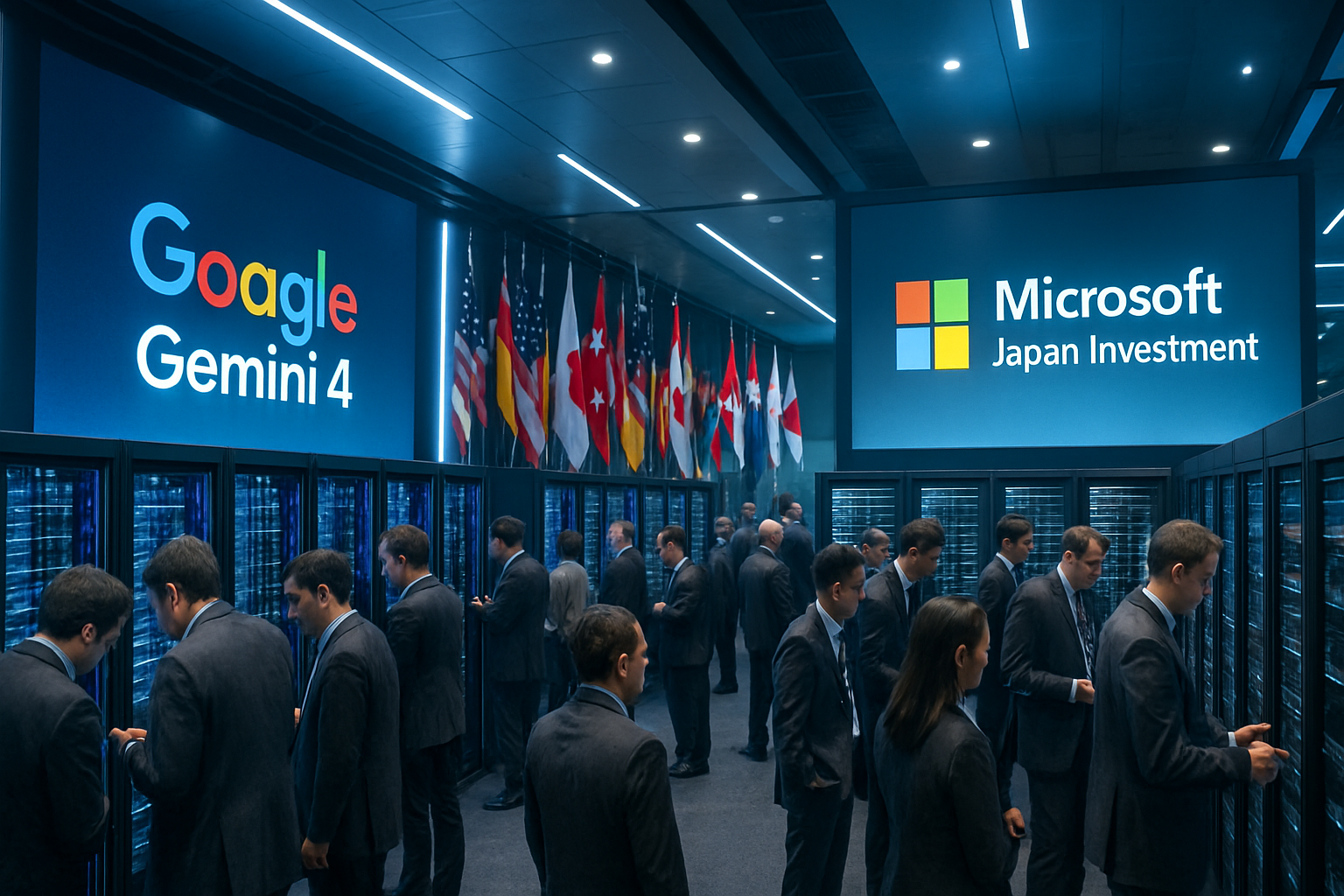
Artificial intelligence reached unprecedented milestones in April 2026 as ChatGPT-based systems demonstrated superior performance to top university applicants in entrance examinations, while major legal battles and celebrity protection measures signal a critical inflection point in AI governance and societal impact.
ChatGPT Outperforms Elite University Applicants
In a groundbreaking development that has sent shockwaves through academic institutions worldwide, an AI system based on ChatGPT achieved results that exceeded those of the most competitive human applicants at Japan's most prestigious universities, including the University of Tokyo and Kyoto University. According to reports from Azerbaijan's AzerNEWS, the AI system demonstrated superior performance across multiple examination categories, marking the first documented instance of artificial intelligence surpassing elite human academic performance in standardized university entrance testing.
This breakthrough represents a significant milestone in AI capabilities, particularly in complex reasoning, language comprehension, and analytical thinking that these examinations are designed to measure. The implications extend far beyond Japan, as universities worldwide grapple with how to assess human potential in an era where AI can outperform top students on traditional metrics.
Elon Musk vs. Sam Altman: The $130 Billion Battle
The technology industry's most high-profile legal confrontation began this week as jury selection commenced in the landmark case between Elon Musk and Sam Altman. Musk is seeking over $130 billion in damages, accusing the OpenAI CEO of fraud and "betraying" the AI startup's founding mission as a non-profit organization. The lawsuit alleges that Altman deliberately transformed OpenAI from its original charitable purpose into a commercial entity that prioritizes profits over public benefit.
"This case will determine the fundamental direction of artificial intelligence development for the next decade."
— Legal Expert, France 24
The trial's outcome could reshape the balance of power in the AI industry, with implications for how major AI companies operate and whether they can maintain commercial ambitions while claiming public benefit missions. The case has drawn international attention as both figures represent different philosophical approaches to AI development and deployment.
Celebrity AI Protection Movement Gains Momentum
Taylor Swift has emerged as a leading figure in the fight against unauthorized AI use, filing applications with the U.S. Patent and Trademark Office to register her voice and iconic phrases including "Hey, it's Taylor Swift" and "Hey, it's Taylor" as protected trademarks. This move follows similar protective measures by actor Matthew McConaughey and reflects growing concerns among entertainers about AI-generated content using their likeness without permission.
Reports from multiple countries, including Portugal, Romania, Greece, and Venezuela, confirm that Swift's legal team is pursuing comprehensive protection against what they term "AI cloning" of her voice and image. The initiative comes after numerous incidents where AI-generated content featuring Swift's likeness, including explicit imagery, circulated online without her consent.
This celebrity protection movement represents a broader trend of high-profile individuals seeking legal recourse against AI misuse. The outcomes of these trademark applications could establish important precedents for personality rights in the age of artificial intelligence, affecting how AI systems can legally use public figures' voices, images, and personas.
Major Corporate AI Restructuring
In a dramatic shift that signals the AI industry's maturation, Microsoft has lost its exclusive access to OpenAI's technology following a major partnership restructuring. Amazon Web Services CEO Andy Jassy announced that ChatGPT models will become available on the AWS cloud platform within weeks, marking the end of one of the most significant exclusive relationships in the AI sector.
This development represents a fundamental change in the competitive landscape, allowing OpenAI to diversify its cloud partnerships while reducing Microsoft's strategic advantage. The restructuring reflects the growing pressure on AI companies to expand their reach and reduce dependence on single partners as the market becomes increasingly competitive.
Youth Protection and Educational Challenges
Canadian education officials are taking unprecedented steps to protect children from AI-related risks, with Manitoba's education minister announcing that schools may become the first institutions to ban children from accessing social media accounts and AI chatbots during school hours. This initiative reflects growing concerns about AI's impact on child development, education quality, and mental health.
The proposal comes amid documented cases of youth dependency on AI chatbots for both educational assistance and emotional support, raising questions about children's ability to develop critical thinking skills and authentic social relationships. Educational experts worldwide are monitoring the Canadian approach as a potential template for balancing AI benefits with child protection.
International Technology Competition Intensifies
China has moved to block U.S. technology giant Meta from acquiring AI startup Manus, demonstrating Beijing's increasing scrutiny of the AI industry amid intensifying geopolitical rivalry with the United States. This decision reflects broader tensions over technological dominance and concerns about foreign access to advanced AI capabilities.
The blocking represents part of China's strategy to maintain technological sovereignty while preventing Western companies from acquiring Chinese AI innovations. This development signals the continuation of the technology decoupling between major powers, with significant implications for global AI development and collaboration.
Infrastructure and Market Challenges
The AI revolution continues to face significant infrastructure constraints, with global memory semiconductor shortages driving chip prices to six times their normal levels. Major manufacturers including Samsung, SK Hynix, and Micron are operating at full capacity but cannot meet demand from AI companies, with shortages expected to persist until 2027 when new fabrication facilities come online.
Despite these constraints, major technology companies continue massive investments in AI infrastructure. Alphabet has committed $185 billion in 2026 alone—the largest single-year corporate technology investment in history—while Amazon has announced over $1 trillion in AI development plans for the current decade.
Regulatory Responses and Safety Concerns
Governments worldwide are implementing increasingly sophisticated AI governance frameworks. Spain has established the world's first criminal executive liability framework for technology platforms, creating personal legal risks for executives. France has conducted cybercrime raids on AI companies, while the United Nations has established an Independent Scientific Panel with 40 experts to provide the first fully independent international AI assessment.
These regulatory developments represent the most comprehensive global technology governance effort since the commercialization of the internet, with coordinated timing designed to prevent companies from relocating to more permissive jurisdictions.
Educational Success Models Emerge
Despite challenges, successful AI integration models are emerging globally. Canada's universities have implemented AI teaching assistants that maintain critical thinking standards while providing personalized support. Malaysia operates the world's first AI-integrated Islamic school, combining artificial intelligence with traditional religious and academic learning. Singapore's WonderBot 2.0 has achieved success in heritage education, demonstrating how AI can preserve cultural knowledge while leveraging advanced technology.
These success models share common characteristics: they treat AI as amplification tools rather than replacement mechanisms, maintain sustained human development commitments, ensure comprehensive stakeholder engagement, and demonstrate cultural sensitivity in implementation.
The Civilizational Choice Point
Industry experts characterize April 2026 as a "civilizational choice point"—a critical juncture determining whether artificial intelligence serves human flourishing or becomes an exploitation tool beyond democratic accountability. The convergence of advancing AI capabilities, regulatory pressure, massive corporate investments, and infrastructure constraints creates unprecedented coordination challenges.
Success in navigating this transition requires balancing innovation acceleration with safety governance, commercial interests with human welfare, and national competitiveness with international cooperation. The decisions made during this period will establish decades-long patterns for human-AI relationships affecting billions of people globally.
Looking Forward
As artificial intelligence transitions from experimental technology to essential infrastructure, the most promising path involves sophisticated human-AI collaboration that amplifies capabilities while preserving creativity, cultural understanding, and ethical reasoning that define human potential. The window for coordinated proactive action is narrowing rapidly, making 2026 decisions crucial for determining whether the AI revolution enhances human potential or undermines the foundations of authentic human experience.
The developments of April 2026 demonstrate that the future belongs to organizations and societies that successfully integrate advanced technologies while preserving human creativity, critical thinking, and cultural knowledge. As we progress through this transformative period, the challenge remains ensuring that technological advancement serves humanity's highest aspirations while maintaining the wisdom, empathy, and cultural understanding that provide meaning to the human experience.