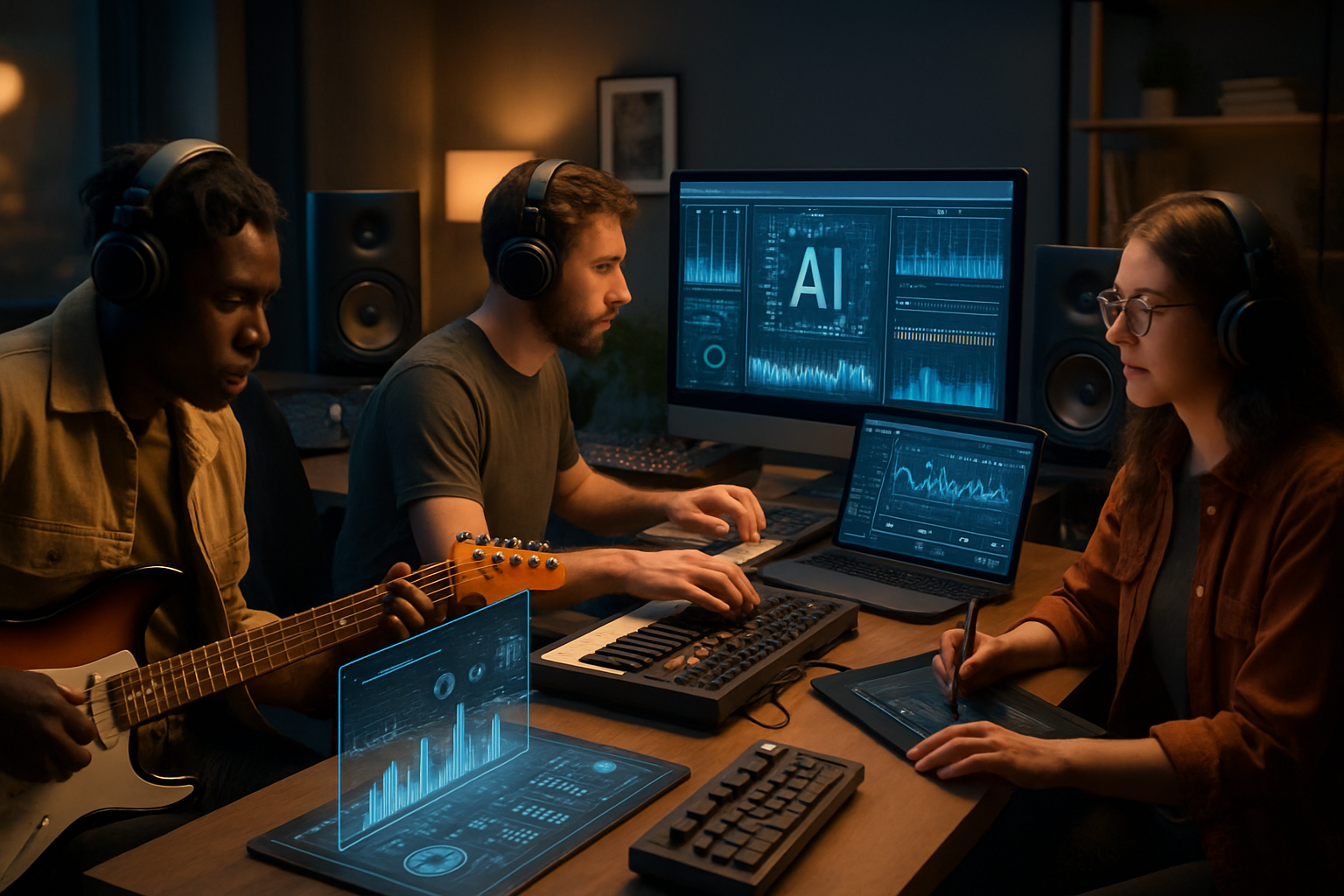
Artificial intelligence is fundamentally reshaping the creative industries as new artist-focused platforms emerge across Europe and Asia, transforming how music, visual art, and entertainment content are created, distributed, and consumed in 2026.
From Vienna's pioneering AI-assisted ticketing systems to Prague's hyper-realistic digital content that audiences mistake for reality, the creative sector is experiencing its most significant technological transformation since the advent of digital media. The developments span multiple continents and platforms, demonstrating both the promise and perils of AI integration in artistic expression.
AI-Powered Platforms Revolutionize Artist Services
Austria's viagogo has launched an innovative AI-powered distribution manager that provides rights holders direct access to over 125 million fans worldwide. The platform represents a fundamental shift in how artists and event organizers connect with audiences, utilizing machine learning algorithms to optimize ticket distribution and fan engagement strategies.
The system leverages sophisticated predictive analytics to match content with audience preferences, potentially revolutionizing how creative works reach their intended markets. Industry experts suggest this marks the beginning of a new era where AI serves as an intelligent intermediary between artists and global audiences.
Meanwhile, Sweden's real estate sector has begun implementing AI-enhanced image editing for property listings, with broker Daniella Isaksson in Växjö explaining their approach: "We use it to create inspiration." This expansion of AI tools beyond traditional creative industries demonstrates the technology's growing influence across various professional sectors.
Global Creative Renaissance Meets AI Innovation
The integration of artificial intelligence with creative work occurs during what industry analysts have termed the "February 2026 Cultural Renaissance" - an unprecedented period of international artistic collaboration and cultural expression. From BLACKPINK's collaboration with Korea's National Museum to Netflix's strategic investment in culturally specific content, the entertainment industry is demonstrating sophisticated approaches to balancing technological innovation with cultural authenticity.
This renaissance has particular significance for AI applications, as creative industries serve as testing grounds for human-machine collaboration models that could define workplace relationships across sectors. Successful implementations emphasize AI as an amplification tool for human creativity rather than a replacement for artistic vision.
"The most promising AI implementations treat technology as sophisticated amplification tools for human capabilities, preserving creativity, cultural understanding, and emotional depth while leveraging computational advantages."
— Entertainment Industry Analysis, March 2026
Content Authenticity Crisis Emerges
However, the rapid advancement of AI-generated content has created significant challenges for audience perception and media integrity. In Prague, graphic designer Vašek Krejčí's "Postapo Praha" project demonstrates the double-edged nature of AI advancement - his apocalyptic videos of abandoned Prague Metro stations are so realistic that viewers contact him believing they depict actual events, despite repeated emphasis on their fictional nature.
This authenticity crisis extends to journalism and official media, with German broadcaster ZDF recalling a correspondent over AI-generated images used in immigration reporting. The incident highlights critical questions about editorial controls and the need for clear frameworks distinguishing human-created from artificially generated content.
The challenge has become so pronounced that experts warn of "copycat behaviors" where realistic AI-generated content influences real-world decisions, particularly concerning in sectors like cosmetic surgery where AI-enhanced before-and-after photos create unrealistic expectations among young consumers.
Infrastructure Constraints Drive Innovation
Despite rapid AI adoption, the creative industries face significant infrastructure challenges. A global memory semiconductor crisis has driven chip prices up sixfold, affecting major manufacturers Samsung, SK Hynix, and Micron, with shortages expected to persist until 2027 when new fabrication facilities come online.
Paradoxically, these constraints are spurring innovation toward more efficient AI systems. Companies are developing memory-efficient algorithms and hybrid processing approaches that maximize AI capabilities while minimizing hardware requirements. This forced efficiency may ultimately benefit smaller creative enterprises by democratizing access to advanced AI tools.
The infrastructure challenges occur alongside massive corporate investments in AI capabilities, with Alphabet committing $185 billion to AI infrastructure in 2026 - the largest single-year corporate technology investment in history - while Amazon has announced development plans exceeding $1 trillion.
Regulatory Frameworks Take Shape
As AI transforms creative industries, regulatory bodies worldwide are implementing governance frameworks to address emerging challenges. Spain has enacted the world's first criminal executive liability system for social media platforms, while France has conducted cybercrime raids targeting AI companies over content safety violations.
The United Nations has established an Independent Scientific Panel with 40 experts under Secretary-General António Guterres, representing the first fully independent international AI impact assessment body. This coordinated approach aims to prevent regulatory arbitrage while establishing global standards for AI deployment in creative and other sectors.
European initiatives demonstrate particular concern for preserving cultural authenticity while enabling technological advancement. The approach contrasts with more commercially driven models elsewhere, suggesting different regional philosophies about the relationship between AI and human creativity.
Successful Human-AI Collaboration Models
Among the challenges, several successful integration models have emerged that preserve human creative agency while leveraging AI capabilities. Canadian universities have implemented AI teaching assistants that maintain critical thinking standards, while Malaysia operates the world's first AI-integrated Islamic school, demonstrating how technology can enhance rather than replace traditional learning relationships.
Singapore's WonderBot 2.0 heritage education program has achieved notable success by using AI to make cultural content more accessible while preserving authenticity. These examples suggest that the most effective AI implementations treat the technology as sophisticated tools that amplify human capabilities rather than replace human judgment and creativity.

Economic Transformation and Market Disruption
The creative industries are experiencing what analysts term the "SaaSpocalypse" - the elimination of hundreds of billions in traditional software market capitalization as AI systems demonstrate direct replacement capabilities for conventional solutions. This transformation creates both opportunities and challenges for creative professionals.
Microsoft's Mustafa Suleyman predicts that AI will replace the majority of office workers within two years, with lawyers and auditors facing replacement within 18 months. However, successful industry transitions demonstrate that proactive adaptation through retraining and hybrid skill development can preserve employment while enhancing productivity.
Indian IT giants including Infosys, Wipro, and HCL have implemented comprehensive worker transition programs rather than mass layoffs, demonstrating thoughtful approaches to AI integration that enhance rather than eliminate human contributions to creative work.
Critical Inflection Point for Creative Future
Industry experts identify March 2026 as a critical inflection point determining whether AI fulfills its transformative promise or creates systemic disruption in creative sectors. The decisions made during this period will influence human-AI relationships in creative industries for decades to come.
Success depends on unprecedented coordination between governments, technology companies, educational institutions, and civil society to balance innovation acceleration with safety governance, commercial interests with human welfare, and national competitiveness with international cooperation.
The creative industries serve as a crucial testing ground for these relationships, as artistic work involves uniquely human elements - imagination, cultural understanding, and emotional depth - that cannot be easily replicated by artificial intelligence. The sector's approach to AI integration may provide templates for other industries facing similar technological transformations.
Looking Ahead: The Future of Human Creativity
As AI capabilities continue expanding, the creative industries face fundamental questions about the nature of artistic expression and cultural authenticity. The most promising developments suggest a future where AI serves as a powerful amplification tool for human creativity rather than a replacement for artistic vision.
The ongoing cultural renaissance demonstrates that audiences value authentic expression and meaningful cultural connections, suggesting that purely AI-generated content may struggle to achieve the emotional resonance that defines compelling creative work.
The challenge for creative professionals lies in mastering AI tools while preserving the essentially human elements that provide cultural significance and emotional depth. Those who successfully navigate this balance are likely to thrive in an AI-enhanced creative landscape that values both technological sophistication and authentic human expression.
"The future lies in sophisticated human-AI collaboration that amplifies human capabilities while preserving creativity, cultural understanding, and emotional intelligence - the defining elements of human potential."
— Global AI Development Analysis, March 2026
As the creative industries continue evolving through 2026, the intersection of artificial intelligence and human creativity will likely define not only the future of entertainment and artistic expression but also serve as a model for human-technology relationships across all sectors of society. The stakes could not be higher for preserving the essentially human elements that make creative work meaningful while embracing the transformative potential of artificial intelligence.